


Common types of modified starch, Properties of starch
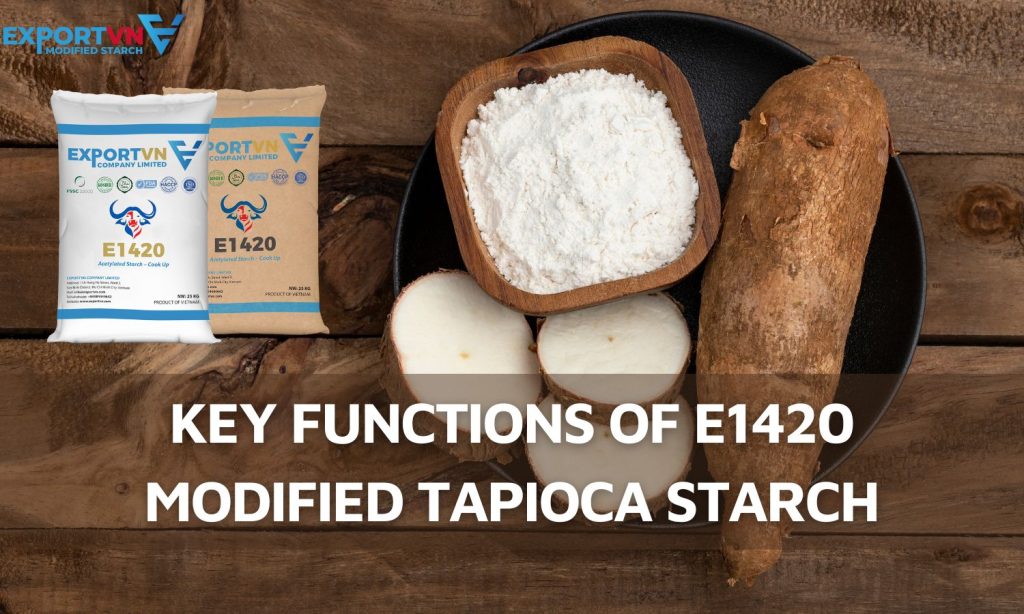
Key Functions of E1420 Modified Tapioca Starch
Apr
When food manufacturers look for better texture, process stability, and shelf life, E1420 modified tapioca starch is often one of the most practical solutions. Known as acetylated starch, E1420 helps improve product consistency in a wide range of food applications — from noodles and sauces to dairy, meat products, and snacks.
As a trusted Vietnamese supplier, EXPORTVN provides high-quality E1420 acetylated tapioca starch for global food manufacturers seeking reliable performance and stable supply.
What Is E1420 Modified Tapioca Starch?
E1420 is an acetylated starch made by introducing acetyl groups into native starch. This modification improves the starch’s functional performance during food processing. What are Key Functions of E1420 Modified Tapioca Starch?
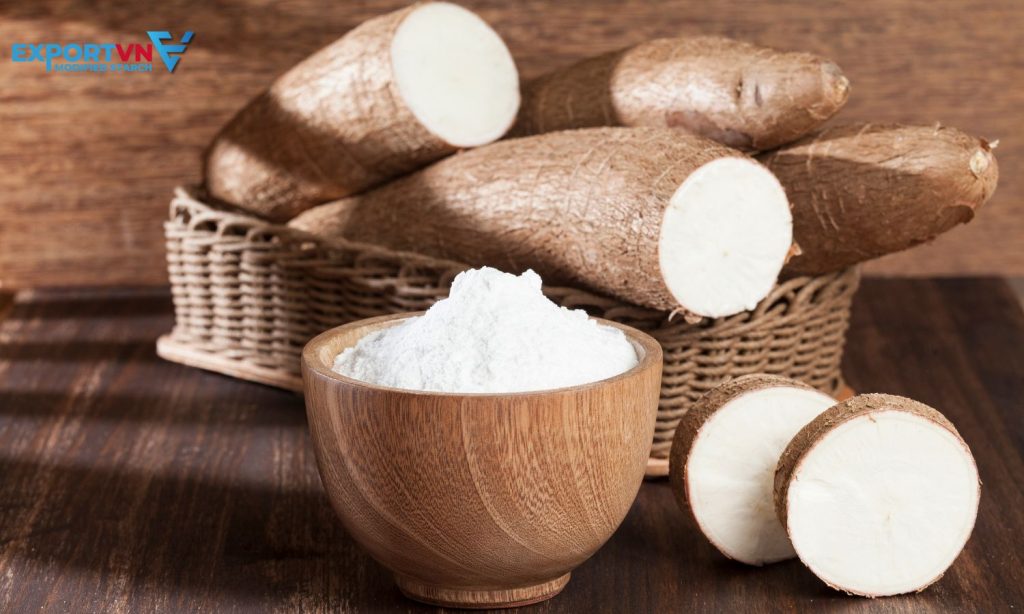
When made from tapioca, E1420 offers several advantages:
- Neutral taste and odor
- Smooth and clean mouthfeel
- Good clarity in sauces and fillings
- Better heat and shear resistance than native starch
- Lower retrogradation tendency
Compared with some other starch sources, tapioca-based E1420 delivers a softer texture and more pleasant eating quality. That is why it is widely used in processed foods that require stability and consumer-friendly texture.
For manufacturers comparing starch options, native tapioca starch and modified starch each serve different roles depending on process and product goals.
Key Functions of E1420 Modified Tapioca Starch in Food Processing
1. Improves Texture and Mouthfeel with E1420 in food applications
E1420 helps create a smooth, stable texture in many foods. It improves body, creaminess, and bite without making products overly sticky.
This is especially useful in:
- Sauces and gravies
- Yogurt and dairy desserts
- Bakery fillings
- Processed meats
2. Enhances Heat and Shear Stability
During cooking, mixing, pumping, or filling, starch can break down. E1420 is more resistant to processing stress than native starch.
Benefits include:
- More stable viscosity during cooking
- Better performance in industrial production lines
- Reduced batch variation
3. Reduces Syneresis and Improves Water Retention
One key function of E1420 modified tapioca starch is water control. It helps bind moisture and reduce water separation.
This leads to:
- Better freshness during storage
- Less liquid release in chilled products
- Improved juiciness in meat products
4. Supports Freeze–Thaw Stability
Frozen and chilled foods often suffer from texture damage after thawing. E1420 helps reduce this issue.
It supports:
- Stable texture after freezing
- Lower water loss after thawing
- Better product appearance
5. Extends Shelf Life and Product Consistency
By improving texture stability and reducing moisture migration, E1420 can help food products maintain quality for longer.
This is important for:
- Export products with long transit times
- Ready meals
- Shelf-stable processed foods
Main Food Applications of E1420 Modified Tapioca Starch
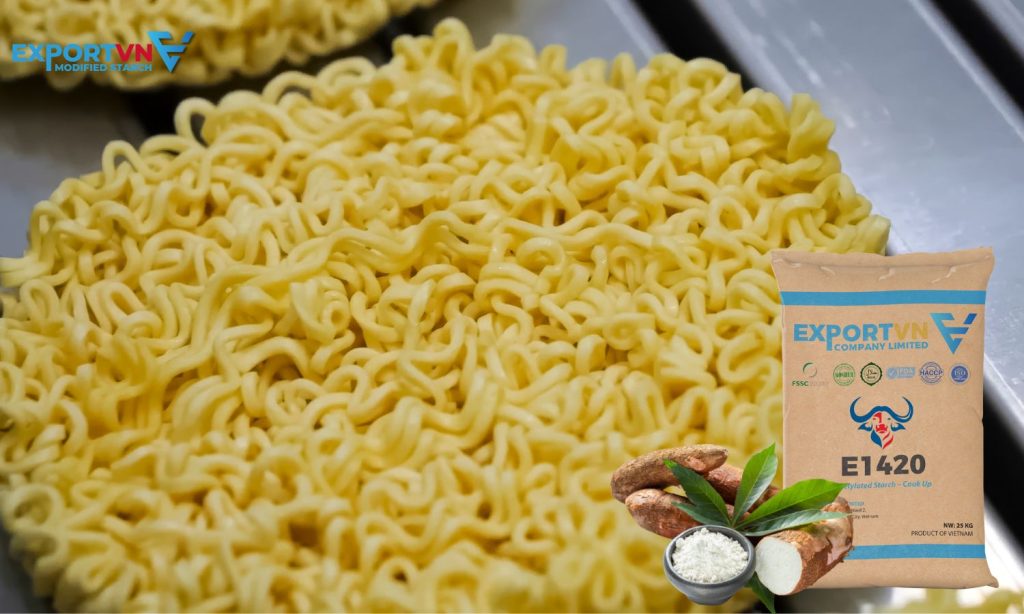
Instant Noodles and Noodle Products
In noodle applications, E1420 helps:
- Improve noodle elasticity and bite
- Reduce cooking loss
- Minimize breakage during processing
- Improve noodle surface smoothness
It is commonly used in instant noodles, fresh noodles, and dried noodle products.
Sauces, Soups, and Gravies
E1420 is widely used in gravies, ketchup, and chili sauce thanks to its stable viscosity and smooth texture.
Main benefits:
- Consistent thickness
- Good suspension of ingredients
- Reduced phase separation
- Stable viscosity under heating and shear
Dairy Products and Desserts
In dairy systems, E1420 supports:
- Creamier mouthfeel
- Better spoonability
- Reduced whey separation
- Improved stability during storage
It can be used in yogurt, pudding, milk desserts, and fillings.
Processed Meat Products
For products like sausages, meatballs, and canned meat, E1420 helps:
- Improve water binding
- Reduce cooking loss
- Improve slicing quality
- Increase yield
This helps manufacturers improve both product quality and cost efficiency.
Bakery, Fillings, and Frozen Foods
E1420 supports moisture retention and texture stability in cake fillings, fruit fillings, and frozen ready meals.
It helps maintain product softness and reduces staling over time.
Snacks and Coated Products
In snack applications such as fried chicken coating or seafood coating, E1420 can:
- Improve crispness
- Reduce oil absorption
- Improve coating adhesion
Why Choose Tapioca-Based E1420 Instead of Other Starch Sources?
Tapioca-based E1420 is preferred by many manufacturers because it offers:
- Cleaner taste profile
- Smooth and glossy texture
- Better transparency in finished products
- Soft and pleasant mouthfeel
- Good compatibility in different recipes
In many food systems, tapioca starch provides a more premium eating experience than some alternative starches.
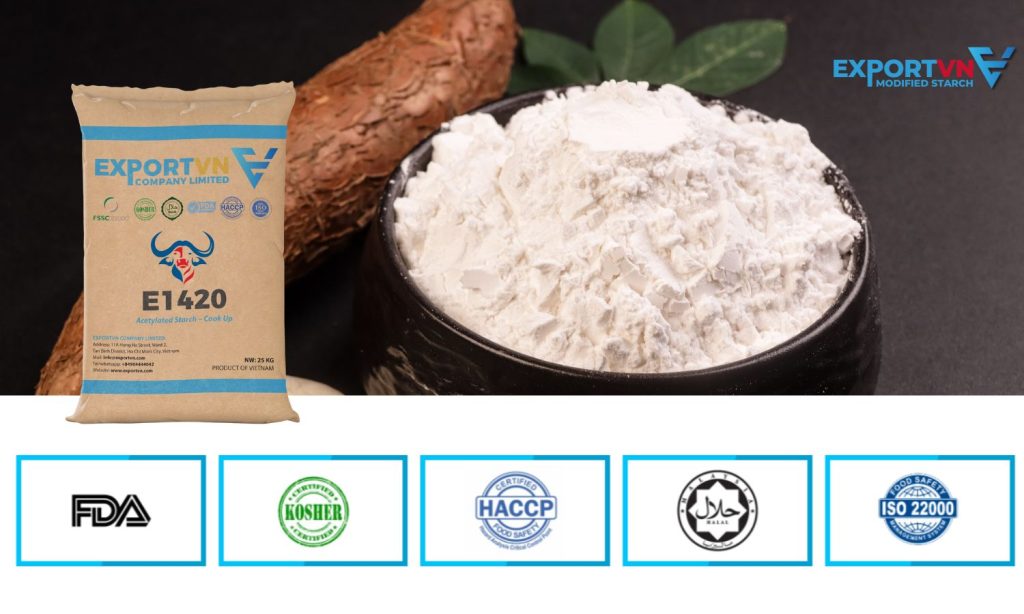
Why Source E1420 Modified Tapioca Starch from Vietnam?
Vietnam is one of the world’s leading tapioca starch suppliers, offering stable raw material supply and competitive pricing.
By working with EXPORTVN, customers benefit from:
- Consistent tapioca sourcing from Vietnam
- Strong production capacity
- Flexible packaging options
- Technical support for food applications
- Export experience to global markets
- International quality certifications
At EXPORTVN, we support customers in selecting the right starch grade based on process conditions, viscosity targets, and final product requirements.
If you are looking for a reliable E1420 supplier for noodles, sauces, dairy, or processed foods, our team is ready to help.
Contact EXPORTVN for E1420 Technical Support
Need support with dosage, application trials, or product recommendations?
- Email: sales1@exportvn.com
- WhatsApp: +84342121420
- Website: https://exportvn.com/us/
