


Common types of modified starch
Modified Tapioca Starch E1414: Why It’s Best for Canned Foods
Apr
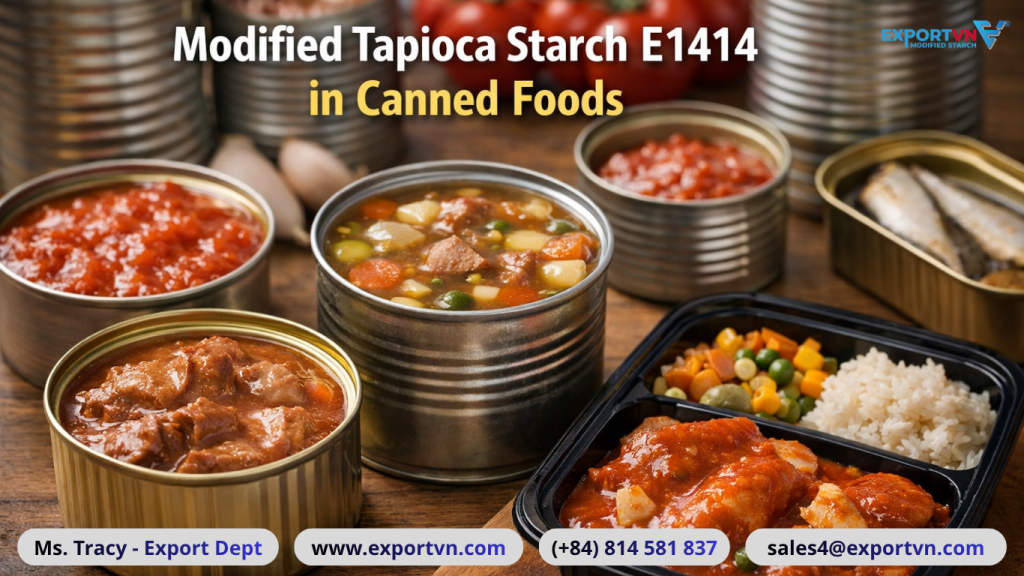
Modified Tapioca Starch E1414 is widely recognized as one of the most effective functional ingredients for canned food processing. In an industry where products must withstand high-temperature sterilization, pressure, and extended shelf life, choosing the right starch is critical.
Compared to native starch and other modified starches, E1414 modified starch for canned foods offers superior heat resistance, stability, and texture control. These properties make it the preferred solution for manufacturers aiming to maintain product quality under demanding industrial conditions.
In this article, we will explore in detail why Modified Tapioca Starch E1414 is the best choice for canned foods, including its structure, functionality, applications, and how to select the right supplier.
What Is Modified Tapioca Starch E1414?
Definition of E1414
Modified Tapioca Starch E1414, also known as Acetylated Distarch Phosphate, is a chemically modified starch derived from tapioca (cassava).
It is specifically engineered to improve:
- Thermal stability
- Resistance to processing stress
- Water-binding capacity
Unlike native starch, Modified Tapioca Starch E1414 maintains its functionality even under extreme industrial conditions, making it ideal for canned food applications.
How It Is Produced
In fact, the performance of E1414 modified tapioca starch is achieved through two key modification processes:
- Cross-linking: Reinforces the internal structure of starch granules, increasing resistance to heat and shear
- Acetylation: Enhances flexibility and reduces retrogradation
This dual modification enables Modified Tapioca Starch E1414 to:
- Withstand sterilization temperatures up to 121°C
- Perform under high shear mixing
- Remain stable in acidic environments
Key Chemical Properties
The unique functionality of E1414 modified starch for canned foods comes from its advanced chemical properties:
- High thermal stability
- Strong acid resistance
- Excellent shear stability
- Superior water retention
Therefore, these properties help ensure consistent viscosity, stable texture, and extended shelf life in finished products.
Why E1414 Is Ideal for Canned Foods?
Heat Resistance
During processing, canned food processing requires exposure to high temperatures during sterilization. Many starches break down under these conditions, leading to product instability.
Modified Tapioca Starch E1414 is designed to:
- Maintain viscosity during heating
- Prevent structural degradation
This makes it one of the best starches for canned food processing, especially for products requiring stable thickness.
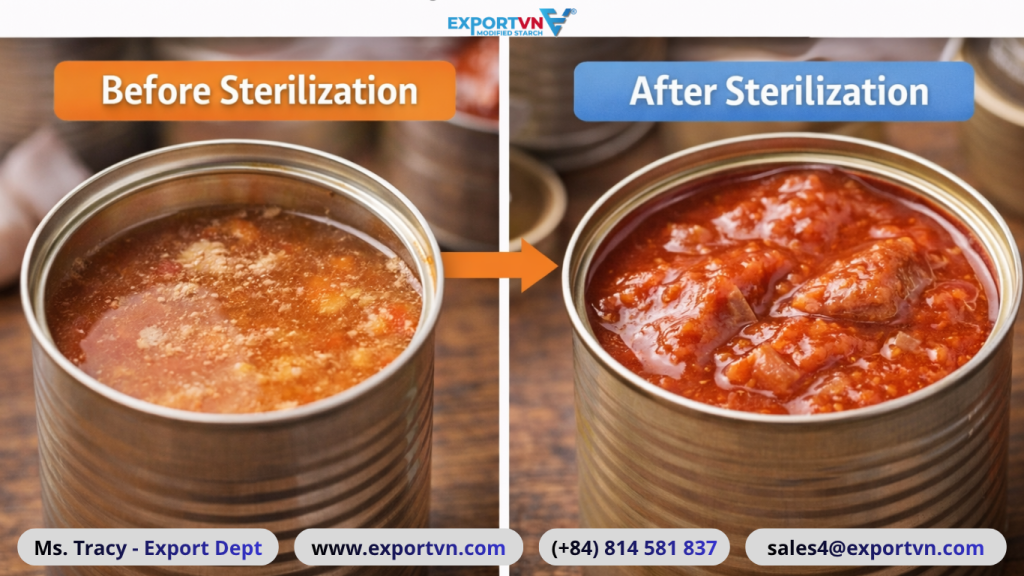
Stability Under Sterilization
During retort processing, food products are subjected to:
- High temperature
- Pressure
- Mechanical stress
E1414 modified starch for canned foods ensures:
- No phase separation
- Stable emulsions
- Uniform consistency after processing
As a result, this significantly reduces production defects and improves overall product reliability.
Texture Improvement
Texture is a key factor in consumer acceptance.
With Modified Tapioca Starch E1414, manufacturers can achieve:
- Smooth and uniform texture
- Improved mouthfeel
- Reduced water separation (syneresis)
As a result, products maintain their quality throughout their shelf life.
Applications of E1414 in Canned Food Products
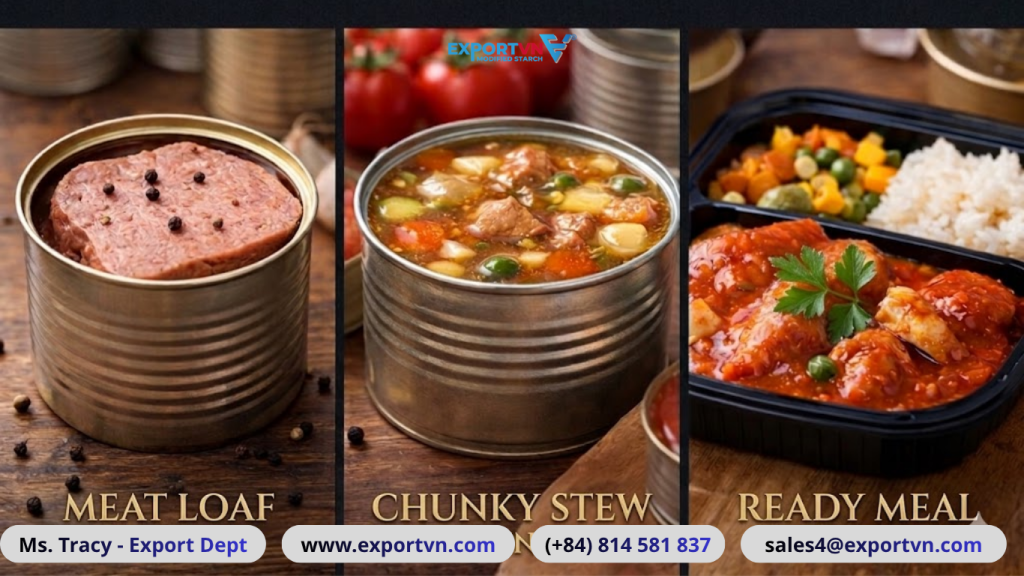
Canned Meat
For example, in canned meat applications, maintaining structure after sterilization is critical.
E1414 modified tapioca starch helps to:
- Improve water retention
- Enhance firmness
- Reduce cooking loss
Canned Soup & Sauces
Similarly, soups and sauces require stable viscosity over time.
E1414 modified starch:
- Maintains consistent thickness
- Prevents separation
- Performs well in acidic formulations
This makes it highly suitable for sauces and liquid-based canned foods.
Ready-to-Eat Meals
Furthermore, ready meals must remain stable during storage and reheating.
Using E1414 modified starch ensures:
- Stable texture after reheating
- No breakdown during storage
- Improved product consistency
E1414 vs Other Modified Starches
E1414 vs E1412
In contrast, E1412 provides basic stability but is less resistant to processing stress.
In comparison, Modified Tapioca Starch E1414 offers:
- Better heat resistance
- Improved texture performance
- Higher processing stability
E1414 vs E1422
However, E1422 performs well in freeze-thaw applications but may not be optimal for high-temperature processing.
For canned foods, E1414 modified starch delivers:
- Better stability during sterilization
- More consistent viscosity
When to Choose E1414
You should choose Modified Tapioca Starch E1414 when:
- Your product undergoes retort processing
- Long shelf life is required
- Texture consistency is critical
How to Choose a Reliable E1414 Supplier
Quality Standards
A professional supplier of E1414 modified starch for canned foods must comply with internationally recognized food safety and quality systems.
Key certifications to look for include:
- FSSC 22000 – Ensures a comprehensive food safety management system
- ISO 22000 – Guarantees standardized food safety processes
- HALAL Certification – Required for Muslim markets
- KOSHER Certification – Essential for specific global markets
However, certifications alone are not enough.
A reliable supplier must also demonstrate:
- Consistent batch-to-batch quality
- Stable viscosity and functional performance
- Clear technical documentation (TDS, COA)
👉 For canned food applications, even small variations in starch quality can lead to texture inconsistency, separation, or product failure after sterilization.
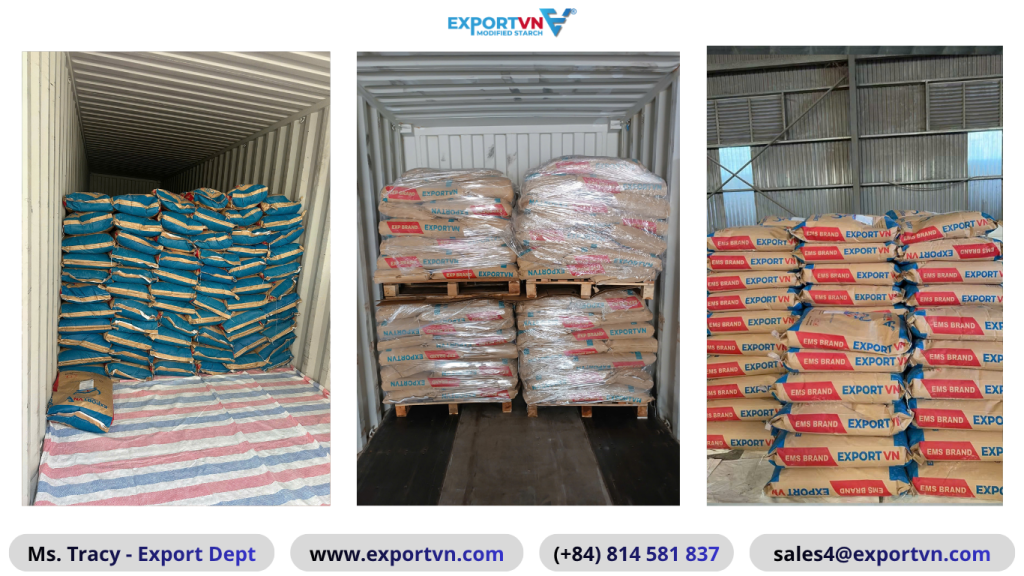
Packaging & Logistics for Modified Tapioca Starch E1414
For international buyers, logistics is not just an operational detail — it is a key risk factor.
A dependable supplier of Modified Tapioca Starch E1414 should offer:
- Moisture-resistant, multi-layer packaging to protect product integrity during long-distance shipping
- Flexible loading options, including 20ft and 40ft containers, optimized for cost efficiency
- Strong export experience with proper documentation and shipment handling
👉 Poor packaging or logistics can result in:
- Moisture absorption
- Reduced starch performance
- Financial loss due to damaged goods
This is especially critical for E1414 starch for canned foods, where functional stability is essential.
Let’s look at the production environment for starch-based products:
Pricing & MOQ Considerations
When evaluating suppliers of E1414 modified starch, pricing should always be considered alongside supply capability and service.
Key factors include:
- Transparent and competitive pricing (FOB, CIF depending on your import strategy)
- Clearly defined Minimum Order Quantity (MOQ)
For example:
👉 MOQ: 18 MT / 20ft container – optimized for export efficiency and cost control
- Ability to support both trial orders and long-term contracts
- Stable pricing policy to avoid fluctuations in long-term cooperation
👉 Choosing a supplier with strong production capacity ensures:
- Continuous supply
- No delays in production planning
- Better negotiation power for large-volume orders
Technical Support & Sampling
Beyond product supply, a strong partner should provide technical support tailored to your application.
A reliable E1414 modified starch supplier should offer:
- Free or low-cost samples for product testing
- Guidance on dosage and formulation
- Support in troubleshooting processing issues
👉 This is especially important for canned food manufacturers, where formulation must be optimized for:
- Shelf life performance
- Sterilization stability
- Texture consistency
Conclusion
Choosing the right starch is essential for achieving consistent quality in canned food production.
With its high heat resistance, excellent processing stability, and superior texture performance, Modified Tapioca Starch E1414 stands out as the best solution for canned food applications.
For manufacturers and importers, using E1414 modified starch for canned foods not only improves product quality but also reduces production risks and enhances long-term efficiency.
Contact for inquiries and business cooperation:
Ms. Tracy – Overseas Sales Executive
WhatsApp/Zalo: (+84) 814 581 837
Email: sales4@exportvn.com
Or visit our Contact page.

Pingback: Кто производит модифицированный крахмал Баффало?
Pingback: Amidon de tapioca modifié Buffalo : quelle entreprise le produit ?