


Common types of modified starch, Properties of starch
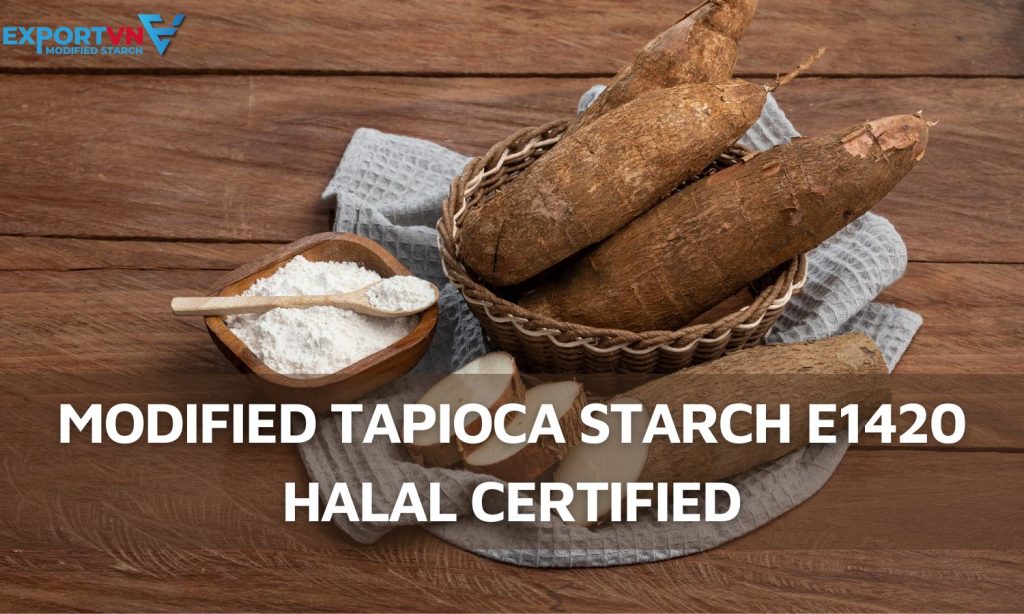
Modified Tapioca Starch E1420 Halal Certified
Apr
For food manufacturers serving Muslim consumers or exporting to halal-sensitive markets, modified tapioca starch E1420 halal certified is more than a functional ingredient — it is a market requirement. From noodles and sauces to meat products and frozen foods, halal-certified E1420 helps improve texture, process stability, and buyer confidence.
As a trusted Vietnamese supplier, EXPORTVN offers high-quality E1420 modified tapioca starch with reliable halal-compliant production for global food brands.
What Is E1420 Modified Tapioca Starch?
E1420 is acetylated starch, a modified starch made by introducing acetyl groups into native starch to improve its performance in food processing. When produced from tapioca, E1420 offers excellent texture, clean taste, and stable functionality.
Compared with native starch, E1420 provides:
- Better heat and shear resistance
- Improved water retention
- Lower retrogradation tendency
- More stable viscosity
- Better freeze–thaw performance
Because tapioca starch has a neutral taste and smooth mouthfeel, it is widely preferred in food applications that require premium eating quality.
Manufacturers often compare native tapioca starch and modified starch depending on the product’s process conditions and shelf-life needs.
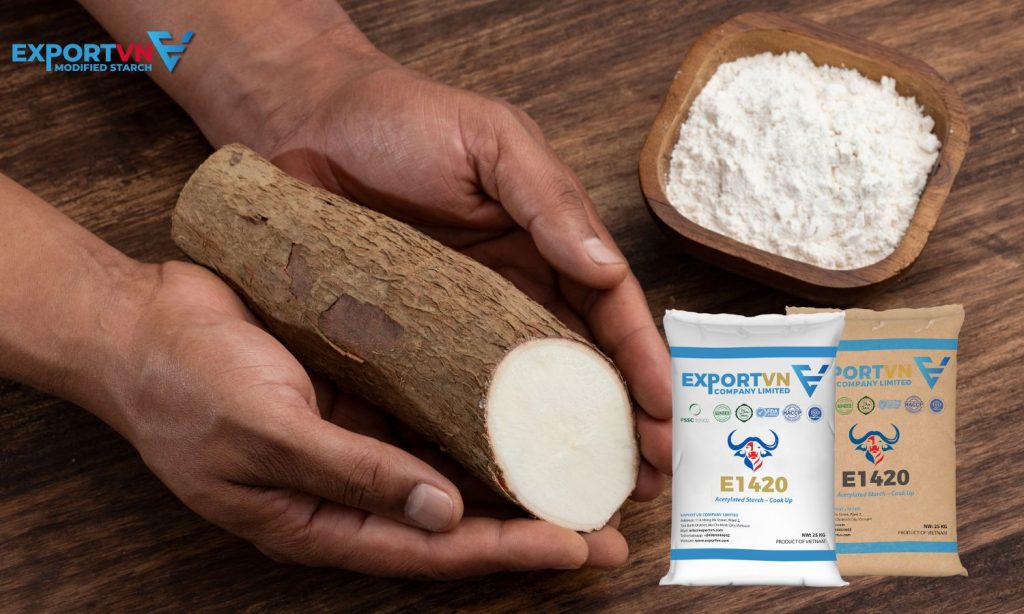
Is E1420 Modified Tapioca Starch Halal?
In general, E1420 made from tapioca is plant-based and does not contain pork, gelatin, or animal-derived ingredients. This makes it suitable for halal applications in principle.
However, halal suitability depends on more than raw material origin. Not all modified starch is automatically halal-compliant.
Food manufacturers should also consider:
- The source of processing aids and chemicals
- Factory hygiene and contamination control
- Shared production lines
- Storage and logistics practices
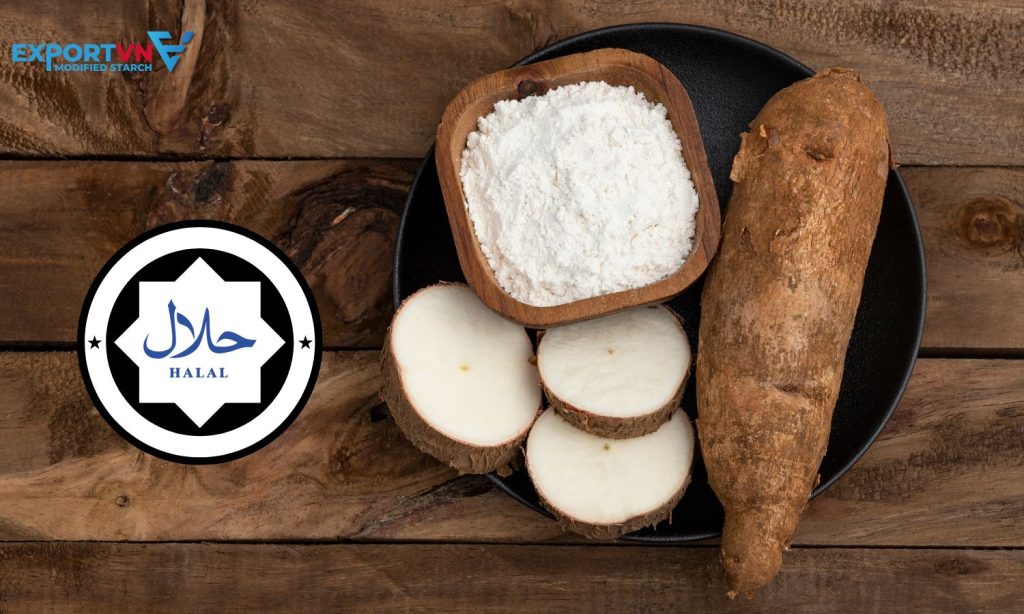
That is why halal certification is essential. It confirms that the ingredient is produced according to Islamic dietary requirements and accepted manufacturing practices.
What Does Halal Certification Mean for E1420?
Halal certification gives food brands confidence that E1420 meets both religious and quality standards.
Raw Material Compliance
Halal-certified E1420 starts with clean tapioca raw materials and approved food-grade chemicals.
Key points include:
- No animal-derived ingredients
- No alcohol-based prohibited additives
- Safe and traceable raw material sourcing
Halal Manufacturing Process
Certification also covers how the starch is produced.
This includes:
- Clean production lines
- Controlled process flow
- No cross-contamination with non-halal materials
- Batch traceability
Storage and Supply Chain Control
Halal compliance continues after production.
Important factors:
- Separate storage if needed
- Clean packaging materials
- Safe transport and warehousing
Recognized Halal Standards
A reliable halal starch supplier should be able to provide certificates recognized in key markets, such as:
- JAKIM (Malaysia)
- BPJPH / MUI (Indonesia)
- GCC market requirements
- IFANCA and other accepted bodies
Why Halal Certified E1420 Matters in Global Markets
Halal certification is increasingly important for food exports, even beyond Muslim-majority countries.
It helps manufacturers:
- Access Middle East markets faster
- Meet import requirements in Indonesia and Malaysia
- Improve acceptance in Africa and South Asia
- Build consumer trust in clean-label products
- Simplify product registration and audits
For B2B buyers, halal certification reduces supply chain risk and supports smoother approvals.
This is especially valuable for exporters, private label brands, and contract manufacturers.
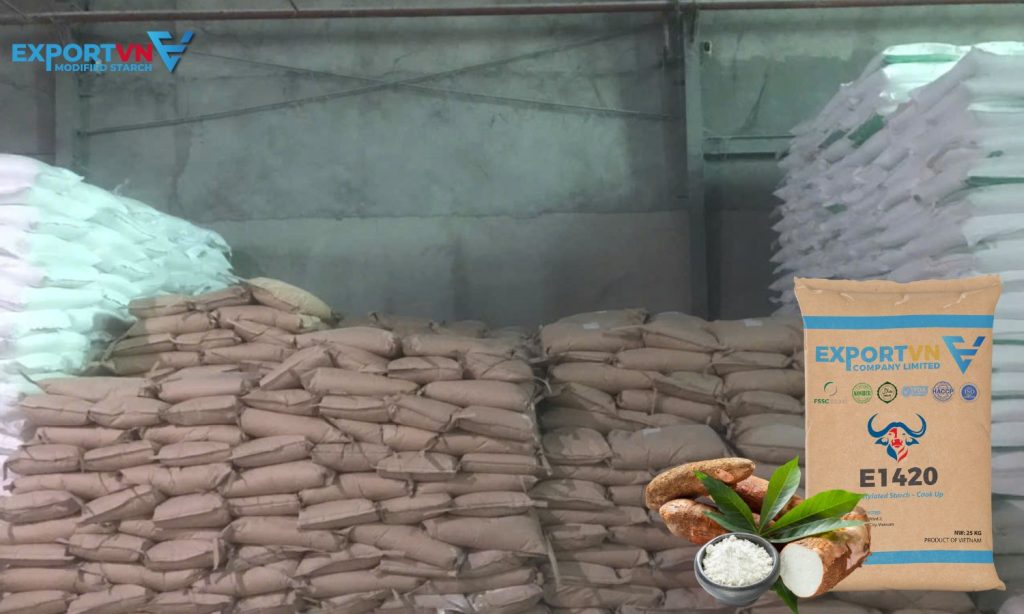
Main Applications of Halal Certified E1420
Noodles and Instant Noodles
In noodle applications, halal-certified E1420 helps:
- Improve elasticity and chewiness
- Reduce breakage during cooking
- Improve noodle surface smoothness
- Maintain texture during storage
Sauces, Soups, and Gravies
In gravies, ketchup, and cooking sauces, E1420 supports:
- Stable viscosity
- Smooth mouthfeel
- Better suspension of spices
- Reduced water separation
Dairy and Desserts
E1420 helps improve:
- Creaminess in dairy desserts
- Reduced whey separation in yogurt
- Better texture in fillings and puddings
Processed Meat Products
For sausages, meatballs, and canned meat, E1420 helps:
- Improve water binding
- Reduce cooking loss
- Improve sliceability
- Increase processing yield
Frozen Foods and Coating Systems
In fried chicken coating and seafood coating, E1420 can:
- Improve crispness
- Reduce oil uptake
- Improve coating adhesion
- Support freeze–thaw stability
Why Choose EXPORTVN for Halal E1420 Supply?
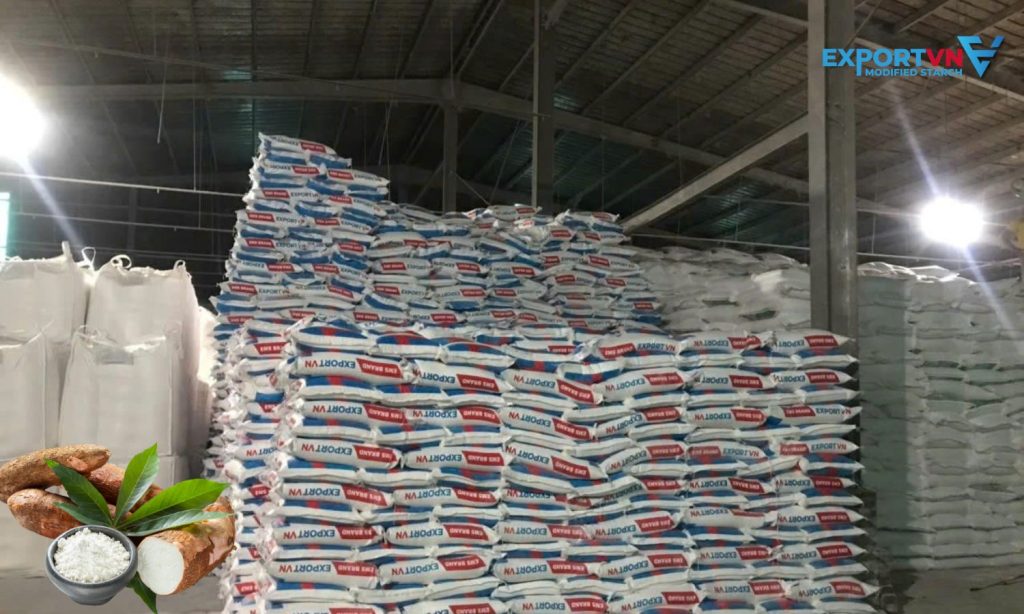
As a reliable Vietnamese modified starch supplier, EXPORTVN supports food manufacturers with consistent halal-compliant starch solutions.
Why customers choose EXPORTVN:
- Stable tapioca raw material supply from Vietnam
- Halal-certified production system
- International food safety standards
- Flexible packaging for export
- Strong technical support by application
- Experience serving customers worldwide
Whether you need E1420 for noodles, sauces, dairy, or processed foods, our team can recommend the right grade based on your process and product goals.
Contact EXPORTVN for Modified Tapioca Starch E1420 Halal Certified Support
Looking for halal-certified E1420 samples, technical advice, or a quotation?
- Email: sales1@exportvn.com
- WhatsApp: +84342121420
- Website: https://exportvn.com/us/
