


Market Update
Tapioca Starch Market 2026: Global Demand, Price Trends and Supply from Vietnam
Mar
The tapioca starch market 2026 is expected to grow significantly as industries around the world increase their demand for natural and functional ingredients. Tapioca starch, extracted from cassava roots, has become a key component in food production, industrial manufacturing, and modern clean-label formulations.
Over the past decade, global manufacturers have shifted toward plant-based ingredients that offer both functionality and sustainability. Consequently, tapioca starch has become one of the most widely used starches due to its neutral flavor, high viscosity, and excellent stability in various applications.
Furthermore, technological innovation in starch modification has created advanced solutions that improve product texture and shelf life. Many food companies now rely on modified tapioca starch to achieve better consistency in processed foods.
As global demand continues to rise, the role of major producing countries—particularly Vietnam—becomes increasingly important in ensuring stable supply for the tapioca starch market 2026.
Global Overview of the Tapioca Starch Market
The global starch industry has experienced steady expansion in recent years. However, the tapioca starch market 2026 is growing at a particularly strong pace due to increasing demand across multiple industries.
Tapioca starch offers several advantages compared with other starch sources such as corn or potato starch. It is naturally gluten-free, highly digestible, and suitable for many food formulations. As a result, it has become an essential ingredient in modern food manufacturing.
Additionally, tapioca starch performs well under various processing conditions. It maintains viscosity at high temperatures and works effectively in frozen or refrigerated products. These properties make it valuable in both traditional and innovative food applications.
Because of these diverse applications, the tapioca starch market 2026 continues to attract attention from global buyers and manufacturers.
Key Industries Driving the Tapioca Starch Market 2026
Several industries are responsible for the rapid expansion of the global tapioca starch market.
Food and Beverage Industry
The food and beverage sector represents the largest consumer of tapioca starch worldwide. Manufacturers use starch to improve texture, stability, and appearance in a wide range of products.
Common food applications include:
- Soups and sauces
- Bakery products such as bread and cakes
- Snack foods like cookies
- Condiments such as ketchup and gravies
- Processed meat products
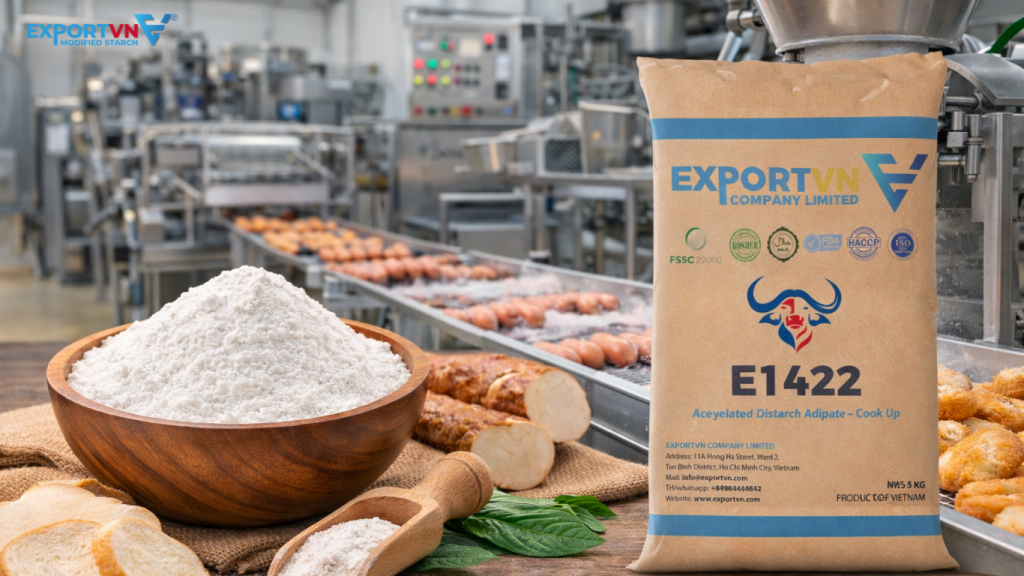
In particular, tapioca starch is widely used in meat processing. It improves water retention and provides better binding between ingredients. For example, many frozen food manufacturers use starch when producing meatballs or sausages to maintain product structure and moisture.
Furthermore, seafood processing industries use starch to improve the texture of products such as surimi and dumpling fillings like shrimp dumplings.
Because of these applications, tapioca starch has become a critical ingredient across the global food industry.
Convenience and Processed Foods
Modern consumers increasingly prefer convenient and ready-to-eat foods. Consequently, food manufacturers require ingredients that perform well under industrial processing conditions.
Modified starch solutions play a crucial role in this sector. Companies often source high-quality ingredients from reliable suppliers such as modified tapioca starch manufacturers to ensure consistent quality and stable supply.
These starches are engineered to withstand heat, shear, freezing, and other processing conditions.
Additionally, specialized food ingredient producers such as cassava ingredient suppliers provide a wide range of cassava-based ingredients used in modern food manufacturing.
Industrial Applications
In addition to food production, tapioca starch is widely used in industrial manufacturing.
Industries using tapioca starch include:
- Paper production
- Textile manufacturing
- Adhesive production
- Biodegradable packaging materials
As environmental concerns grow worldwide, starch-based materials are increasingly replacing petroleum-based chemicals. Therefore, industrial demand is expected to continue driving the tapioca starch market.

Clean Label Trend Boosting Tapioca Starch Demand
Another important factor supporting the growth of the tapioca starch market 2026 is the global clean label movement.
Consumers are becoming more conscious about food ingredients. As a result, many brands are reformulating their products to remove artificial additives and replace them with natural alternatives.
Tapioca starch offers several benefits in clean-label formulations:
- Natural origin
- Neutral taste
- Gluten-free properties
- Excellent thickening capability
Because of these characteristics, tapioca starch has become a preferred ingredient for manufacturers seeking simple and transparent ingredient lists.
Furthermore, modern ingredient producers provide advanced solutions such as modified food starch ingredients that maintain product quality while meeting clean-label expectations.
Price Trends in the Tapioca Starch Market
The tapioca starch market has experienced strong fluctuations over the past two years, especially in Vietnam, one of the world’s largest exporters of cassava and cassava starch. From 2024 to 2026, the market moved from a period of price decline to a new phase of recovery due to raw material shortages, rising logistics costs, and tighter supply conditions. Understanding these price movements is crucial for global buyers and manufacturers that rely on Vietnam as a major tapioca starch supplier.
Tapioca Starch Price Trends from 2024 to Early 2026
During the period 2024–2025, the tapioca starch market in Vietnam experienced a significant decline in export prices despite strong export volumes.
According to Vietnam’s General Department of Customs, in 2024 Vietnam exported about 2.62 million tons of cassava and cassava products worth approximately USD 1.15 billion. The average export price reached around USD 440.4 per ton, slightly lower than the previous year due to weaker demand in major markets.
China remained the dominant export market, accounting for over 92% of Vietnam’s cassava export volume, showing how strongly the industry depends on Chinese demand.
In 2025, export prices declined more sharply. Data from the Ministry of Agriculture and Environment shows that in the first half of 2025, Vietnam exported about 2.3 million tons of cassava and cassava products worth USD 711.5 million, while the average export price fell to approximately USD 304.1 per ton, representing a 33.1% decrease compared with the same period in 2024.
Similarly, in April 2025, the average export price was recorded at USD 288.4 per ton, which was 34.5% lower than April 2024, showing a clear downward trend in global cassava prices.
Despite lower prices, export volumes continued to rise. By the end of 2025, Vietnam exported more than 3.9 million tons of cassava and cassava products worth about USD 1.26 billion, maintaining its position as the world’s third-largest cassava exporter.
Entering 2026, the market situation has begun to shift. Raw cassava supply has become tighter in several growing regions, which has started pushing domestic cassava and starch prices upward after the significant drop seen in 2025.
Key Factors Driving Tapioca Starch Price Increases
Several key factors explain why tapioca starch prices are rising again in the current market.
Raw Cassava Supply Shortage
One of the main reasons for the current price increase is the limited supply of raw cassava roots.
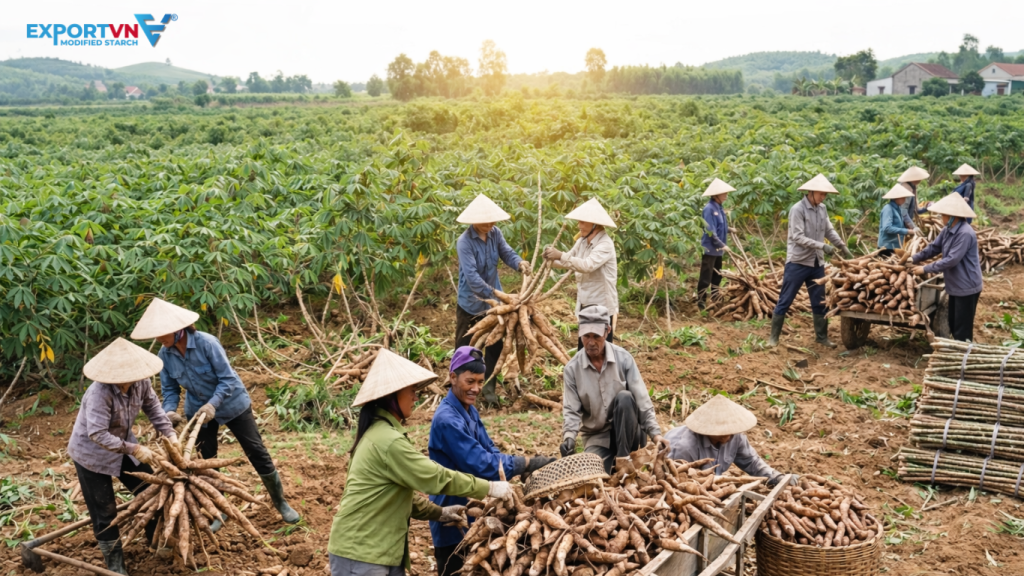
Vietnam currently cultivates cassava on about 517,800 hectares with annual production of roughly 10.5 million tons of fresh cassava.
However, cassava prices fell sharply during 2024–2025, discouraging farmers from expanding cultivation. In some regions, cassava prices dropped to the lowest level in nearly ten years, leaving harvested cassava without buyers in certain periods.
Because of these low prices, many farmers reduced cassava planting areas or switched to other crops, which has resulted in lower raw material supply for starch factories in the following season.
As a result, several starch processing plants in Vietnam have been forced to operate at reduced capacity when raw cassava becomes scarce near the end of the harvest season.
Geopolitical Impact: The Iran-US Conflict and Logistics
The escalating conflict between the US and Iran in early 2026 has sent shockwaves through the energy market.
Fuel Prices: As of March 2026, Brent Crude has breached the $110/barrel mark due to threats in the Strait of Hormuz. In Vietnam, the price of RON 95 petrol has surged to nearly 30,000 VND/liter, while Diesel has hit 30,710 VND/liter.
Another important factor affecting tapioca starch prices is the increase in logistics and transportation costs.
Domestic transportation of cassava roots depends heavily on trucking from farms to factories. Rising global fuel prices — influenced by geopolitical tensions and instability in energy markets — have increased the cost of:
- Transporting cassava roots to processing plants
- Domestic logistics to export ports
- International shipping and container freight
These higher costs directly increase the production cost of tapioca starch, contributing to higher selling prices in the global market.
Weather and Agricultural Challenges
Weather conditions also influence cassava production and starch yields.
Vietnam produces more than 18 million tons of fresh cassava annually from about 500,000 hectares of farmland, but production can fluctuate depending on rainfall, drought, and crop diseases affecting cassava fields.
When cassava yields decline or harvests are delayed, factories face raw material shortages, which can quickly tighten supply in the starch market and push prices upward.
Expert Outlook: Why Tapioca Starch Prices May Remain High in 2026
From an industry perspective, tapioca starch prices in 2026 are expected to remain elevated due to tightening raw cassava supply, strong export demand, and rising production costs.
Tight Supply and Low Inventories
One of the main reasons for rising prices is the limited supply of raw cassava roots. Vietnam cultivates about 517,800 hectares of cassava with annual production of around 10–10.5 million tons, but supply has become unstable due to reduced planting areas and fluctuating farm-gate prices in previous seasons.
Because cassava prices dropped sharply in 2024–2025, many farmers reduced planting areas or switched to other crops. As a result, several starch factories in Vietnam have faced raw material shortages near the end of the harvest season, which limits production capacity.
Regional Price Pressure from Thailand
Vietnam’s tapioca starch prices are also influenced by regional pricing in Thailand, the world’s largest exporter of cassava starch. In early 2026, Thai export quotations were reported at around USD 480–500 per ton FOB Bangkok, which sets a benchmark for Southeast Asian suppliers.
Vietnamese exporters typically maintain similar price levels to remain competitive, meaning export prices could approach or exceed USD 500 per ton during strong demand periods in 2026.
Higher Energy and Logistics Costs
Another factor supporting higher prices is the increase in fuel and transportation costs. Rising global oil prices have pushed up the cost of trucking cassava roots to factories and transporting finished starch to export ports.
Energy market analysts warn that geopolitical tensions in the Middle East could keep oil prices high, which increases logistics costs across agricultural supply chains.
Market Outlook
Overall, the combination of tight cassava supply, regional price alignment with Thailand, and higher logistics costs suggests that the tapioca starch market will likely remain in a high-price environment throughout 2026, especially if demand from China continues to stay strong.
Vietnam’s Role in the Global Tapioca Starch Supply
Vietnam has become one of the most important exporters in the tapioca starch market 2026.
The country benefits from favorable agricultural conditions and an expanding cassava farming sector. Large cultivation areas allow manufacturers to maintain steady raw material supply.
Moreover, Vietnam has invested heavily in modern starch processing technology. Many factories now produce both native and modified starch products that meet international quality standards.
Several factors contribute to Vietnam’s growing reputation as a reliable supplier:
- Competitive production costs
- Modern processing facilities
- Strong export logistics networks
- Consistent product quality
As a result, global buyers increasingly choose Vietnamese suppliers when sourcing starch products.
Companies looking for long-term partnerships often work with manufacturers such as Vietnam tapioca starch suppliers and ingredient distributors like Vietnam cassava ingredient exporters to ensure stable supply.
Opportunities for Global Buyers in 2026
The tapioca starch market 2026 offers significant opportunities for international buyers and food manufacturers.
Key opportunities include:
- Expanding food processing demand
- Increasing use of starch in biodegradable materials
- Growth in gluten-free and clean-label foods
- Competitive sourcing from Southeast Asia
By establishing partnerships with experienced suppliers, buyers can ensure consistent product quality and stable pricing.
Future Outlook of the Tapioca Starch Market
Looking ahead, the tapioca starch market 2026 is expected to continue expanding across both food and industrial sectors.
Global trends supporting this growth include:
- Rising demand for plant-based ingredients
- Increased focus on sustainability
- Growth of processed and convenience foods
- Expanding industrial applications
In addition, ongoing research in starch modification will further enhance the functionality of tapioca starch in specialized products.
Conclusion
The tapioca starch market 2026 is entering a period of strong growth driven by global demand for natural, functional, and sustainable ingredients.
Food manufacturers rely on tapioca starch for its excellent thickening and stabilizing properties. Meanwhile, industrial sectors continue to expand their use of starch-based materials in paper, textiles, and biodegradable packaging.
Vietnam plays a vital role in supplying high-quality starch to global markets thanks to its strong cassava production and modern processing facilities.
As demand continues to increase, businesses that establish reliable sourcing partnerships will be well positioned to benefit from the expanding tapioca starch industry.
Company Introduction Video – Get to Know Us Better
Contact for inquiries and business cooperation:
Ms. Tracy – Overseas Sales Executive
WhatsApp/Zalo: (+84) 814 581 837
Email: sales4@exportvn.com
Or visit our Contact page.
