


Common types of modified starch
Modified Tapioca Starch: Common Types and Food Applications
Mar
Modified tapioca starch is widely used in the food industry thanks to its excellent thickening ability, processing stability, and smooth texture. This article introduces the common types of modified tapioca starch, their functional properties, and key food applications, while highlighting Vietnam as a reliable supplier for global food manufacturers and importers looking for high-quality starch ingredients.
For companies seeking a trusted supplier, Vietnam has become an important sourcing destination for modified cassava starch, especially through experienced exporters such as Vietnam tapioca starch supplier and professional manufacturers in the Vietnamese starch industry.
Introduction to Modified Tapioca Starch
What is Modified Tapioca Starch?
Modified Tapioca Starch is a functional ingredient derived from cassava roots that has been physically, chemically, or enzymatically treated to improve its performance in food processing.
Native starch already has useful properties. However, in demanding industrial processing conditions such as heat, shear, or acidity, it may lose stability. For this reason, many manufacturers use modified starch solutions.
You can learn more about the concept of cassava starch products and how it improves food processing performance.
Compared with Native Tapioca Starch, modified starch offers improved stability, texture, and processing tolerance.
A detailed overview of the advantages of tapioca starch in food production can also be found in tapioca starch benefits for food processing.
Why the Food Industry Uses Modified Tapioca Starch
Modern food manufacturing requires ingredients that remain stable during processing, transportation, and storage.
Compared with traditional starches, Modified Tapioca Starch provides:
- Excellent thickening performance
- Better heat resistance
- Improved freeze–thaw stability
- Enhanced mouthfeel and texture
- Gluten-free ingredient for clean label formulations
Because of these advantages, many global food manufacturers are switching to tapioca-based food thickeners for modern food production.
Functional Properties of Modified Tapioca Starch
Excellent Thickening Ability
One of the main functions of Modified Tapioca Starch is its superior thickening capability.
When heated with water, starch granules swell and form a viscous gel structure. This makes the starch ideal for food products requiring stable viscosity.
For example, it is widely used in sauce applications such as:
A detailed formulation guide can also be found in how to use modified tapioca starch E1422 in sauces.
High Heat and Processing Stability
Industrial food production often involves high temperature, mechanical mixing, and acidic environments.
Certain modified starch types such as E1414 acetylated distarch phosphate are specifically designed to maintain viscosity during processing.
This is why modified tapioca starch is commonly used in:
- Canned food production
- Processed meat products such as meatballs and sausages
- Various meat product applications
Modified starch improves water retention, texture, and binding in processed meats.
Freeze–Thaw Stability
Frozen foods require ingredients that can maintain structure after freezing and thawing.
Modified starches such as E1422 acetylated distarch adipate offer excellent freeze–thaw stability and help prevent water separation.
These properties make them ideal for applications such as:
Freeze–thaw resistant starches help maintain product quality during cold storage and transportation.
Neutral Flavor and Gluten-Free Ingredient
Another advantage of Modified Tapioca Starch is its neutral taste and clean appearance.
Because it does not affect the flavor of foods, it can be used in a wide variety of formulations.
Additionally, cassava starch is naturally gluten-free, which makes it suitable for gluten-free food production.
More details about gluten-free Modified Tapioca Starch E1422 can help manufacturers develop gluten-free formulations.
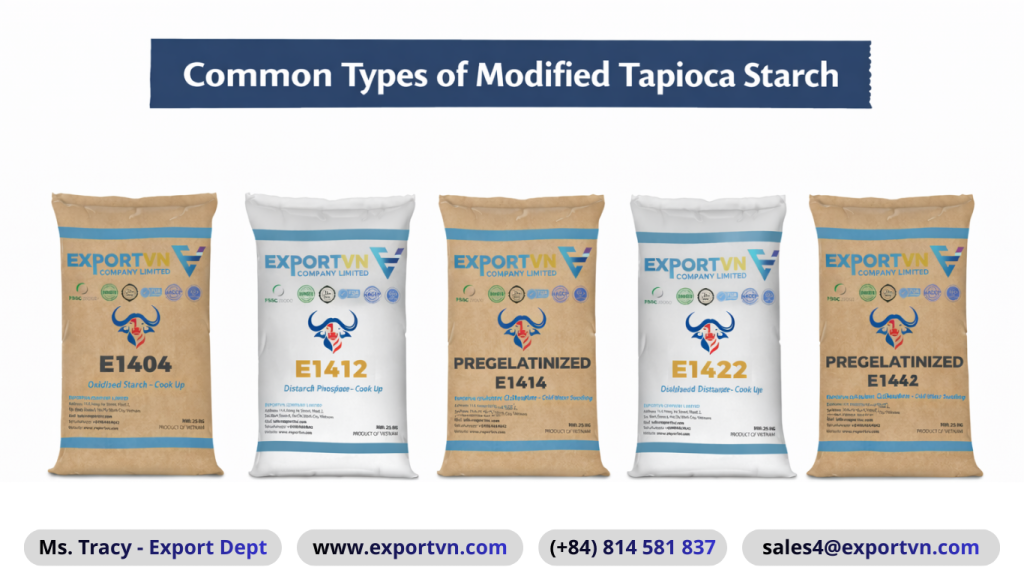
Common Types of Modified Tapioca Starch
Pregelatinized Tapioca Starch
Pregelatinized tapioca starch is starch that has been pre-cooked and dried so that it can thicken instantly in cold water.
A typical product example is Alpha Pregelatinized Starch.
This type of starch is widely used in:
Instant food manufacturers often use pregelatinized starch to shorten processing time and simplify production.
In commercial food production, similar ingredients can also be found in pregelatinized modified starch products used for instant food processing.
Cross-Linked Tapioca Starch
Cross-linked starch improves resistance to high temperature, mechanical mixing, and acidic conditions.
Typical examples include E1412 distarch phosphate.
These starches are commonly used in sauce processing and condiment production such as:
Cross-linked starch improves viscosity stability and prevents breakdown during processing.
Acetylated Tapioca Starch
Acetylated starch improves texture, freeze–thaw stability, and mouthfeel in food formulations.
A typical example is E1422 acetylated distarch adipate.
This starch is widely used in dairy and frozen desserts, including:
Acetylated starch helps create smooth and creamy textures in dairy products.
Oxidized Tapioca Starch
Oxidized starch provides lower viscosity and excellent film-forming properties.
A common example is E1404 oxidized starch.
This starch is widely used in noodle processing and coating systems, including:
These applications help improve product texture and processing efficiency.
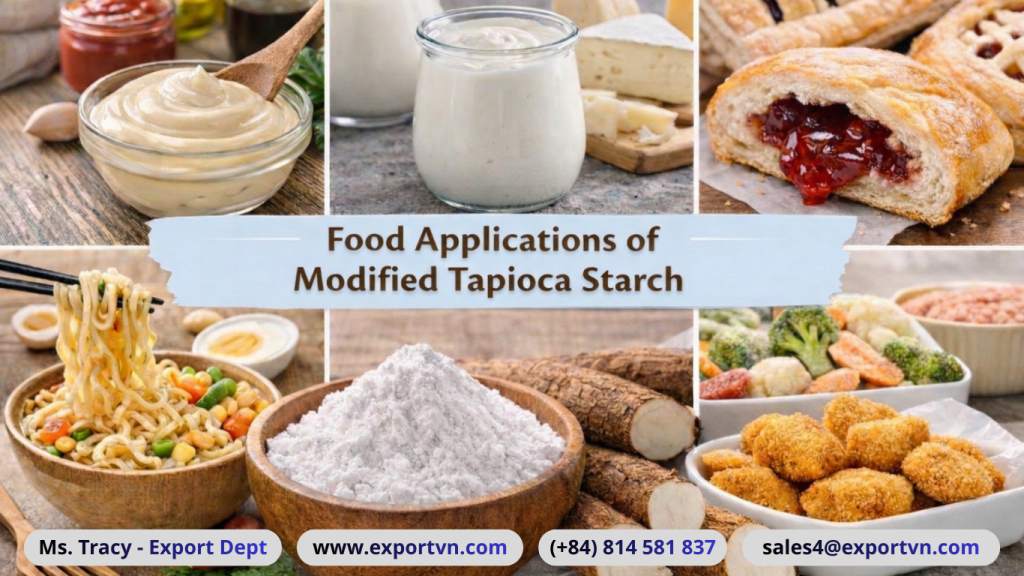
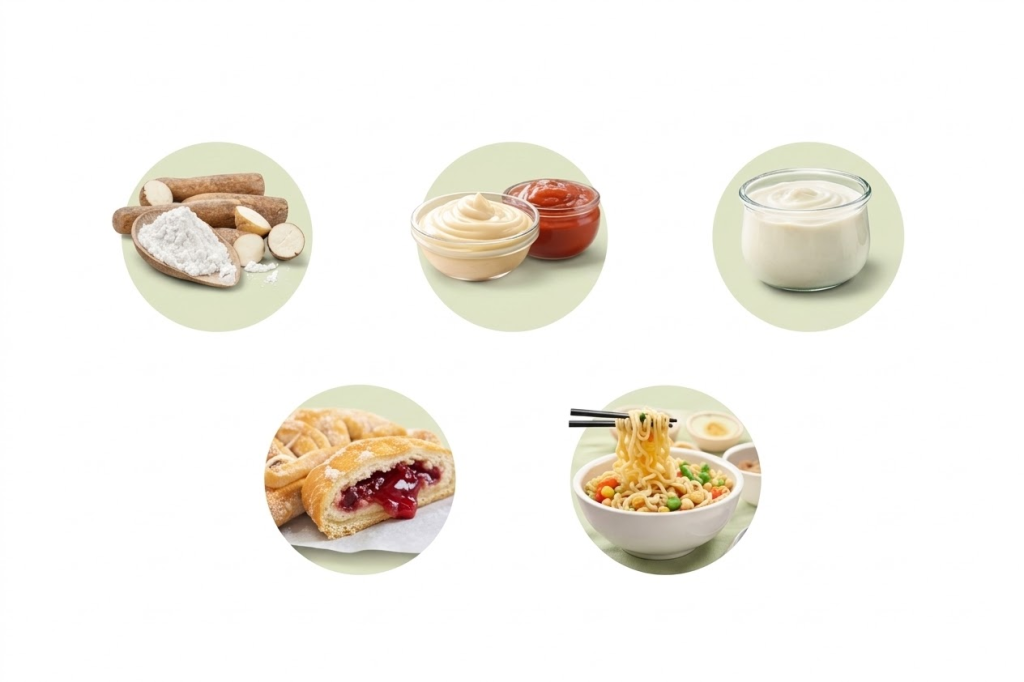
Food Applications of Modified Tapioca Starch
Sauces and Dressings
One of the most common uses of modified tapioca starch is in sauces and dressings. Food manufacturers rely on this ingredient to create stable viscosity, smooth texture, and consistent product quality.
During sauce production, ingredients must remain stable under high heat, mixing, and acidic conditions. This is where modified starch becomes extremely valuable.
For example, E1422 acetylated distarch adipate is widely used as a thickener and stabilizer in many sauce formulations.
Typical sauce applications include:
These products require starch that maintains viscosity without breaking down during heating or storage.
A practical guide on formulation can also be found in how to use modified tapioca starch E1422 in sauces.
Dairy Products
Another important application of modified tapioca starch is in dairy products. In dairy processing, starch helps improve texture, mouthfeel, and product stability.
In many dairy formulations, starch functions as a stabilizer that prevents separation and improves creaminess.
Typical dairy applications include:
- Thickener for stirred yogurt
- Modified starch for cheese production
- Cream desserts and pudding products
Many manufacturers prefer tapioca-based starch because it provides a clean flavor and smooth texture.
High-performance dairy stabilizers such as E1414 acetylated distarch phosphate are commonly used to ensure consistent product quality.
Bakery Fillings
Bakery products often require fillings that remain stable during baking and storage.
For example, fruit fillings, cream fillings, and pie fillings must maintain a thick, glossy texture without separating or becoming watery.
In these applications, modified tapioca starch works as an effective thickener and moisture stabilizer.
Typical bakery applications include:
- Fruit pie fillings
- Cream fillings
- Custard fillings
- Pastry fillings
Pregelatinized starch such as Alpha Pregelatinized Starch can also be used in bakery systems that require instant thickening.
These starches provide excellent stability while maintaining smooth texture and clean appearance.
Instant and Convenience Foods
The global demand for instant foods and convenience meals has grown significantly in recent years. These products require ingredients that work quickly and maintain consistent quality.
Modified tapioca starch is widely used in this segment because it offers instant thickening and strong process stability.
Common applications include:
Instant food manufacturers often prefer pregelatinized tapioca starch because it dissolves quickly and creates viscosity without long cooking times.
Similar ingredients are also widely used in pregelatinized modified starch products for convenience food production.
Frozen and Processed Foods
Frozen food products require ingredients that remain stable during freezing and thawing cycles.
Without proper stabilizers, food products can suffer from water separation, texture loss, or structural breakdown.
This is why many frozen food manufacturers rely on modified tapioca starch with strong freeze–thaw stability.
Typical frozen food applications include:
- Frozen dumplings
- Frozen processed foods
- Ready-to-eat meals
Modified starch helps improve texture, moisture retention, and product stability throughout the supply chain.
Vietnam as a Reliable Supplier of Modified Tapioca Starch
Advantages of Vietnamese Tapioca Starch
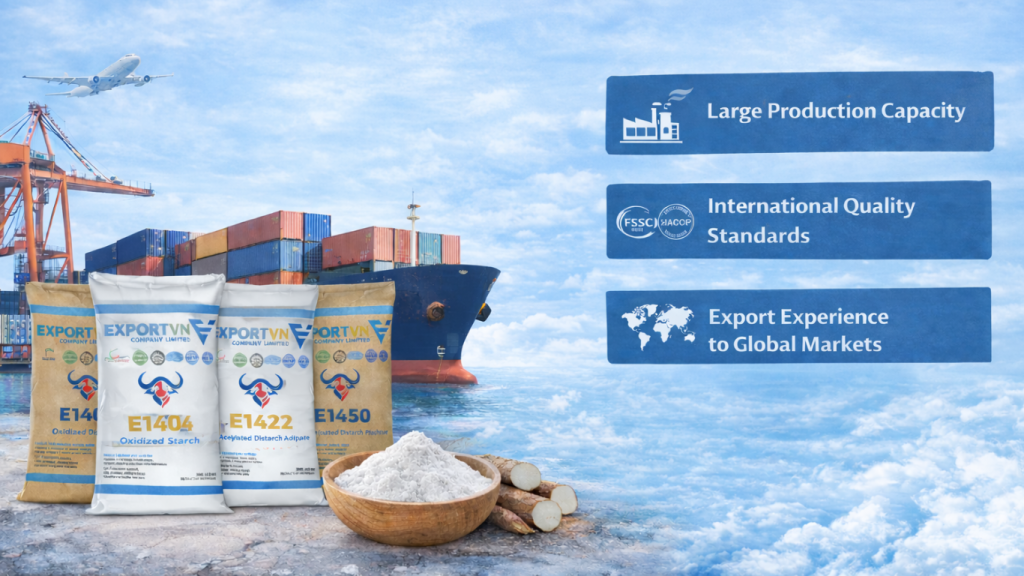
Vietnam is currently one of the world’s largest producers and exporters of tapioca starch. Thanks to its favorable climate and large cassava cultivation areas, the country has become a major supplier of modified tapioca starch for global markets.
Several advantages make Vietnam an attractive sourcing destination:
- Abundant cassava raw materials
- Competitive production costs
- Modern starch processing factories
- Strong export logistics infrastructure
Many international buyers source from experienced exporters such as Vietnam tapioca starch supplier.
Vietnamese starch products are widely used in food manufacturing across Asia, Europe, and the Middle East.
More details about the Vietnamese starch industry can be found in Vietnam tapioca starch overview.
Quality Standards and Certifications
International food manufacturers require ingredients that meet strict safety and quality standards.
Reputable Vietnamese producers of modified tapioca starch often comply with international certifications such as:
- ISO 22000
- HACCP
- Halal certification
- Kosher certification
- FSSC 22000
These certifications ensure that starch products are suitable for global food production.
Suppliers that follow international standards can provide consistent product quality and traceability for export markets.
Choosing a Trusted Supplier
When importing modified tapioca starch, buyers should carefully evaluate suppliers based on several important factors.
A reliable supplier should offer:
- Stable production capacity
- Consistent product quality
- International certifications
- Professional export experience
- Flexible logistics solutions
Working with experienced exporters such as tapioca starch supplier from Vietnam can help buyers reduce risks and ensure stable supply.
Professional starch exporters often provide a wide range of modified starch products tailored to different food applications.
Conclusion
Modified tapioca starch plays a crucial role in modern food manufacturing. Thanks to its excellent thickening ability, processing stability, and neutral flavor, it has become an essential ingredient in many food products.
From sauces and dairy products to instant foods and frozen meals, different types of modified starch help manufacturers improve product quality and processing efficiency.
As global demand continues to grow, Vietnam is becoming an increasingly important supplier of modified tapioca starch for international food manufacturers.
By working with reliable suppliers, buyers can secure high-quality starch ingredients that support consistent food production and long-term business growth.
Our company’s products: Modified Tapioca Starch E1440 Hydroxypropyl starch
Contact for inquiries and business cooperation:
Ms. Tracy – Overseas Sales Executive
WhatsApp/Zalo: (+84) 814 581 837
Email: sales4@exportvn.com
Or visit our Contact page.
