


Properties of starch
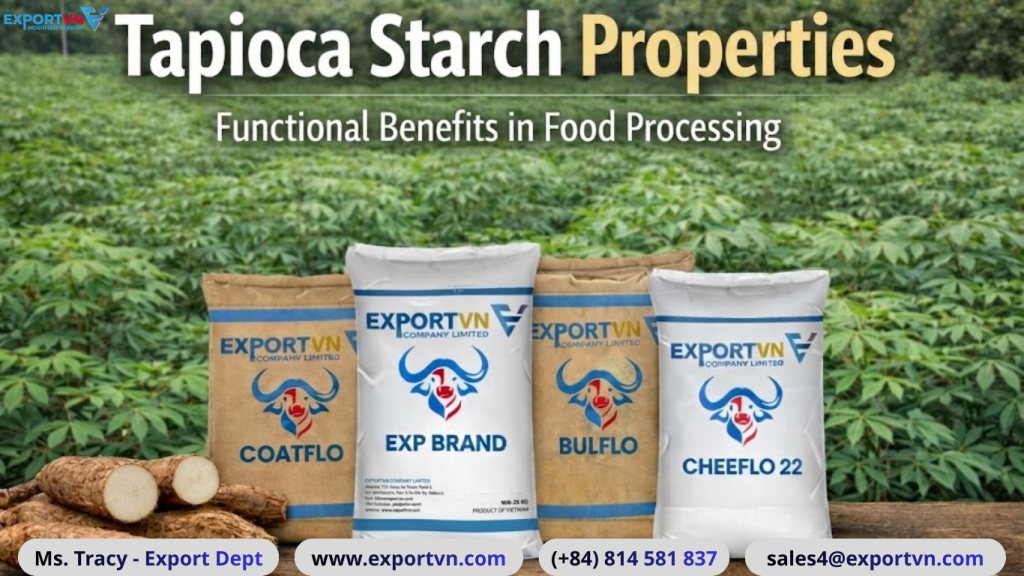
Tapioca Starch Properties: Functional Benefits in Food Processing
Mar
Tapioca starch properties play an important role in modern food manufacturing. Extracted from cassava roots, this natural starch provides excellent functionality in a wide range of food applications. Food processors value it for its strong thickening ability, neutral taste, and capacity to improve product texture.
In recent years, food manufacturers have increasingly focused on ingredients that deliver both performance and clean-label appeal. Modified tapioca starch and tapioca-based ingredients meet these expectations effectively. As a result, they have become essential components in sauces, noodles, snacks, bakery items, and processed foods.
Understanding the functional characteristics of tapioca starch helps producers improve product formulation, processing stability, and overall product quality.
Understanding Tapioca Starch Properties in Food Processing
Tapioca starch contains unique physical and chemical characteristics that allow it to perform effectively during cooking and industrial processing. When heated in water, the starch granules absorb moisture and expand. This process, known as gelatinization, creates viscosity and improves the body and consistency of many foods.
Additionally, tapioca starch forms a smooth and stable paste after gelatinization. This property makes it highly suitable for products that require a uniform texture and consistent appearance.
Another key advantage is its adaptability. Cassava starch performs well across different processing temperatures and mixing conditions. Consequently, manufacturers can apply it in both small-scale recipes and large industrial food production systems.
Thickening and Viscosity Control
One of the most valuable functional characteristics of tapioca starch properties is its ability to act as an effective thickening agent.
Strong Thickening Performance
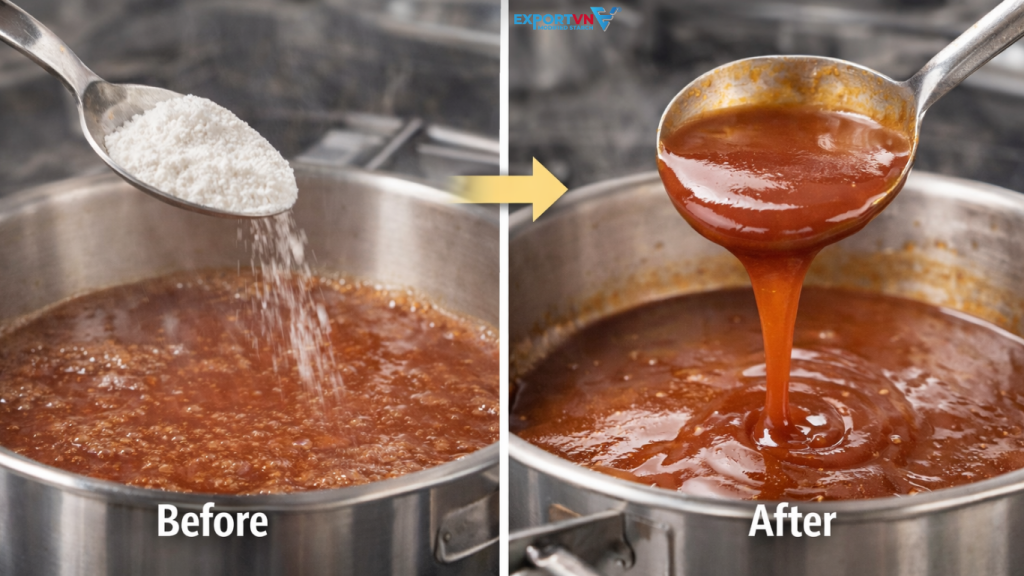
During heating, tapioca starch granules swell and release amylose molecules, creating a thick and smooth consistency. This property helps control viscosity in many food systems.
As a result, tapioca starch is widely used in sauces, soups, and processed foods such as meatballs and sausages, where stable thickness and water retention are required.
Smooth and Glossy Texture
In addition to thickening, tapioca starch provides a glossy and smooth appearance. This visual quality enhances the final presentation of food products.
Because of these advantages, many manufacturers prefer tapioca starch or functional ingredients such as E1412 modified starch and INS 1414 starch when developing products that require attractive textures.
Neutral Taste and Clear Appearance
Another important benefit of tapioca starch is its neutral flavor profile.
Flavor Neutrality
Unlike some starches that may influence the taste of foods, tapioca starch does not interfere with the natural flavor of ingredients. This characteristic allows food manufacturers to preserve the original taste of their recipes.
For example, fruit fillings, dessert sauces, and beverages require thickening ingredients that maintain flavor integrity. Products such as crispy coating mix and dessert ingredients like tapioca pearls also benefit from neutral starch functionality.
Transparent Gel Formation
Tapioca starch also forms a clear or slightly translucent gel. This property is particularly useful in food products where visual clarity is important, such as pie fillings or sweet dessert sauces.
Therefore, food developers often combine native starch with modified starches like E1451 modified starch to maintain stability and transparency.
Texture Enhancement from Tapioca Starch Properties
Texture is a key factor affecting consumer perception and product quality. Fortunately, tapioca starch properties contribute significantly to texture improvement.
Elastic and Soft Structure
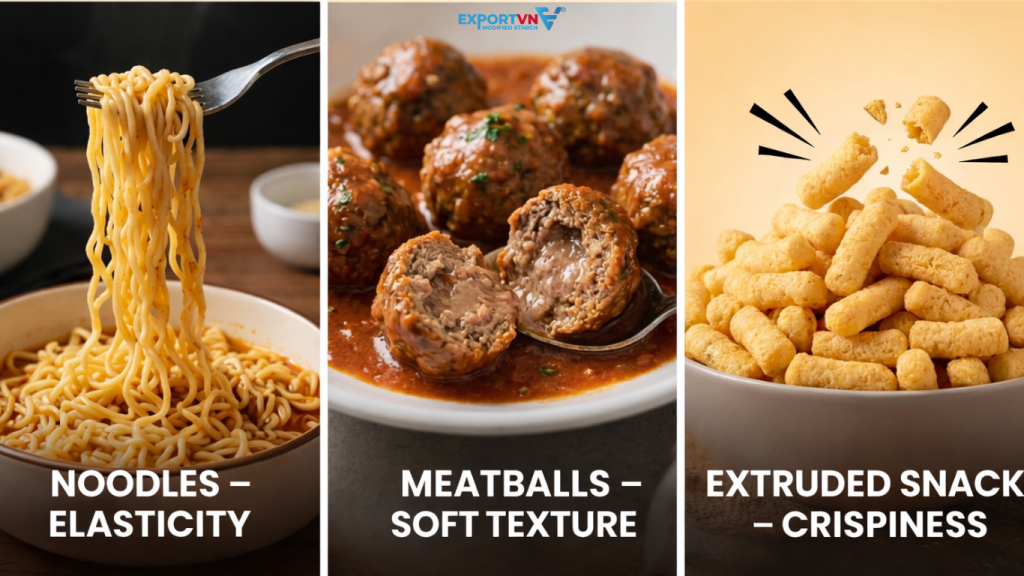
Tapioca starch helps create elasticity and softness in foods such as noodles and dumplings. These characteristics improve chewiness and overall mouthfeel.
In processed foods like meatballs and sausages, starch also helps bind ingredients and retain moisture.
Crispiness in Snack Products
In snack production, tapioca starch helps form light and crispy textures. This property is valuable in extruded snacks and fried products.
Manufacturers often combine tapioca starch with ingredients such as E1412 starch or E1451 starch to enhance texture performance.
Moisture Retention in Bakery
In bakery applications, tapioca starch improves moisture retention within the product structure. As a result, baked goods remain soft for longer periods, extending shelf life and improving consumer satisfaction.
Stability in Industrial Food Processing
For large-scale food production, ingredient stability is essential. Tapioca starch performs well under many industrial processing conditions.
Processing Stability
Tapioca starch can tolerate mixing, heating, and mechanical processing without losing its functionality. This stability ensures consistent quality during mass production.
Food products such as sausages or meatballs rely heavily on this stability for industrial processing.
Freeze–Thaw Stability
Another valuable property is freeze–thaw stability. Many frozen foods suffer from water separation after repeated freezing cycles.
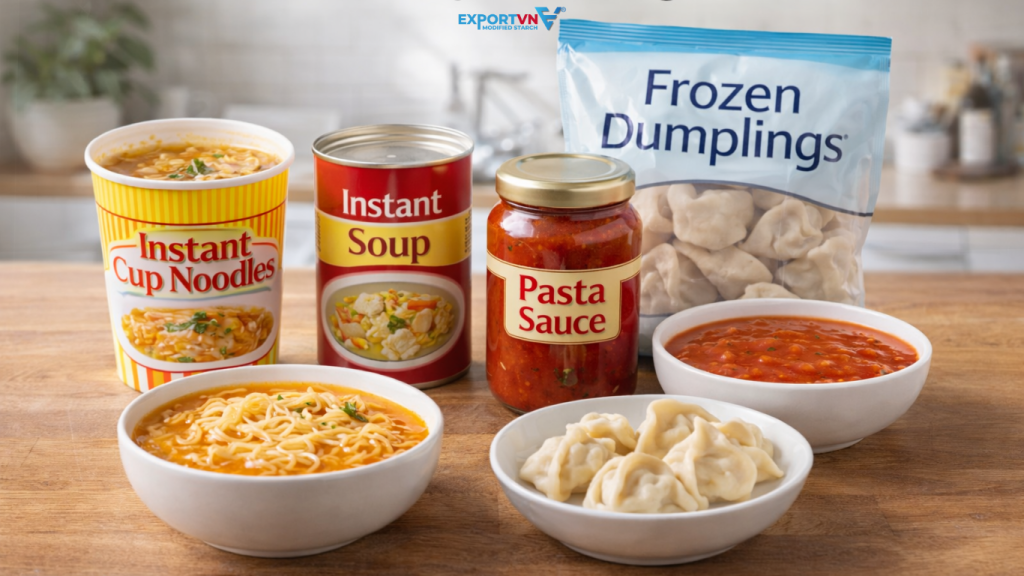
Tapioca starch helps reduce this issue by stabilizing the internal structure of the product. Consequently, frozen meals and ready-to-eat foods maintain their texture after storage and reheating.
Functional starch products such as E1451 modified starch are often used to improve freeze–thaw stability.
Clean Label and Natural Ingredient Appeal
Consumer preferences are shifting toward natural and transparent ingredient lists. Tapioca starch fits perfectly into this clean-label trend.
Plant-Based Ingredient
Derived from cassava roots, tapioca starch is considered a natural plant-based ingredient. This characteristic makes it suitable for modern food formulations focused on natural sources.
Many global food manufacturers source their starch from reliable suppliers such as EXPORTVN, a leading producer of modified tapioca starch.
Gluten-Free Functionality
Tapioca starch is naturally gluten-free. Therefore, it is widely used in gluten-free food products and alternative dietary formulations.
Ingredients such as E1412 starch or INS 1414 starch are commonly applied in gluten-free food systems.
Common Food Applications of Tapioca Starch Properties
Due to its versatility, tapioca starch is used in a wide range of food products.
Sauce and Soup Production
In sauces and soups, tapioca starch provides stable thickening and smooth consistency.
Noodle and Dumpling Products
In noodle manufacturing, tapioca starch improves elasticity and chewiness.
Snack and Processed Meat Products
Snack producers use tapioca starch to create light and crispy textures. Meanwhile, processed meat products such as meatballs and sausages rely on starch for binding and moisture retention.
Bakery and Dessert Products
Bakery manufacturers add tapioca starch to improve softness, moisture retention, and shelf-life stability in cakes, breads, and pastries.
Choosing High-Quality Tapioca Starch for Food Manufacturing
The functional performance of tapioca starch strongly depends on its quality and processing consistency.
Consistent Functional Properties
High-quality tapioca starch should provide stable viscosity, uniform granule size, and reliable gelatinization behavior. These properties ensure consistent product performance in industrial manufacturing.
Reliable Supply and Quality Standards
Reliable suppliers also maintain strict quality control and stable global supply chains. Companies such as EXPORTVN and ingredient distributors like EXPFOODS support food producers with consistent starch solutions.
Selecting the right tapioca starch supplier helps manufacturers optimize production efficiency and product performance.
EXPORTVN – Leading Tapioca Starch Manufacturer from Vietnam
Conclusion
Tapioca starch properties make this ingredient extremely valuable in modern food processing. Its strong thickening ability, neutral flavor, and texture-enhancing characteristics support a wide variety of food applications.
Furthermore, its stability during industrial processing and compatibility with clean-label trends make tapioca starch an ideal choice for many food manufacturers.
By understanding these functional benefits, producers can develop food products that deliver better texture, stability, and overall consumer satisfaction.
Contact for inquiries and business cooperation:
Ms. Tracy – Overseas Sales Executive
WhatsApp/Zalo: (+84) 814 581 837
Email: sales4@exportvn.com
Or visit our Contact page.
