
Common types of modified starch, Market Update, Price, Properties of starch
Reduce Formulation Costs with Tapioca-Based Modified Starches
Nov
Rising ingredient prices and global supply fluctuations are pushing manufacturers to find smarter ways to reduce formulation costs with tapioca-based modified starches. Tapioca starch offers high performance, strong stability, and excellent cost efficiency. When modified, it becomes even more functional—helping food processors improve texture, enhance stability, and reduce overall production costs. This makes tapioca-based modified starch one of the most effective solutions for competitive export markets.
1. How Tapioca-Based Modified Starches Reduce Formulation Costs
1.1. Lower Ingredient Costs Help Reduce Formulation Costs
Tapioca starch is produced extensively in Southeast Asia, especially in Vietnam. Its local availability ensures competitive pricing compared to corn and potato starch. Because tapioca pricing is more stable throughout the year, manufacturers gain predictable costing and better financial planning.
1.2. Higher Efficiency Further Reduces Formulation Costs
Modified tapioca starches typically deliver high viscosity and excellent water-binding capacity. Because they are more efficient, manufacturers often achieve the same texture or stability with lower dosage. A 5–15% reduction in starch usage per batch translates directly into meaningful cost savings.
1.3. Improved Processing Stability Reduces Waste Costs
Tapioca-based modified starches improve yield and production efficiency. They perform well in high heat, shear, pumping, freezing, and retort conditions. This reduces waste, minimizes texture failures, and lowers the risk of rejected batches.
2. Types of Modified Tapioca Starches That Reduce Formulation Costs
2.1. E1412 for Cost-Effective Thickening
E1412 (Distarch Phosphate) provides excellent heat and shear stability. It reduces breakdown during processing and improves yield, making it ideal for sauces, noodles, and canned foods.
2.2. E1420 for Cost-Optimized Texture
E1420 (Acetylated Starch) enhances viscosity and smoothness. Because of its efficiency, manufacturers can reduce overall stabilizer usage.
2.3. E1422 for Cost-Saving Freeze–Thaw Stability
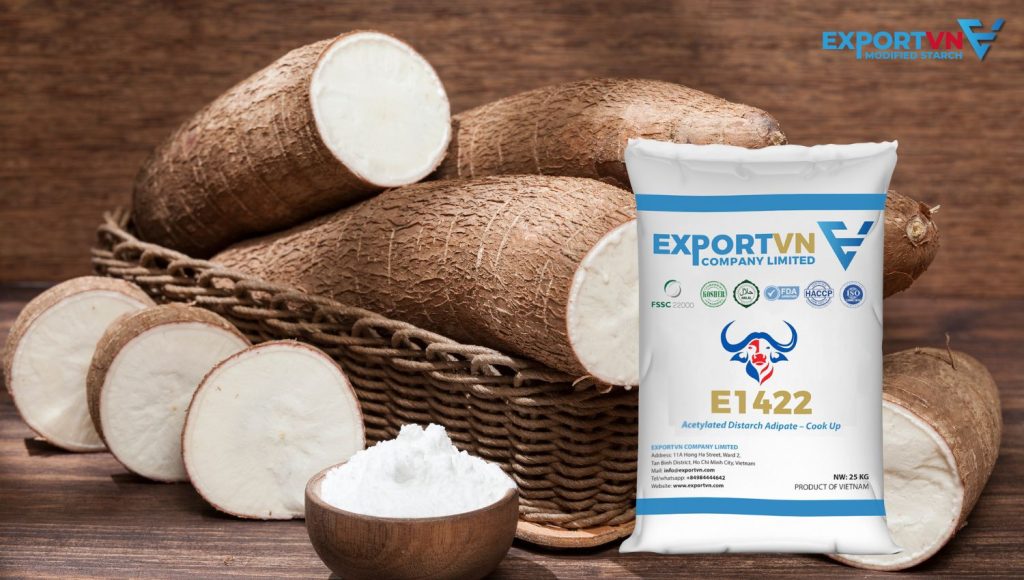
E1422 (Acetylated Distarch Adipate) prevents syneresis in frozen products. Its freeze–thaw stability eliminates product loss and improves batch consistency.
2.4. E1440 for Cost-Efficient Shelf-Life Stability
E1440 (Hydroxypropyl Starch) keeps viscosity stable throughout shelf life. This reduces formulation corrections and improves finished product quality.
2.5. E1442 for Reducing Costly Hydrocolloids
E1442 (Hydroxypropyl Distarch Phosphate) withstands heat, acid, and shear. It can partially replace expensive gums in demanding applications.
2.6. E1414 for Lower Oil Absorption in Fried Products
E1414 (Acetylated Distarch Phosphate) creates smooth, glossy textures and reduces oil uptake—lowering frying costs.
2.7. E1450 for Cost-Effective Emulsification
E1450 (OSA Starch) enhances emulsification in powdered beverages, reducing gum or emulsifier usage.
2.8. E1451 for Efficient Thickening at Lower Dosage
E1451 (Acetylated Oxidized Starch) forms clear, stable pastes that work at lower inclusion levels.
3. Cost-Saving Applications Using Tapioca-Based Modified Starches
3.1. Sauces and Ketchup Formulations Reduce Costs
Tapioca-based modified starches maintain viscosity during heating and cooling. They prevent phase separation and work effectively at reduced dosage levels—saving money in condiments, ketchup, chili sauces, dressings, and cooking sauces.
3.2. Noodle Manufacturers Reduce Formulation Costs
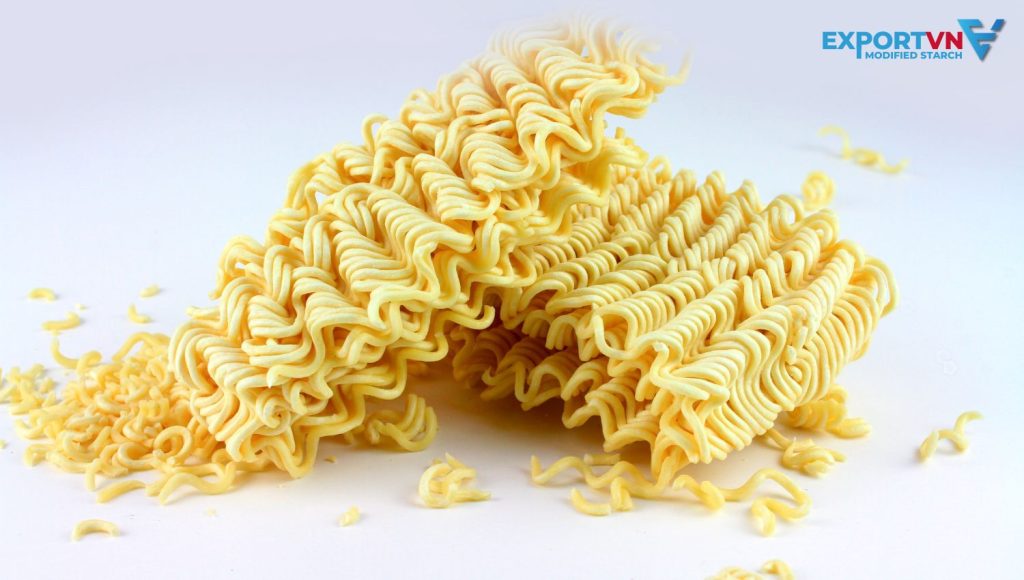
Instant noodles, glass noodles, vermicelli, udon, and fresh noodles all benefit from improved elasticity and shortened drying time. Reduced energy usage and higher yield directly lower production costs.
3.3. Meat Processing and Surimi Plants Reduce Costs
Modified tapioca starch increases binding and water-holding capacity. This boosts yield, reduces protein loss, and lowers formulation cost in meatballs, sausages, ham, fish balls, surimi, and canned meat.
3.4 Snack and Coating Applications Lower Oil and Ingredient Costs
Snacks and coatings require consistent crispiness and controlled oil absorption. Tapioca modified starch improves adhesion, reduces oil uptake, and shortens frying time. This cuts down oil usage and enhances efficiency.
3.5. Beverage and Dairy Powders Reduce Stabilizer Costs
E1450 is a functional emulsifier for powdered beverages and dairy systems. It supports stable dispersion, reduces sedimentation, and decreases the need for expensive emulsifiers.
4. Modified Tapioca Starch from EXPORTVN CO., LTD for Cost Reduction
4.1. EXPORTVN’s Range Supports Reduced Formulation Costs
EXPORTVN CO., LTD supplies a full range of modified tapioca starches designed for food manufacturers seeking cost-effective formulations. Their starches are optimized for viscosity, texture, stability, and efficiency.
4.2. High Standards Ensure Consistent Cost Savings
EXPORTVN maintains strict quality control, meeting international standards such as ISO, HACCP, Halal, and Kosher. This consistency ensures manufacturers receive the same performance in every batch—avoiding costly variations.
4.3. Competitive Export Pricing Helps Reduce Formulation Costs
Vietnam’s strong cassava base allows EXPORTVN to offer competitive pricing. Their supply chain efficiency ensures fast shipments and steady availability for importers.
4.4. Technical Support for Reducing Costs in Formulas
EXPORTVN assists customers in improving viscosity, optimizing dosage, solving syneresis problems, stabilizing emulsions, and increasing yield—ultimately lowering formulation costs across applications.
4.5. Global Export Expertise
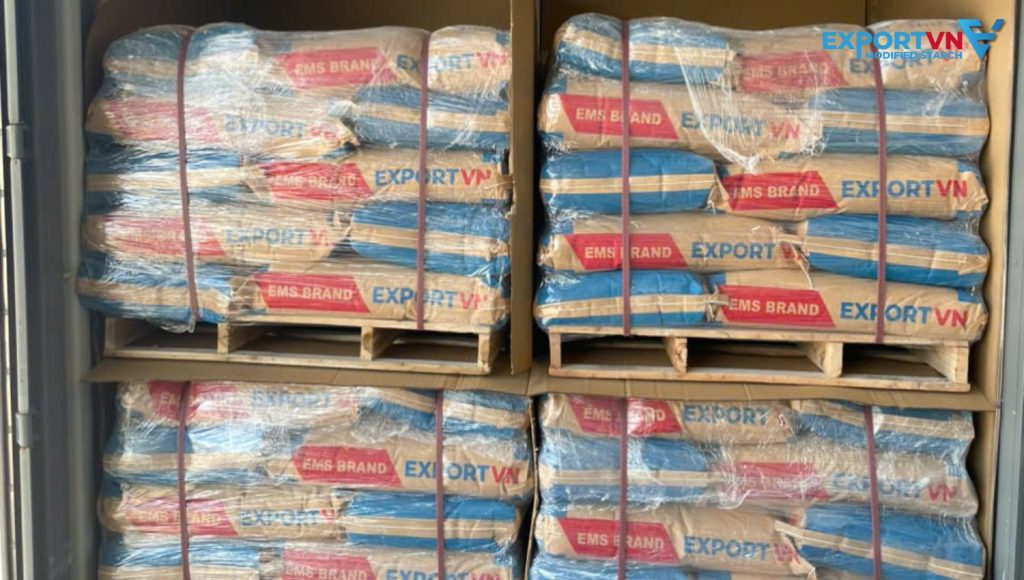
EXPORTVN regularly supplies markets across Asia, the Middle East, Africa, and Europe. With strong export infrastructure, flexible packaging (25 kg bags & jumbo bags), and fast documentation, they support manufacturers in cost-sensitive industries.
5. How to Switch to Cost-Efficient Tapioca Modified Starch
5.1. Identify Cost Reduction Goals
Start by defining viscosity, stability, elasticity, or emulsification targets.
5.2. Test Replacement Ratios for Lower Cost
Most tapioca modified starches replace other starches at a 1:1 ratio. Many applications allow dosage reduction for further savings.
5.3. Pilot Production to Confirm Cost Benefits
Pilot trials help determine ideal viscosity and performance under real processing conditions.
5.4. Use Long-Term Supply Contracts for Price Stability
Multi-shipment agreements secure stable prices and reliable deliveries—critical for cost planning.
Tapioca-based modified starches provide a powerful solution for food manufacturers aiming to reduce formulation costs without lowering product quality. From sauces to noodles, meat processing, snacks, beverages, and more, these starches deliver efficiency, stability, and improved yield. EXPORTVN CO., LTD offers a complete portfolio of modified tapioca starches, competitive export pricing, and strong technical support—making them a trusted partner for cost-sensitive food manufacturers worldwide.
Email: sales1@exportvn.com
WhatsApp: +84342121420
Website: https://exportvn.com/us/
