
Properties of starch
Modified Tapioca Starch E1422 & E1442 for Stable Ketchup Texture and Smooth Dispensing

Feb
In ketchup manufacturing, achieving a stable ketchup texture while maintaining smooth dispensing throughout shelf life is technically challenging. Ketchup is an acidic, high-moisture system exposed to intense heat and shear during processing. Without a properly designed starch system, common defects such as syneresis, viscosity loss, and poor squeeze performance are unavoidable. Modified Tapioca Starch E1422 & E1442 are specifically engineered to address these challenges, making them the preferred Modified Tapioca Starch for Ketchup applications in industrial-scale production.
Key Texture Challenges in Ketchup
Water Separation and Syneresis
Syneresis is one of the most visible quality defects in ketchup. During storage, weak starch networks release bound water, resulting in phase separation. This issue is particularly severe in low-solids or reduced-sugar formulations.
Using a suitable anti-syneresis starch—especially Modified Tapioca Starch for Ketchup—is critical to ensure a homogeneous appearance and consistent texture throughout shelf life.
Viscosity Instability Under Heat and Shear
Ketchup processing typically involves:
- High-temperature cooking
- Intense shear during mixing and homogenization
- Mechanical stress during filling
Native starches and poorly modified starches often lose viscosity under these conditions, leading to thin texture or post-fill inconsistency. For stable performance, manufacturers increasingly rely on Modified Tapioca Starch engineered for high heat and shear resistance.
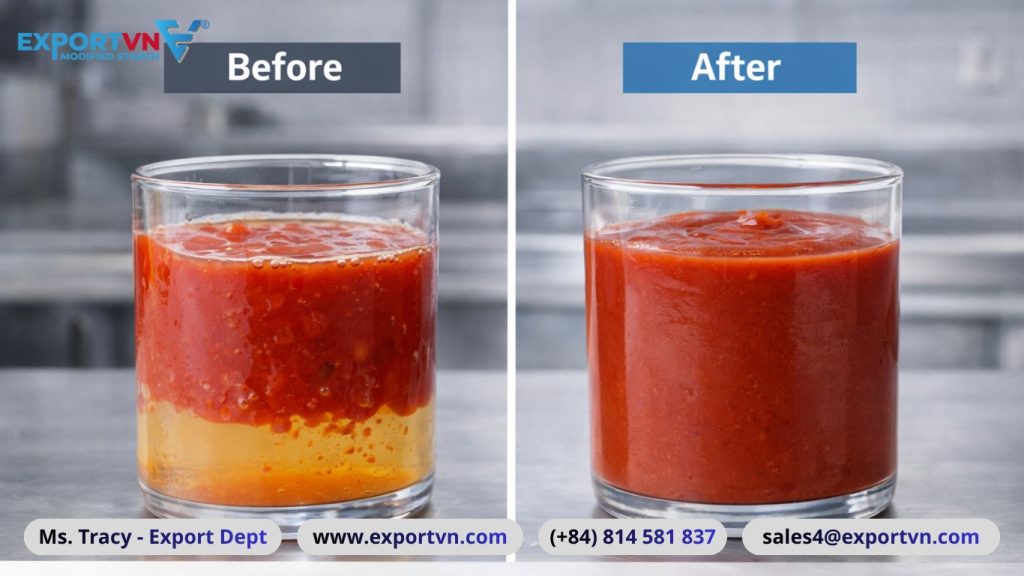
Why Modified Starch Is Needed in Ketchup
Impact of Low pH and Thermal Processing
Ketchup typically has a pH between 3.6 and 4.0. Acid hydrolysis can rapidly degrade native starch granules, especially during thermal treatment. As a result, viscosity drops and texture becomes unstable.
In contrast, Modified Tapioca Starch for Ketchup is chemically stabilized to resist both acid and heat, maintaining functional performance even after severe processing.
Limitations of Native Starches
Compared to modified starch solutions, native starches often suffer from:
- Poor acid tolerance
- Weak shear stability
- Retrogradation during storage
These limitations make them unsuitable for modern ketchup formulations that require extended shelf life and consistent dispensing behavior.
Benefits of Modified Tapioca Starch
Texture Stability and Shelf-Life Performance
Modified tapioca starch forms a robust, elastic network capable of retaining water under stress. This results in:
- Excellent ketchup texture stability
- Reduced syneresis
- Stable viscosity over time
Its resistance to retrogradation further supports long-term shelf stability, even under fluctuating storage temperatures.
Performance Versus Other Starch Sources
Compared with corn- or potato-based starches, tapioca-based modified starch offers:
- Cleaner flavor profile
- Brighter color
- Smoother, less pasty mouthfeel
These attributes are especially important for premium ketchup products where sensory quality matters.

Application of E1422 and E1442 in Ketchup
E1422 – Optimized for Stable Ketchup Texture
E1422 (Acetylated Distarch Adipate) is highly effective in controlling water mobility in ketchup systems. Its dual modification provides:
- Strong resistance to acid hydrolysis
- High tolerance to heat and shear
- Excellent anti-syneresis performance
E1422 is commonly selected when the primary goal is stable ketchup texture and long shelf-life reliability.
E1442 – Designed for Smooth Dispensing
E1442 (Hydroxypropyl Distarch Phosphate) introduces flexible side chains into the starch structure, improving flow behavior under shear. In ketchup applications, E1442 delivers:
- Smooth, uniform flow from squeeze bottles
- Creamy, non-gummy mouthfeel
- Consistent viscosity during repeated dispensing
This makes E1442 ideal for products emphasizing smooth dispensing and superior consumer experience.
Combining E1422 and E1442
In many formulations, E1422 and E1442 are used together to balance:
- Structural stability (E1422)
- Flow and dispensing performance (E1442)
This combination allows precise control of ketchup rheology under both processing and end-use conditions.
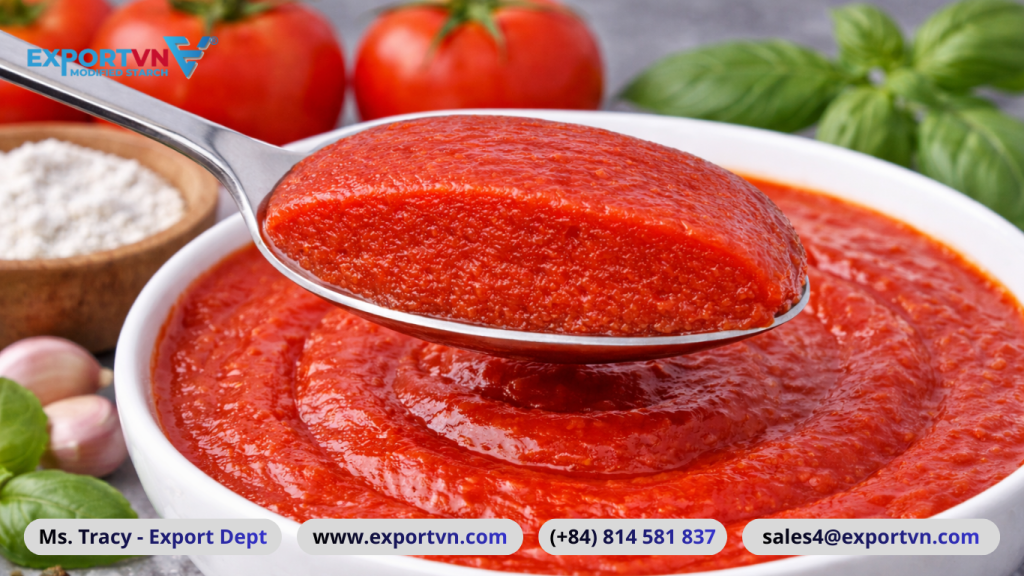
Usage Guidelines and Technical FAQs
Recommended Dosage and Processing Considerations
Typical usage levels of Modified Tapioca Starch E1422 & E1442 for ketchup range from 4.0% to 4.5%, depending on:
- Tomato solids content
- Desired viscosity profile
- Processing severity
Proper hydration and controlled gelatinization are essential to fully activate starch functionality.
Technical FAQs
Does modified tapioca starch affect ketchup flavor or color?
No. Both E1422 and E1442 are neutral in taste and help maintain natural tomato color.
Are E1422 and E1442 suitable for low-pH ketchup systems?
Yes. They are specifically engineered for acidic ketchup formulations.
Which starch is better for squeeze bottle ketchup?
E1442 is preferred for smooth dispensing, while E1422 ensures structural stability. A blend often delivers the best overall performance.
For more questions, you can also refer to Q&A.
Company Introduction Video – Get to Know Us Better
Conclusion
For manufacturers seeking reliable stable ketchup texture and consistent smooth dispensing, Modified Tapioca Starch E1422 & E1442 offer a technically proven and commercially efficient solution. Their superior resistance to acid, heat, and shear makes them essential ingredients in high-quality ketchup formulations designed for modern processing and extended shelf life.
📩 Contact for inquiries and business cooperation:
Ms. Tracy – Overseas Sales Executive
WhatsApp/Zalo: (+84) 814 581 837
Email: sales4@exportvn.com
Or visit our Contact page.
