


Common types of modified starch
Hydroxypropyl Starch E1440 Manufacturer in Vietnam
Aug
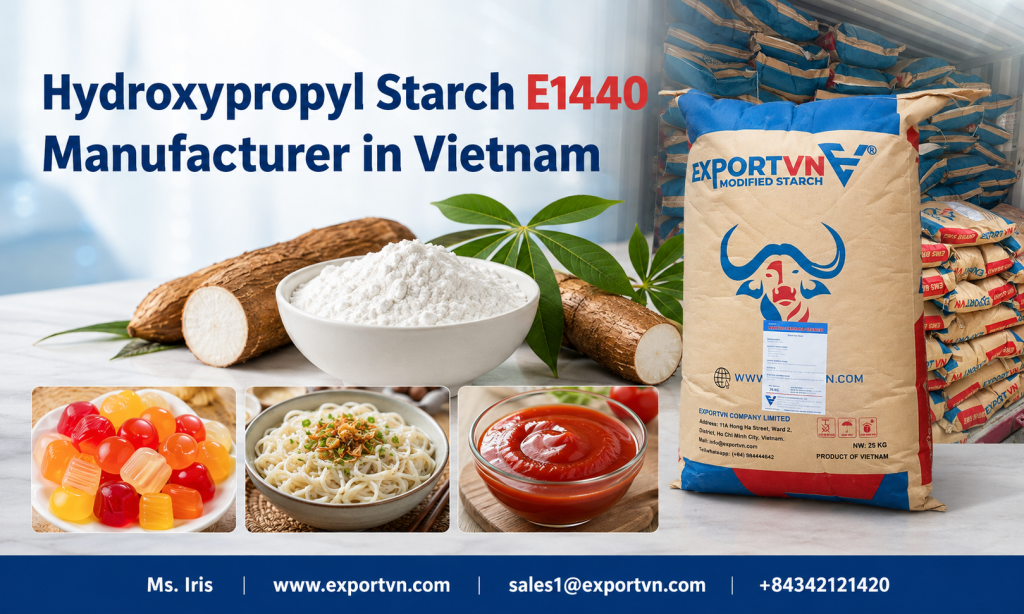
As a Hydroxypropyl Starch E1440 Manufacturer in Vietnam, EXPORTVN CO., LTD supplies food-grade modified tapioca starch for manufacturers, importers, and distributors seeking reliable texture and viscosity control. Hydroxypropyl Starch, identified as INS 1440, develops a transparent, viscous paste when cooked with water. It can also form a gel during cooling while supporting a consistent structure under temperature and pH changes. Therefore, it is a practical option for noodles, dumplings, tapioca pearls, taro balls, bakery products, and selected specialty applications. It is designed for processors that need practical performance and repeatable quality. This article explains how E1440 works, its applications, and the specifications buyers should review.
What Is Hydroxypropyl Starch E1440?
Hydroxypropyl Starch E1440 is produced by introducing hydroxypropyl groups into starch molecules through controlled etherification. According to the FAO/JECFA specifications for modified starches, it is identified as INS 1440 and may function as a thickener, stabilizer, binder, or emulsifier.
However, E1440 should not be confused with Hydroxypropyl Distarch Phosphate E1442. E1442 combines hydroxypropyl modification with phosphate cross-linking, whereas E1440 is hydroxypropyl starch without that cross-linked designation. Consequently, buyers should confirm the correct INS number before approving a specification or shipment.
How Hydroxypropyl Modification Improves Starch Performance
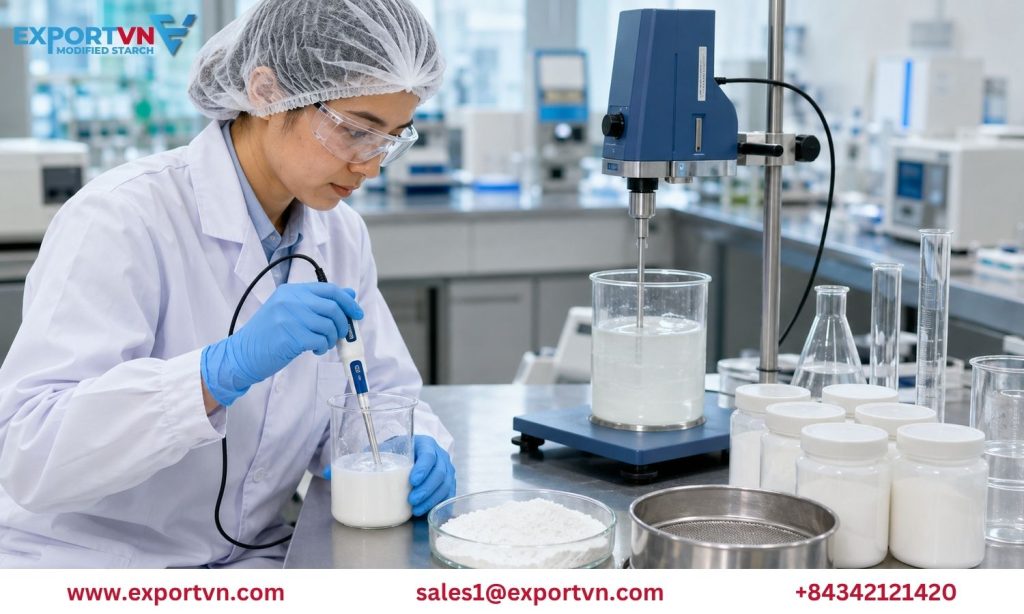
Native tapioca starch provides useful thickening and binding, but its texture may change during processing or storage. Hydroxypropyl modification alters interactions between starch chains. As a result, the cooked starch can provide smoother viscosity, improved clarity, and controlled gel formation.
However, performance is formulation-dependent. Dosage and cooking conditions may vary with water, sugar, salt, protein, fat, acidity, and the target texture. Therefore, pilot trials should precede commercial production.
Key Characteristics of E1440
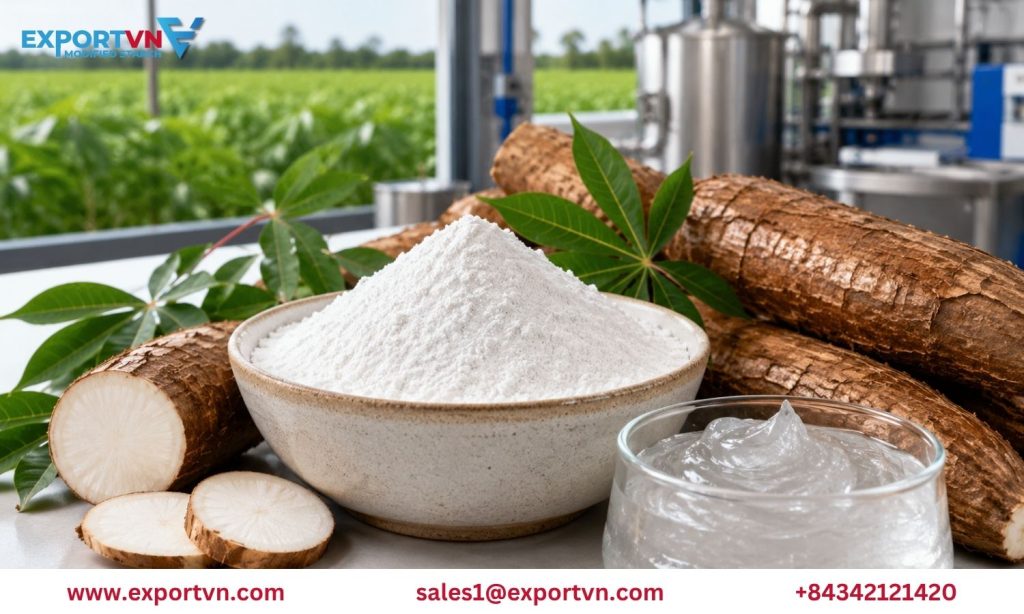
Based on the product Technical Data Sheet, this E1440 grade offers several useful characteristics:
- It forms a transparent, high-viscosity paste at elevated temperatures.
- It can develop a gel structure as the cooked system cools.
- It supports texture and physical stability in processed foods.
- It remains stable across a range of temperature and pH conditions.
Together, these properties suit products requiring both clarity and controlled texture. Nevertheless, customers should evaluate the grade in their actual recipe and process.
Key Benefits of Hydroxypropyl Starch E1440 in Food Processing
High Viscosity and Transparent Appearance
The specified viscosity is at least 800 BU under the stated Brabender 6% micro method. Therefore, E1440 can build body without creating a highly opaque paste. For example, this is valuable in translucent fillings, lightly colored gels, and selected noodle or dumpling systems.
Moreover, stable viscosity can support filling, forming, pumping, or portioning and contribute to more uniform batches.
Improved Gel Texture and Product Consistency
In addition, when the product cools after cooking, E1440 can support a soft, elastic, chewy, or cohesive gel, depending on the formula. It may also help ingredients remain evenly distributed.
Still, E1440 is not a universal replacement. The target bite, cooking method, storage temperature, and shelf life must guide grade selection.
Stability Under Temperature and pH Changes
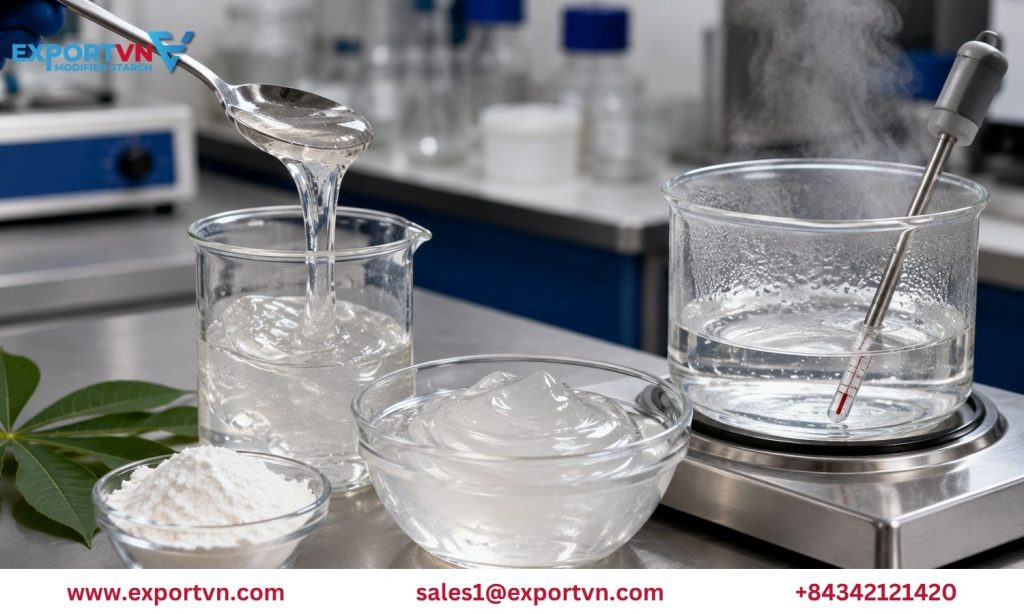
Food production often involves heating, cooling, holding, and acidity changes. E1440 is designed to perform across a range of temperature and pH conditions. Accordingly, it can help limit unwanted thinning or texture variation during normal processing.
For severe heat, acid, or mechanical shear, however, a cross-linked starch may be more appropriate. Comparing E1440 with E1442 or another modified starch through side-by-side trials is the most reliable way to select the correct solution.
Food Applications of Hydroxypropyl Starch E1440
Noodles and Dumplings
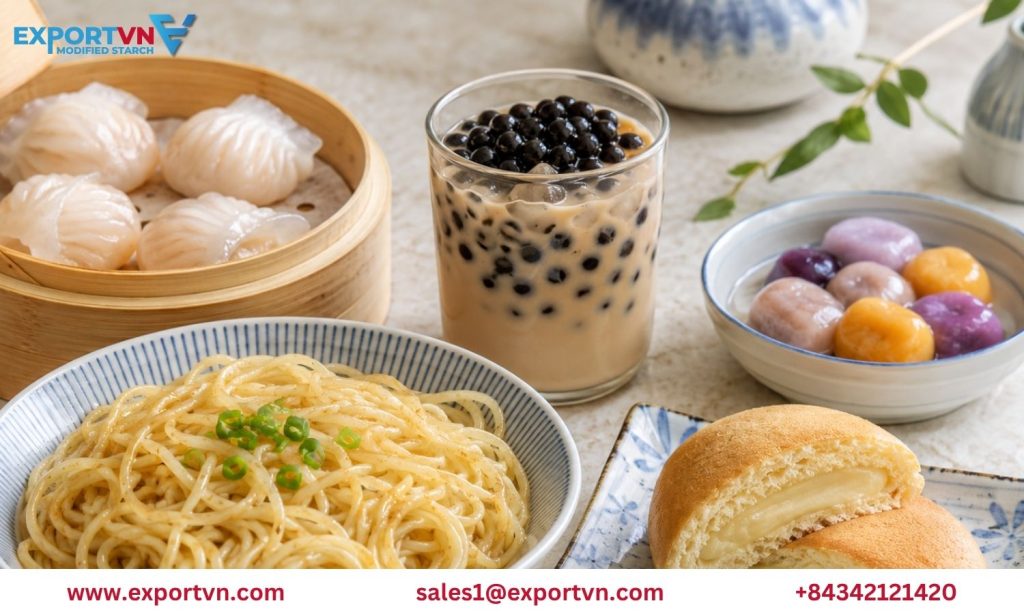
For example, in noodle applications, modified starch can support elasticity, a smoother surface, and resistance to breakage during cooking. In addition, E1440 may help retain a pleasant bite. However, results depend on the flour or starch base, water level, mixing, and noodle format.
For dumpling production, E1440 can improve dough cohesiveness and wrapper elasticity. As a result, wrappers may better withstand forming, steaming, or boiling while retaining their shape.
Tapioca Pearls and Taro Balls
Similarly, chewiness and gel uniformity are essential in bubble tea pearls, taro balls, and similar products. E1440 can support an elastic bite and consistent internal structure after cooking and cooling. Furthermore, its paste clarity helps preserve an attractive appearance.
Manufacturers should test several inclusion levels because formulation changes can affect chewiness, cooking loss, and holding stability.
Bakery and Other Specialty Applications
In addition, E1440 can contribute to moisture management, softness, filling stability, and texture control in cakes, steamed products, and fillings.
The TDS also lists transparent capsules as a potential application. However, capsule use requires separate qualification because pharmaceutical or supplement applications may demand additional purity and documentation.
E1440 Specifications, Packaging, and Shelf Life
Physicochemical Specifications
The following figures summarize the main values stated in the current product TDS:
| Parameter | Specification |
|---|---|
| Starch | ≥ 85.0% |
| Moisture | ≤ 14.0% |
| Viscosity | ≥ 800 BU |
| Fineness through 140 mesh | ≥ 99.0% |
| Impurity | ≤ 0.1% |
| Whiteness | ≥ 90.0% |
| Ash | ≤ 0.50% |
| Fiber | ≤ 0.05% |
| Hydroxypropyl content | ≤ 7.00% on a dry basis |
| pH, 20% starch solution | 4.5–7.5 |
| SO₂ | ≤ 10 ppm |
Accordingly, test methods and complete limits should be checked against current lot documentation. Buyers can also review available technical data sheets for modified starch during qualification.
Microbiological and Heavy Metal Control
The TDS sets limits for mesophilic aerobic bacteria, coliforms, S. aureus, Clostridium perfringens, B. cereus, yeast and moulds, and E. coli. In addition, lead and cadmium are each limited to 0.1 ppm. Therefore, procurement teams should compare the lot-specific Certificate of Analysis with internal and destination-market requirements.
Packaging, Storage, and Shelf Life
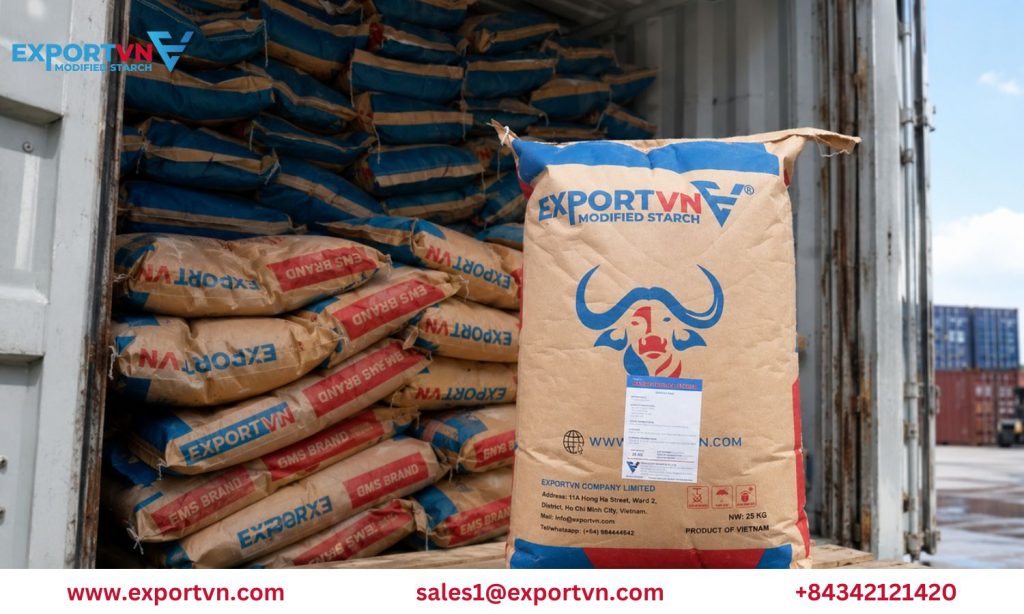
Available packaging listed in the TDS includes:
- 25 kg paper bags
- 25 kg or 50 kg PP bags
- 850 kg jumbo bags
Finally, store the product in a clean, dry area away from water, humidity, and high temperatures. Its stated shelf life is two years from the manufacturing date when stored under the recommended conditions.
How to Choose a Hydroxypropyl Starch E1440 Manufacturer in Vietnam
Product Quality and Batch Consistency
First, compare viscosity, moisture, fineness, whiteness, pH, and microbiological limits. Next, evaluate the starch in the intended formulation. It must deliver the required texture and processing performance, not merely pass laboratory specifications.
Technical Documentation and Application Support
B2B buyers should request the current TDS and a lot-specific COA. In addition, they should confirm which SDS, allergen, GMO, halal, food-safety, or market-specific documents are available. Because regulations differ by country and food category, the importer should verify permitted use and labeling in the destination market.
Packaging, Export Service, and Supply Capability
Before ordering, buyers should confirm packaging, minimum order quantity, lead time, loading quantity, Incoterm, shipment port, and documents. EXPORTVN CO., LTD supports international buyers with starch selection, export coordination, and application discussions.
Request a Sample or Quotation
If you need a Hydroxypropyl Starch E1440 Manufacturer in Vietnam, contact EXPORTVN with your application, target viscosity, process, packaging, destination port, and expected volume. Our team can then arrange the next step for sample evaluation or quotation.
Email: sales1@exportvn.com
WhatsApp: +84 342 121 420
Website: EXPORTVN
