


Common types of modified starch, Production Formula, Properties of starch
Why Use Modified Tapioca Starch in Chiffon Cake? | EXPORTVN EMS
Aug
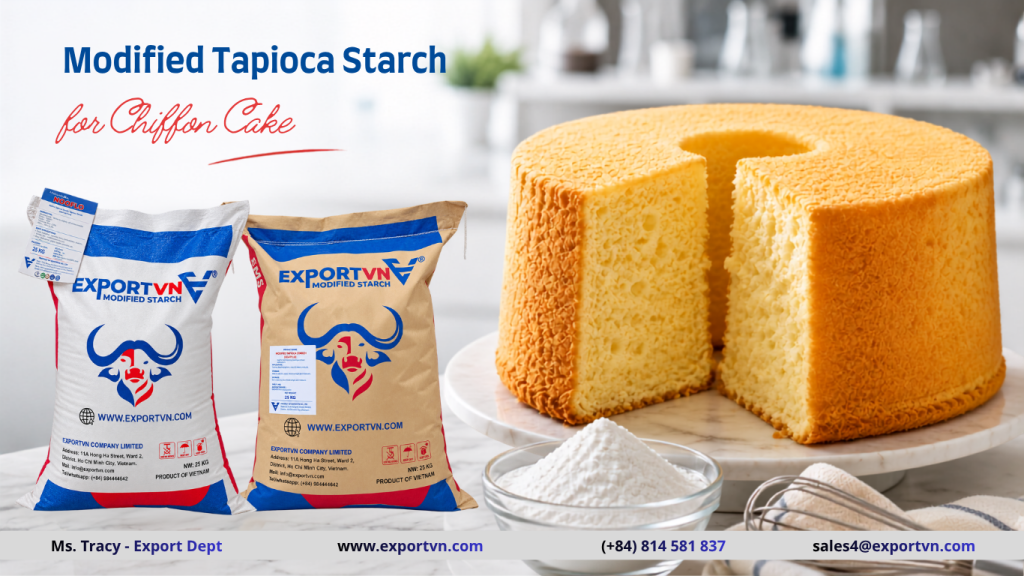
Chiffon cake is valued for its soft, airy, and moist texture. However, maintaining this texture consistently in commercial production can be challenging. When developing a chiffon cake with modified tapioca starch, manufacturers can improve texture control, moisture management, and processing consistency by selecting a suitable starch grade and dosage.
For bakery manufacturers, the objective is not simply to add starch. Instead, the starch should work with the complete formula to support the final cake structure and eating quality. This approach can help manufacturers develop a more consistent chiffon cake for commercial production.
Why Use Modified Tapioca Starch in Chiffon Cake?
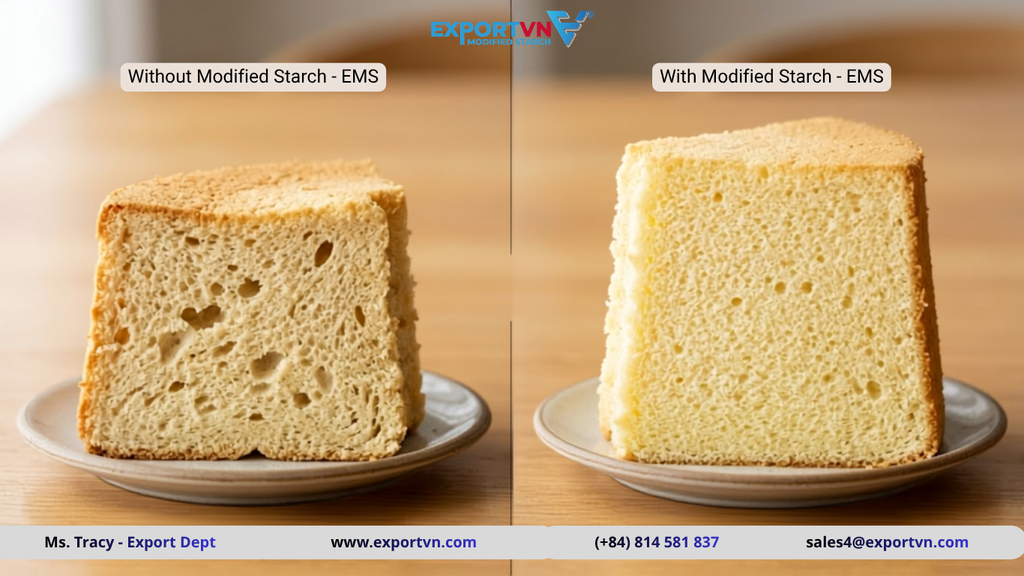
Support a Soft and Moist Crumb
During baking, chiffon cake loses moisture and develops its final crumb structure. A suitable modified tapioca starch can help manage water within the formulation.
As a result, the cake can maintain a softer and more pleasant texture after cooling. This property can also support manufacturers who need consistent texture throughout storage.
Improve Structural Balance
Chiffon cake must stay light while maintaining enough strength for slicing and handling. Modified tapioca starch can help adjust the internal structure without making the cake unnecessarily dense.
The final effect depends on the starch grade, dosage, flour system, and baking conditions. Therefore, manufacturers should test the selected grade in the complete recipe before commercial production.
Improve Production Consistency
Commercial production requires consistent results from batch to batch. Variations in flour, mixing, baking, and storage can affect cake volume and texture.
A functional starch can help make the formulation more stable and easier to control during production. For this reason, modified tapioca starch can become a useful tool for bakery manufacturers seeking better process consistency.
Reference Formula for Chiffon Cake
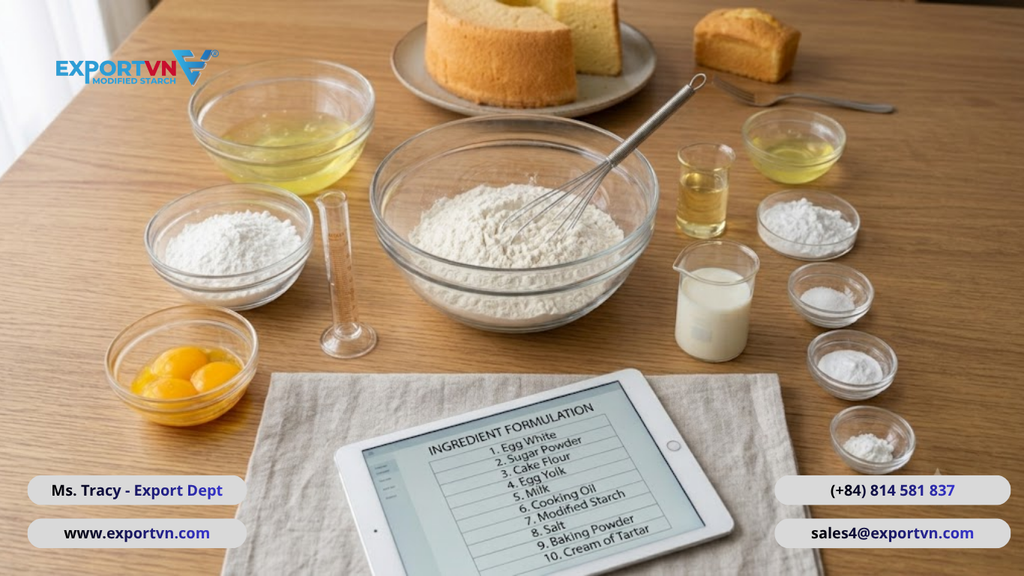
Manufacturers can use the following formula as a reference formulation for chiffon cake trials. It is presented based on the formula shown in the provided technical reference.
Recommended Ingredient Formula
| Ingredient | Proportion (%) |
|---|---|
| Egg White | 34.56 |
| Powdered Sugar | 20.00 |
| Cake Flour | 18.18 |
| Egg Yolk | 14.54 |
| Milk | 9.00 |
| Salad Oil | 2.70 |
| Modified Starch | 1.00 |
| Salt | 0.02 |
| Baking Powder | Moderation |
| Cream of Tartar | Moderation |
The listed percentage ingredients total 100%. Baking powder and cream of tartar can be adjusted according to the required formulation conditions.
Where Can Modified Tapioca Starch Be Evaluated?
For product development, modified tapioca starch can be evaluated as part of the starch system in the cake flour portion.
The exact replacement level should not serve as a universal standard. Instead, manufacturers should conduct controlled trials based on the selected starch grade and target cake characteristics.
A controlled trial can help compare cake volume, crumb texture, moisture, and storage performance. This method gives manufacturers a clearer basis for selecting the most suitable starch solution.
What to Check When Testing Modified Tapioca Starch?
A proper trial should evaluate more than the appearance immediately after baking. Manufacturers should check:
- Cake volume and height
- Crumb softness and uniformity
- Moisture perception
- Elasticity and resilience
- Slicing and handling performance
- Texture after storage
These results help determine whether the selected modified tapioca starch suits the actual production process. Manufacturers can then adjust the dosage or formulation based on the trial results.
How to Select Modified Tapioca Starch for Chiffon Cake
Consider Batter Behavior with Modified Tapioca Starch
Batter viscosity directly affects mixing, aeration, and depositing. A starch that increases viscosity too much may interfere with the light structure of chiffon cake.
Therefore, the selected starch should provide functional support without excessively restricting air incorporation. A balanced batter can help maintain the airy structure that defines chiffon cake.
Consider Baking and Storage
Starch performance should be evaluated throughout the process, not only during mixing.
Manufacturers should examine the cake after baking, cooling, and storage. This process helps manufacturers understand the effect of modified tapioca starch on softness, firmness, moisture, and overall texture stability.
Consider the Complete Application
There is no single modified starch grade that fits every chiffon cake formula.
Flour type, liquid ratio, egg content, baking temperature, equipment, packaging, and storage conditions all affect the final result. Therefore, application testing is essential before commercial production.
For additional information about tapioca starch solutions, manufacturers can visit EXPORTVN’s Modified Tapioca Starch information page and review the available product portfolio.
Why Choose EXPORTVN EMS?
EXPORTVN EMS provides tapioca starch solutions for international B2B food manufacturers and ingredient buyers. Our approach focuses on the application instead of treating starch as a standard commodity.
Application-Focused Support
We help customers evaluate starch based on the intended food application, target texture, processing conditions, and technical requirements.
For chiffon cake, this means considering the complete formulation rather than recommending a product based only on viscosity or product name. This approach can help customers select a more suitable starch for their development trials.
Modified Tapioca Starch Solutions
EXPORTVN EMS offers modified tapioca starch options for different food applications. The suitable grade depends on the customer’s formulation and required functionality.
For bakery applications, we encourage customers to conduct product trials to confirm performance under their own processing conditions. This step helps identify the most suitable balance between texture, structure, and process performance.
Support for International B2B Customers
For overseas buyers, a reliable supplier should provide more than the product itself.
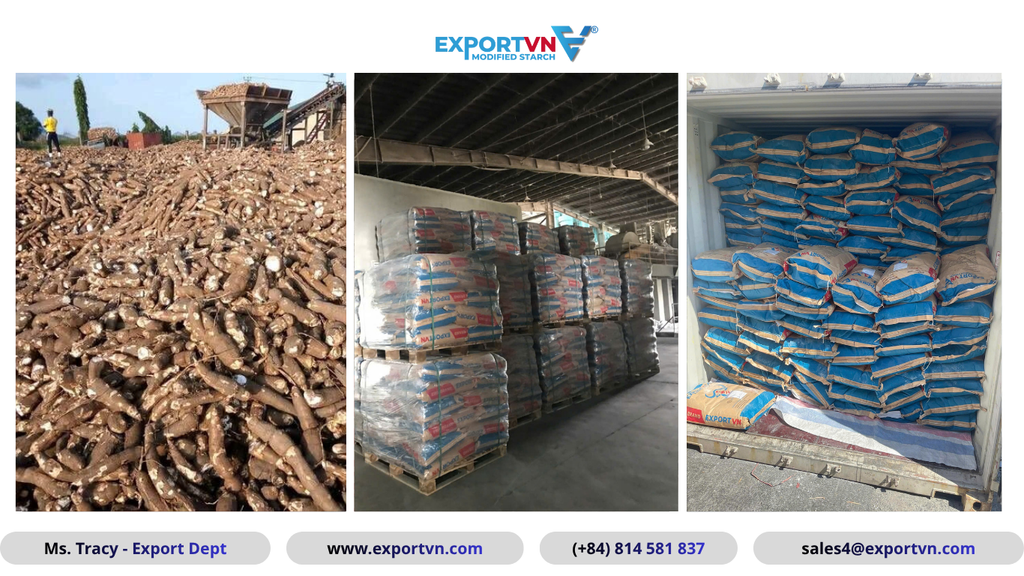
EXPORTVN supports customers with product information, technical communication, packaging discussions, and export-related requirements.
If you are developing or improving a chiffon cake formulation, contact EXPORTVN EMS to discuss your requirements and identify a suitable modified tapioca starch for evaluation.
Conclusion
Modified tapioca starch can be a useful functional ingredient in chiffon cake formulation. It can support moisture management, crumb texture, structural balance, and production consistency.
However, performance depends on the specific starch grade, dosage, recipe, and processing conditions. The reference formula above can serve as a starting point for application trials, while the final formulation should be optimized through testing.
EXPORTVN EMS works with international food manufacturers and ingredient buyers to provide tapioca starch solutions based on real application requirements.
Contact for inquiries and business cooperation:
Ms. Tracy – Global Sales Executive
WhatsApp/ Mob: (+84) 814 581 837
Email: sales4@exportvn.com
