


Market Update, Properties of starch
Food Grade Tapioca Starch Supplier in Vietnam
Jul
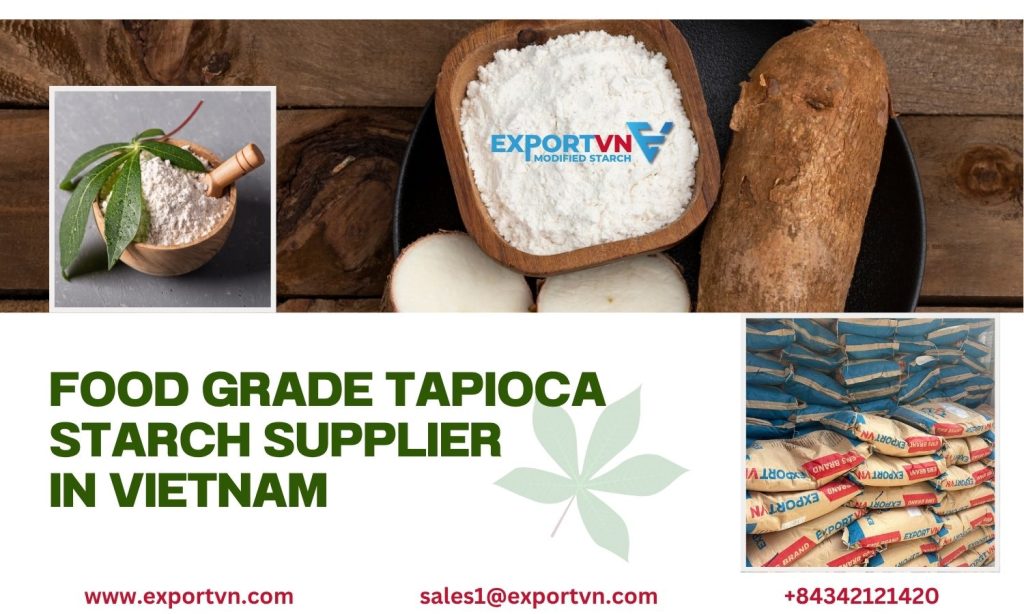
Choosing a reliable Food Grade Tapioca Starch Supplier in Vietnam is important for food manufacturers that require consistent quality, competitive pricing and professional export support. As a Vietnamese supplier of native and modified tapioca starch, EXPORTVN supports international buyers with food-grade ingredients, technical documentation, flexible packaging and container shipments.
Vietnam has established a strong cassava-processing industry. Therefore, buyers can source tapioca starch for noodles, sauces, bakery products, meat products, snacks and many other food applications. However, selecting a supplier should involve more than comparing prices. Product specifications, food safety management, documentation and delivery capability must also be carefully evaluated.
What Is Food Grade Tapioca Starch?
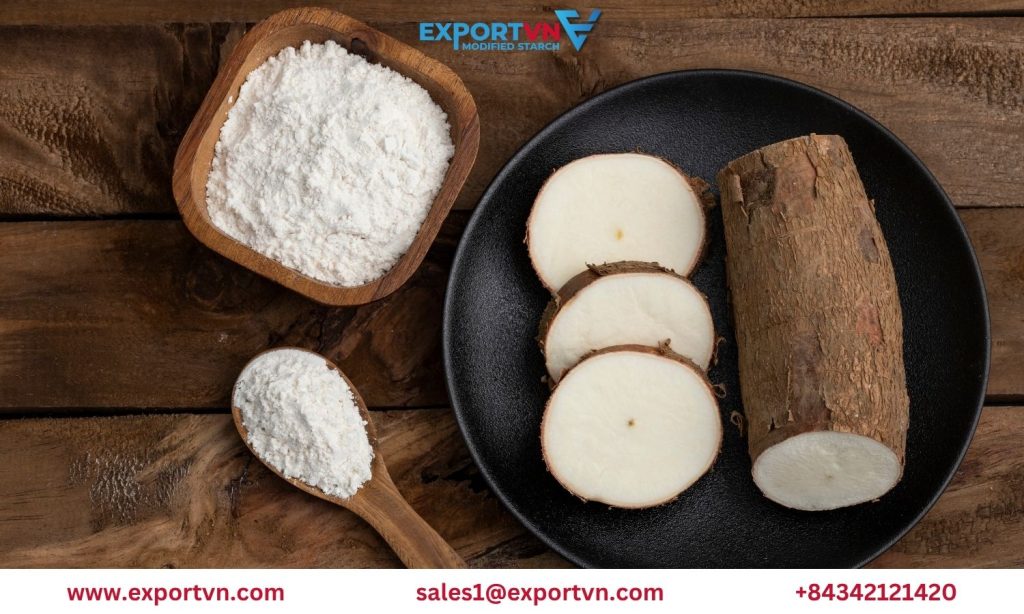
Food grade tapioca starch, also known as cassava starch, is a fine white powder extracted from cassava roots. It is widely used as a thickener, binder, texture enhancer and processing ingredient.
Because it has a relatively neutral taste and light color, tapioca starch can be incorporated into many formulations without significantly changing the original flavor or appearance. It is also naturally gluten-free. Nevertheless, manufacturers making a gluten-free claim should still evaluate cross-contact controls throughout the supply chain.
How Tapioca Starch Is Produced
The production process generally includes the following stages:
Cassava roots → cleaning → crushing → starch extraction → separation → drying → sieving → packaging
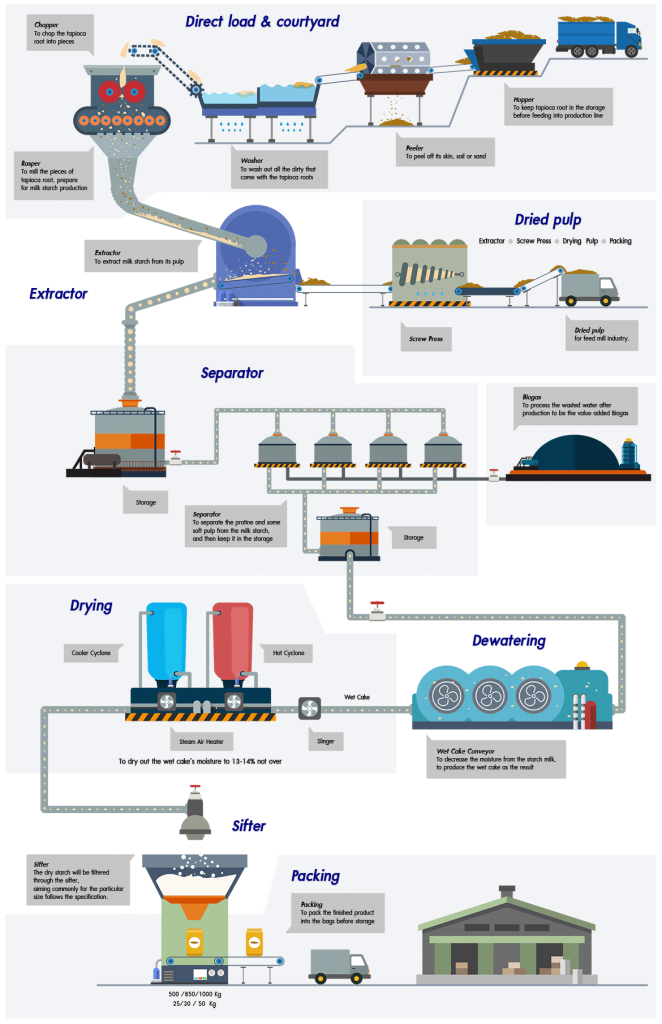
First, fresh cassava roots are cleaned to remove soil and foreign matter. Next, the roots are crushed so that the starch can be released and separated from the cassava fiber.
The extracted starch slurry is then purified and dewatered. Afterward, the starch is dried, sieved and packed under controlled conditions. Efficient processing is important because fresh cassava roots can deteriorate quickly after harvesting. Buyers can read more about the general process through the FAO guidance on cassava starch processing.
Key Properties of Food Grade Tapioca Starch
Food manufacturers select tapioca starch because of several useful characteristics:
- Fine white powder and high whiteness
- Neutral taste and odor
- Good thickening performance
- Smooth mouthfeel
- Clear or translucent paste appearance
- Strong water-binding ability
- Easy gelatinization during cooking
- Naturally gluten-free composition
Its actual performance depends on the starch concentration, processing temperature, pH, shear conditions and other ingredients in the formula. Therefore, application trials are recommended before commercial production.
Native Tapioca Starch vs. Modified Tapioca Starch
Native tapioca starch is obtained from cassava roots without functional modification. It is suitable for standard applications where processing conditions are not excessively demanding.
In contrast, modified food starch is processed physically, enzymatically or chemically to improve specific properties. Depending on the starch type, these improvements may include better resistance to:
- High processing temperatures
- Acidic conditions
- Mechanical shear
- Freezing and thawing
- Long-term storage
- Water separation
Consequently, the correct choice depends on the intended application and production process.
Food Grade Tapioca Starch Supplier in Vietnam: Specifications and Quality Standards
Specifications are among the first documents that B2B buyers should review. They help determine whether a starch is suitable for a particular formulation, production line and destination market.
Typical Product Specifications
The following table provides a general reference for EXPORTVN’s food grade tapioca starch. Final parameters should be confirmed in the approved product specification or sales contract.
| Parameter | Typical Requirement |
|---|---|
| Appearance | Fine white powder |
| Starch content | Minimum 85% |
| Moisture | Maximum 13% |
| Whiteness | Minimum 90% |
| pH | 5.0–7.0 |
| Ash | According to the agreed specification |
| Viscosity | Minimum 700 BU, depending on the testing method |
| Sulfur dioxide | Not detected |
| Fineness | Minimum 99% through 140 mesh |
Because testing methods can affect the reported result, buyers should confirm the sample concentration, equipment and measurement conditions when comparing viscosity specifications from different suppliers.
Microbiological Requirements
Food grade tapioca starch may also be controlled for:
- Total Plate Count
- Yeast and Mould
- Coliforms
- Escherichia coli
- Salmonella
The applicable limits depend on the agreed product specification, customer requirements and regulations in the destination market. Moreover, additional analyses can be discussed when required for a specific application.
Food Safety Certifications
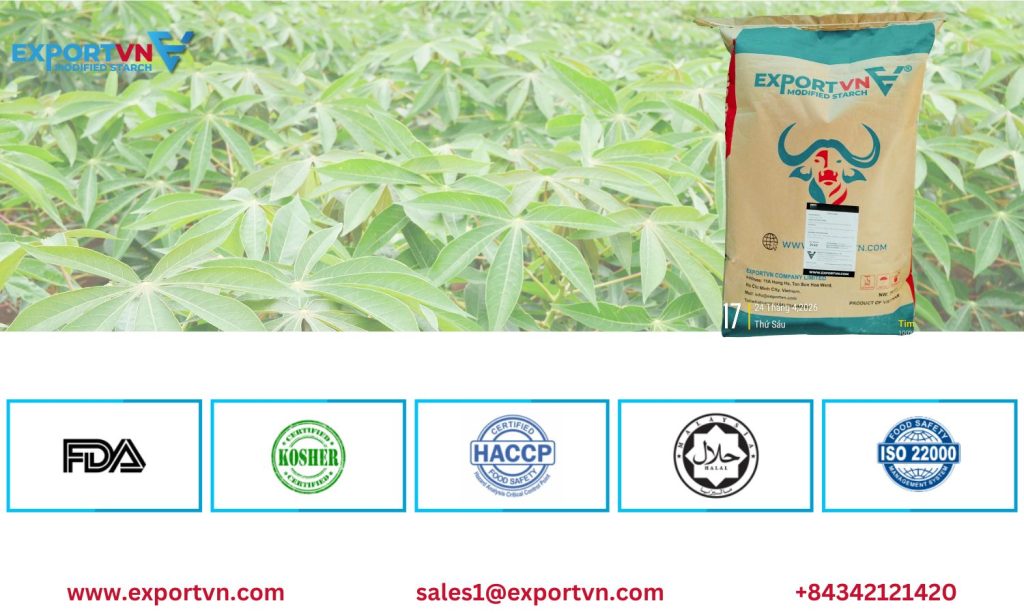
EXPORTVN can support customers with internationally recognized food safety and market-access certifications, including:
- ISO 22000
- HACCP
- Halal
- Kosher
Certification scope and validity should always be confirmed for the product and manufacturing facility involved in each order.
Documents Available for International Buyers
Depending on the order and destination, EXPORTVN can provide or coordinate relevant documents such as:
- Certificate of Analysis
- Product Specification
- Technical Data Sheet
- Safety Data Sheet
- Certificate of Origin
- Health Certificate
- Phytosanitary Certificate, where required
- Food safety certificates
- Packing list and commercial invoice
Buyers can also review available technical data sheets for starch products before selecting a suitable grade.
Applications of Food Grade Tapioca Starch
Tapioca starch is a versatile ingredient. However, its dosage and processing method should be adjusted according to the desired texture, stability and finished-product quality.
Sauces, Soups and Gravies
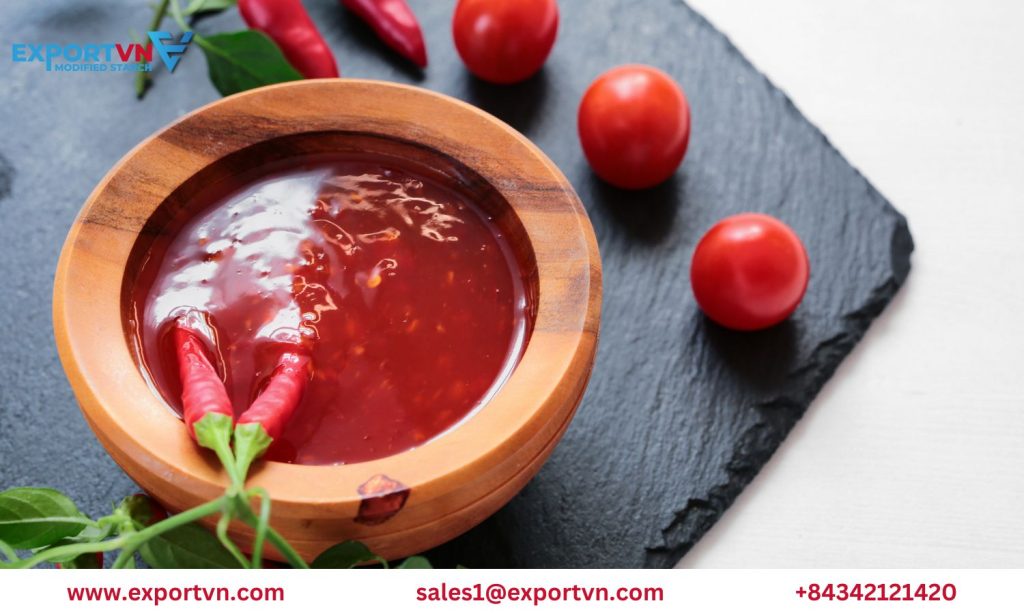
In sauces, soups and gravies, tapioca starch can:
- Increase viscosity
- Improve consistency
- Create a smooth mouthfeel
- Support water binding
- Reduce liquid separation
Native starch may be suitable for products consumed shortly after preparation. For retorted, highly acidic or long-shelf-life sauces, a modified starch may provide better stability.
Noodles and Vermicelli
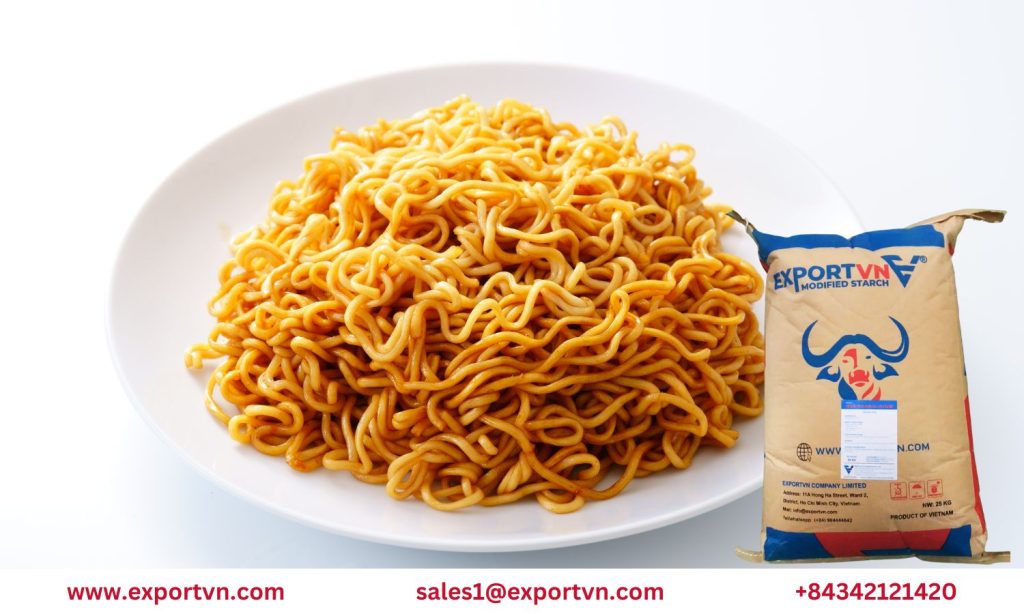
Tapioca starch is commonly used in noodle products to improve elasticity, smoothness and cooking quality. It may also help increase transparency and reduce breakage during processing.
The formulation must be optimized according to the noodle type, flour system, drying process and target texture.
Bakery and Gluten-Free Products
Food producers may use tapioca starch in:
- Gluten-free bread
- Cakes
- Cookies
- Bakery premixes
- Fillings and desserts
It contributes a light texture and can work with rice flour, corn starch, potato starch, hydrocolloids and proteins. However, tapioca starch alone does not fully replace the structure provided by gluten. A balanced ingredient system is usually necessary.
Meat and Seafood Products
Tapioca starch may support water retention, binding and texture in sausages, meatballs, fish balls and processed seafood. For example, it can contribute to a more cohesive structure in sausages and other emulsified products.
It is also used in seafood coating systems and fried chicken coatings, where it can help create a crisp surface and improve coating adhesion.
Snacks and Confectionery
Other applications include:
- Extruded snacks
- Crispy biscuits
- Candies
- Puddings
- Mochi
- Bubble tea pearls
- Cake and fruit fillings
- Coating systems
As a result, one starch grade may not be ideal for every product. Buyers should provide application details when requesting a sample or technical recommendation.
Why Source Food Grade Tapioca Starch Supplier in Vietnam?
Vietnam offers an established cassava-growing and starch-processing supply chain. This supports both domestic food production and international exports.
Reliable Cassava Raw Material Supply
Cassava is cultivated in several regions of Vietnam. A developed collection and processing system allows manufacturers to convert fresh roots into native starch and various value-added starch products.
Nevertheless, cassava availability and pricing can change according to the harvest season, weather, demand and competing industrial uses. Early purchasing plans can help buyers manage these fluctuations.
Competitive Export Solutions
Vietnamese tapioca starch can provide a competitive balance between product quality and purchasing cost. In addition, efficient container loading and flexible shipment arrangements make it suitable for bulk international orders.
Prices are normally influenced by:
- Raw cassava root costs
- Production and energy costs
- Packaging type
- Order volume
- Pallet requirements
- Ocean freight
- Destination port
- Required certificates and analyses
Therefore, buyers should provide complete purchasing details to receive an accurate quotation.
International Shipping and Packaging
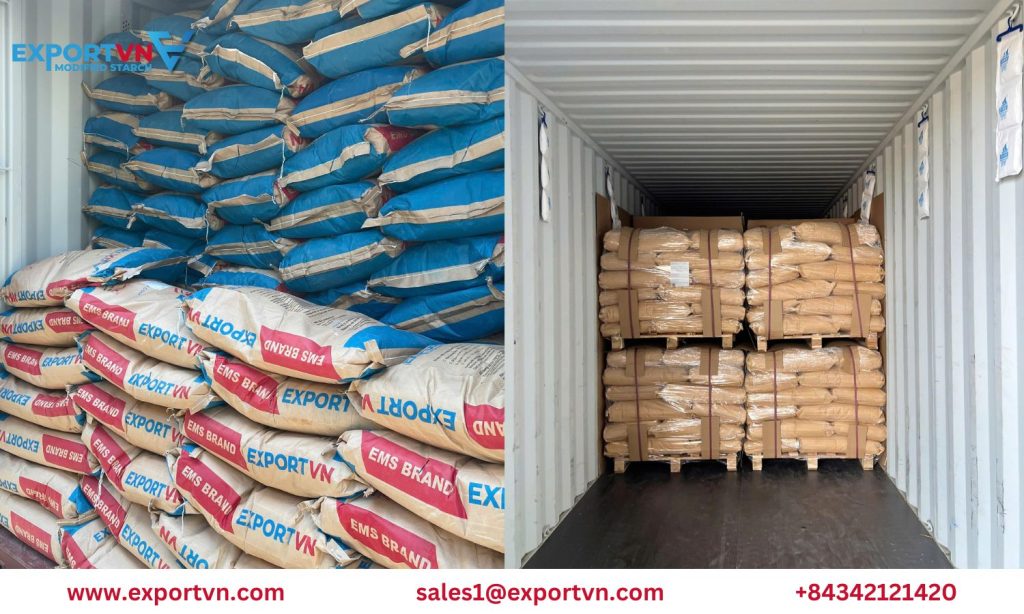
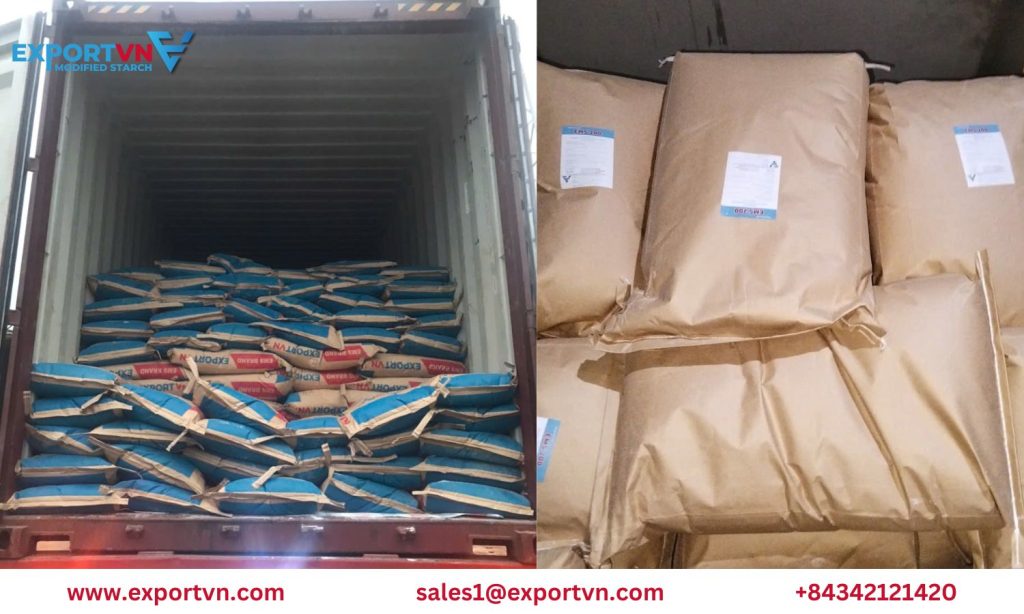
EXPORTVN can support 20-foot and 40-foot container shipments under suitable Incoterms, including FOB, CFR and CIF.
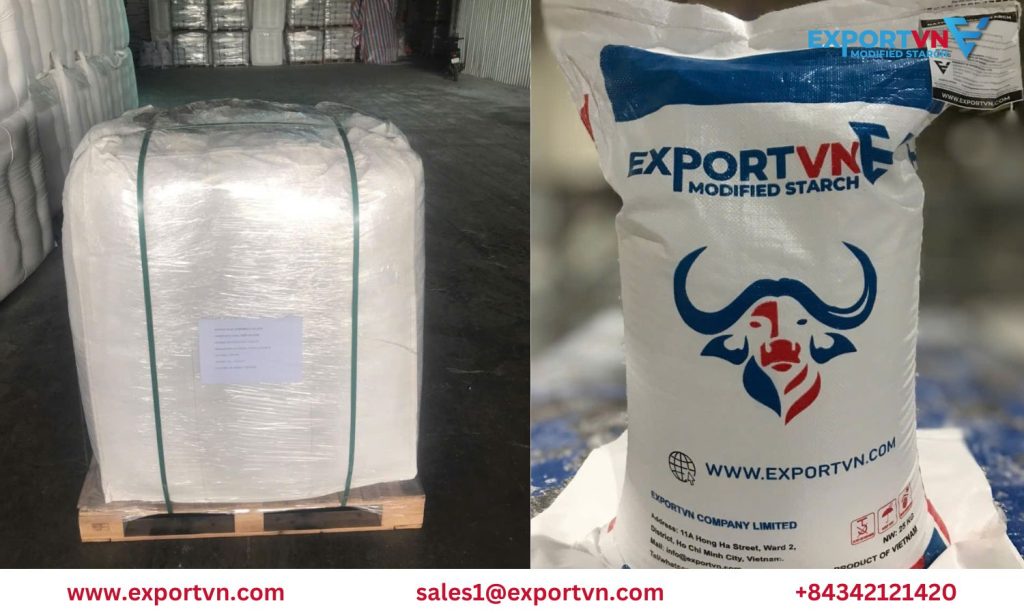
Available packaging may include:
- 25 kg kraft paper bags
- 25 kg PP woven bags
- 50 kg PP woven bags
- Palletized loading
- Non-palletized loading
- Customized shipping marks, where applicable
Final packaging options should be confirmed based on the product, destination requirements and loading plan.
Why Choose EXPORTVN as Your Tapioca Starch Supplier?
EXPORTVN combines product supply with technical, documentation and logistics support. This approach is particularly valuable for international buyers managing food safety approvals, customs clearance and supplier qualification.
The company’s quality-control activities may cover raw material evaluation, production monitoring, finished-product testing, batch traceability and pre-shipment inspection.
In addition, customers can receive support with:
- Product and application selection
- Specifications and Certificates of Analysis
- Food safety documentation
- Customer audit questionnaires
- Compliance declarations
- Export and shipping documents
- Production and shipment updates
- Samples and container orders
Most importantly, customers should provide their application, target viscosity, packaging, quantity and destination port. This information allows the sales and technical teams to recommend a more suitable product and prepare an accurate offer.
Request a Quote for Food Grade Tapioca Starch
Contact EXPORTVN for the latest tapioca starch price, product specification, sample availability and shipping options from Vietnam.
Email: sales1@exportvn.com
WhatsApp: +84 342 121 420
Website: EXPORTVN
