
NATIVE STARCH


Modified Starch for Tomato Sauce
Modified starch for tomato sauce helps food manufacturers achieve consistent viscosity, smooth texture and stable product quality. It can improve sauce body, support processing performance and help control water separation during storage.
For tomato sauce manufacturers, choosing the right starch is important. The formulation must withstand heating, mixing, pumping and filling while maintaining the desired flow and texture.
EXPORTVN supplies modified tapioca starch for food manufacturers seeking reliable ingredients and application-specific starch solutions.
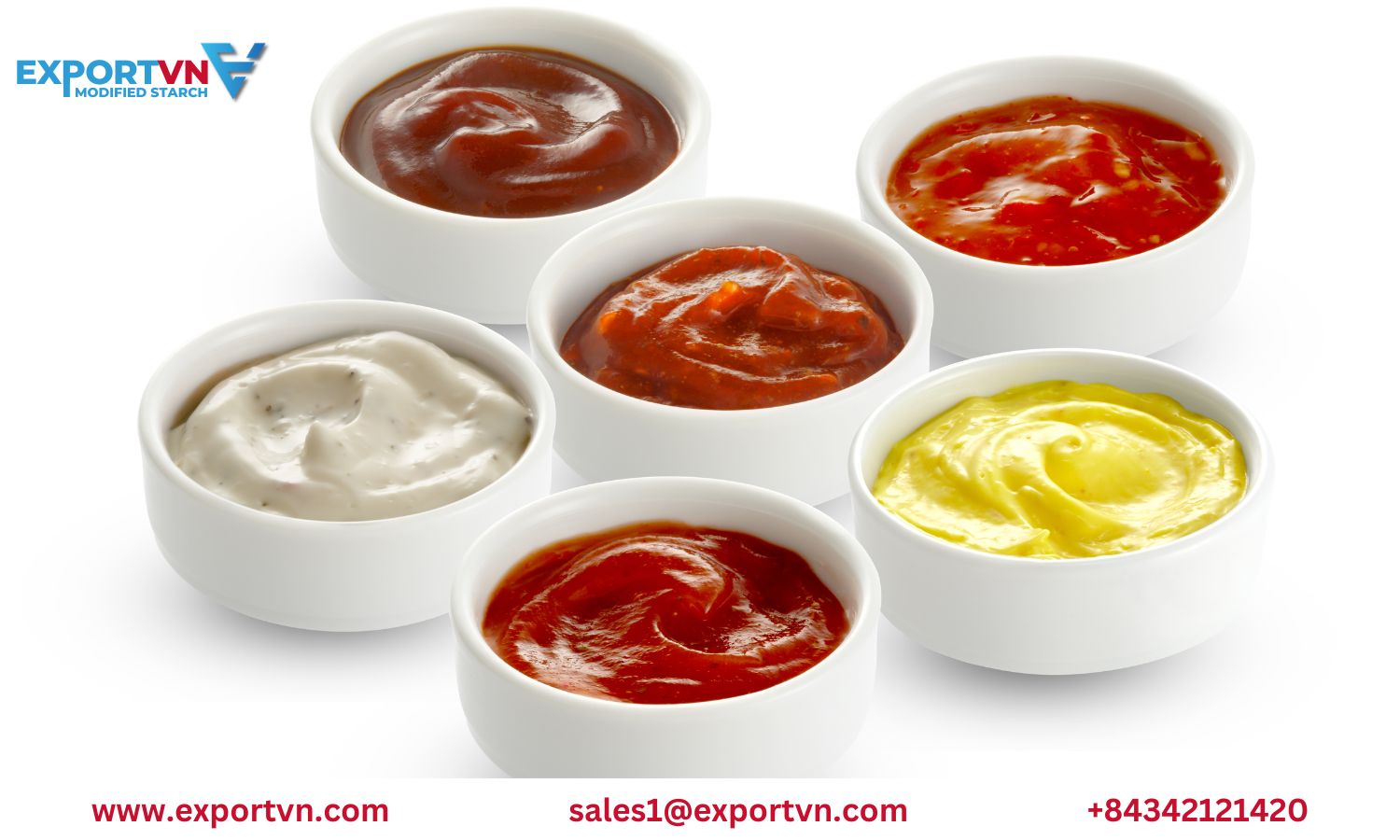
Benefits of Modified Starch in Tomato Sauce
Tomato sauce manufacturers need more than a thickening ingredient. They need consistent texture throughout production and storage.
The right modified tapioca starch can provide several functional benefits.
1. Viscosity Control
Modified starch increases the body and thickness of tomato sauce. It helps manufacturers achieve the desired consistency for different product formats.
A suitable starch grade can help create:
-
Thick and smooth tomato sauce.
-
Consistent viscosity between production batches.
-
Good flow during pumping and filling.
-
The desired coating and pouring properties.
The required viscosity depends on the sauce formulation, starch grade and processing conditions.
2. Texture Improvement
Texture directly affects how consumers experience tomato sauce.
Modified starch can improve smoothness and provide a fuller mouthfeel. It also helps manufacturers adjust the balance between thickness and pourability.
The objective is to achieve a sauce that is thick enough to coat food but still easy to dispense from its packaging.
3. Processing Stability
Tomato sauce production involves several processing stages, including heating, mixing and pumping.
These operations can affect starch viscosity and the final texture. An appropriate modified starch helps maintain the desired consistency under the processing conditions for which it has been selected.
Manufacturers should evaluate starch performance after the complete production process rather than relying only on laboratory viscosity measurements.
4. Water Separation Control
Water separation can affect the appearance and consistency of tomato sauce during storage.
The right starch selection and formulation can help reduce visible liquid separation. However, this result also depends on tomato solids, acidity, processing conditions and storage temperature.
Manufacturers should evaluate separation using actual production samples and defined storage conditions.
Recommended Modified Starch for Tomato Sauce
Different modified starches provide different functional properties. The selection should consider the acidity, heating conditions, target viscosity and processing requirements of the finished sauce.
EXPORTVN specializes in modified tapioca starch and provides several starch types for food processing applications.
E1422 – Acetylated Distarch Adipate
E1422 is a cross-linked and acetylated starch. It is commonly considered when manufacturers need a balance of viscosity, texture and processing stability.
For tomato sauce applications, an appropriate E1422 grade may help:
-
Maintain sauce consistency during processing.
-
Improve texture and mouthfeel.
-
Support viscosity stability under suitable heating conditions.
-
Control changes in texture during storage.
The final performance depends on the specific grade and formulation.
E1442 – Hydroxypropyl Distarch Phosphate
E1442 combines cross-linking and hydroxypropylation to provide functional properties for processed foods.
It may be evaluated in tomato sauce formulations that require viscosity stability and resistance to processing conditions.
Potential application benefits include:
-
Supporting viscosity during heating.
-
Maintaining a consistent sauce texture.
-
Improving stability under suitable processing conditions.
-
Helping control texture changes during storage.
How to Choose the Right Starch
There is no single modified starch that is suitable for every tomato sauce formulation.
Before selecting a grade, manufacturers should consider:
| Selection factor | What to evaluate |
|---|---|
| Product acidity | Finished pH and acid addition sequence |
| Heating conditions | Cooking temperature and holding time |
| Mixing conditions | Mixer type, speed and processing time |
| Pumping and filling | Shear exposure and filling requirements |
| Target texture | Viscosity, flow and mouthfeel |
| Storage | Temperature, duration and water separation |
A controlled application trial is the most practical way to identify the appropriate starch grade.
Tomato Sauce Formulation Calculator
Calculate ingredient quantities based on your target production batch.
Ingredient Formulation
%
%
%
%
%
%
Water (Automatically Calculated)
51.00%
Total formulation: 100%
Calculated Ingredient Quantities
| Ingredient | Percentage | Weight (kg) |
|---|---|---|
| Total Batch | 100% | 100.00 kg |
Note: This calculator is for illustrative formulation calculations only. Actual ingredient proportions should be validated through laboratory testing and production trials.
Tomato Sauce Manufacturing Process
The manufacturing process affects starch hydration, viscosity development and final product consistency.
The following steps provide a general framework for evaluating modified starch in tomato sauce production.
1. Prepare and Check Raw Materials
Prepare the tomato paste or concentrate, modified starch, water, sugar, salt, vinegar and other ingredients.
Check the specifications of each raw material before production. Tomato solids, ingredient quality and acidity can influence the final sauce properties.
2. Disperse the Modified Starch
Disperse the modified starch in water according to the technical instructions for the selected grade.
Proper dispersion helps prevent lumps and uneven hydration.
Keep the mixture moving during preparation if required by the grade-specific instructions.
3. Mix the Tomato Sauce Ingredients
Combine the tomato concentrate and other ingredients according to the established formulation.
Control the mixing speed and addition sequence to achieve uniform distribution.
The starch addition method should be evaluated based on the equipment and formulation.
4. Control Cooking Temperature and Time
Heat the mixture according to the selected starch grade and the validated production process.
Temperature and holding time influence starch hydration, viscosity and texture.
Avoid applying one universal cooking condition to all modified starch grades.
5. Add Acid and Adjust the Final Formulation
Vinegar or other acid ingredients contribute to the characteristic flavor and acidity of tomato sauce.
The timing of acid addition can affect starch performance. Therefore, manufacturers should evaluate the addition sequence with the starch supplier and process specialist.
Measure the finished product pH rather than estimating acidity from the amount of vinegar added.
6. Homogenize, Cool and Fill
Complete mixing and homogenization according to the product requirements.
Check the final viscosity, appearance and texture before filling.
The thermal treatment, filling method, packaging and cooling conditions must be validated for the finished product and target market.
Common Tomato Sauce Problems and Solutions
Texture problems can result from several factors, including starch selection, ingredient variation and processing conditions.
The following table provides a practical starting point for troubleshooting.
| Production problem | Possible causes | Recommended checks |
|---|---|---|
| Sauce becomes too thin | Inadequate starch cooking, unsuitable grade or excessive processing stress | Review cooking conditions and compare suitable starch grades |
| Water separates during storage | Formulation imbalance, unsuitable starch or storage conditions | Check starch selection, tomato solids and storage stability |
| Sauce is too thick | Excessive starch dosage or unsuitable viscosity profile | Adjust the formulation through controlled trials |
| Lumps appear in the sauce | Poor starch dispersion or incorrect addition method | Review slurry preparation and mixing conditions |
| Batch viscosity varies | Differences in raw materials, cooking or final yield | Standardize raw material specifications and process controls |
| Texture changes after heating | Starch grade or processing conditions are unsuitable | Evaluate viscosity after the complete heating process |
Changing starch dosage should not be the first response to every production problem. Manufacturers should identify the underlying cause before adjusting the formulation.
How to Evaluate Modified Starch for Tomato Sauce
Before introducing a new modified starch into commercial production, manufacturers should conduct application trials.
A structured evaluation helps R&D and production teams compare candidate grades under consistent conditions.
1. Compare Viscosity
Measure viscosity using the same instrument, test temperature, spindle and measurement speed.
For products evaluated by flow, use a consistent test method and record the testing conditions.
2. Check Finished Product pH
Measure the equilibrium pH of the finished sauce.
This is important because acidity can influence starch performance and must be considered during grade selection.
3. Evaluate Texture and Appearance
Observe the sauce for:
-
Smoothness and uniformity.
-
Thickness and pourability.
-
Gloss and appearance.
-
Visible lumps or separation.
-
Mouthfeel and sensory quality.
4. Conduct Storage Stability Tests
Store samples under defined conditions and evaluate them at scheduled intervals.
Monitor viscosity changes, water separation, color and overall appearance.
5. Test on Production Equipment
Laboratory results do not always represent full-scale manufacturing performance.
Where possible, evaluate the selected starch on the actual mixing, heating, pumping and filling equipment.
Modified Tapioca Starch Supplier for Tomato Sauce Manufacturers
Choosing a reliable modified starch supplier is important for maintaining product quality and production consistency.
EXPORTVN is a Vietnamese manufacturer and exporter specializing in native and modified tapioca starch. Through its EMS BRAND™ product range, EXPORTVN supplies starch solutions for food manufacturers and industrial customers in international markets.
For tomato sauce manufacturers, EXPORTVN can support ingredient evaluation based on the required product characteristics and processing conditions.
Why Work with EXPORTVN?
-
Modified Tapioca Starch Specialist: Focused on native and modified tapioca starch.
-
Manufacturer and Exporter: Vietnamese starch manufacturing and export operations.
-
International Supply Experience: Exporting to customers in 30 countries.
-
Application-Oriented Support: Assistance with starch selection and product evaluation.
-
B2B Supply: Solutions for food manufacturers, ingredient distributors and industrial buyers.
Product suitability, specifications, documentation and commercial availability should be confirmed for each proposed grade and destination market.
Frequently Asked Questions About Modified Starch for Tomato Sauce
What is the function of modified starch in tomato sauce?
Modified starch helps control viscosity, improve texture and support product consistency. Depending on the selected grade, it may also help manage water separation and processing-related changes in texture.
Which modified starch is suitable for tomato sauce?
E1422, E1442 and E1412 may be considered for evaluation. The appropriate grade depends on product acidity, heating conditions, mixing intensity and the desired finished texture.
Can modified tapioca starch be used in tomato sauce?
Yes. Modified tapioca starch can be used in suitable tomato sauce formulations. The selected grade should be tested for viscosity development, processing stability and finished product quality.
How much modified starch should be added to tomato sauce?
The required dosage depends on the starch grade, tomato solids, target viscosity and manufacturing process. Manufacturers should establish the appropriate dosage through controlled formulation trials rather than applying one fixed percentage to every product.
Does modified starch prevent water separation in tomato sauce?
A suitable modified starch can help reduce visible water separation. However, the result also depends on the complete formulation, processing conditions and storage environment.
What information is needed to select a suitable starch?
Manufacturers should provide the finished product pH, tomato concentrate specifications, target viscosity, cooking temperature, mixing conditions, packaging format and storage requirements.
Request Modified Tapioca Starch for Tomato Sauce
Looking for modified tapioca starch for your tomato sauce production?
Contact EXPORTVN to discuss your formulation requirements, processing conditions and target product specifications.
Our team can help evaluate suitable modified tapioca starch options for your application.
Contact EXPORTVN for product information, technical specifications and sample inquiries.
THINK TAPIOCA / THINK EXPORTVN