


Common types of modified starch, Properties of starch
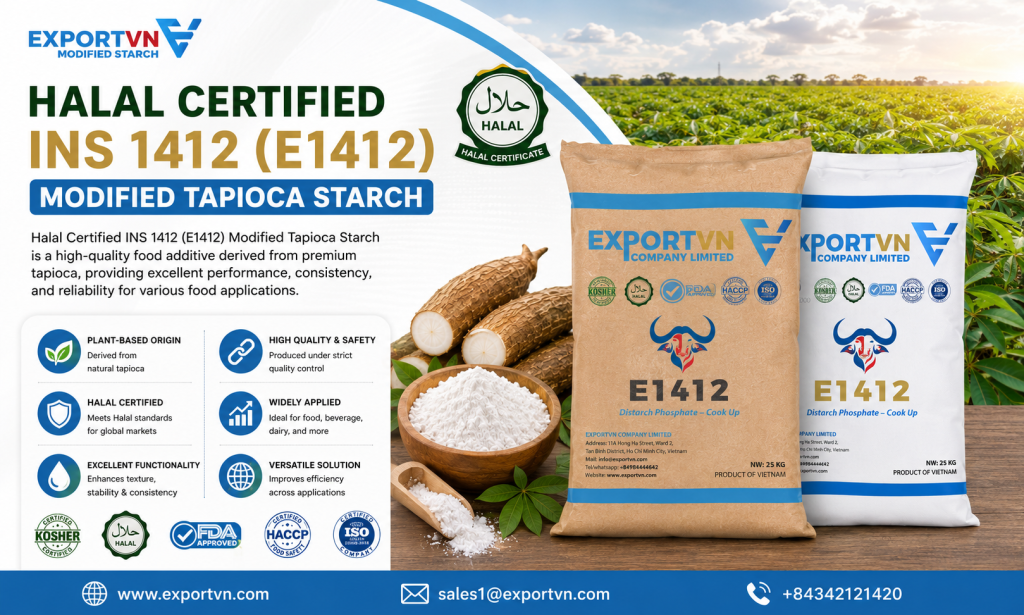
Halal Certified INS 1412 (E1412) Modified Tapioca Starch
May
Halal Certified INS 1412 (E1412) Modified Tapioca Starch is a widely used food ingredient in the global food industry. Also known as Distarch Phosphate, INS 1412 and E1412 refer to the same modified starch produced from tapioca starch through a phosphate cross-linking process. This modification improves heat stability, water retention, texture, and processing performance, making it suitable for a wide range of food applications.
Today, Halal-certified INS 1412 (E1412) is commonly used in processed meat products, noodles, sauces, frozen foods, bakery products, and confectionery products. As global demand for Halal food continues to grow, manufacturers increasingly seek certified ingredients that meet both functional and regulatory requirements.
What Is Halal Certified INS 1412 (E1412) Modified Tapioca Starch?
What Is INS 1412 (E1412)?
INS 1412 and E1412 are different regulatory designations for the same food additive: Distarch Phosphate.
- INS 1412 is commonly used in Codex and many international markets.
- E1412 is the designation used in the European Union.
- Both refer to the same cross-linked modified starch.
- Both provide similar functional properties and food processing benefits.
INS 1412 (E1412) belongs to the family of modified starches that are specifically designed to improve performance under industrial food processing conditions.
Manufacturers can learn more about this product through our E1412 Distarch Phosphate product page.
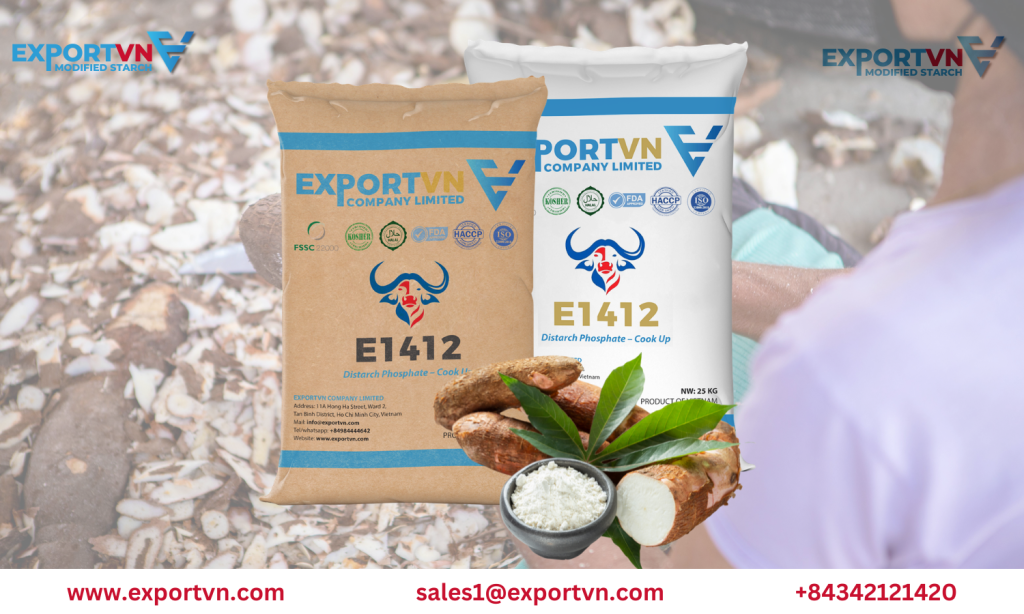
What Does Halal Certification Mean?
Halal certification verifies that an ingredient complies with Islamic dietary requirements and can be safely used in Halal food production.
For modified starch products, certification evaluates:
- Raw material origin
- Manufacturing process
- Processing aids
- Storage and handling systems
- Product traceability
A Halal certificate gives manufacturers confidence that the ingredient is suitable for Muslim consumers and export markets requiring Halal compliance.
Why Halal Certification Matters for Food Manufacturers
Halal certification has become increasingly important in international food trade.
Benefits include:
- Access to Middle Eastern markets
- Compliance with customer requirements
- Greater consumer confidence
- Support for global export activities
- Improved brand credibility
For many food manufacturers, Halal certification is now a key purchasing requirement when selecting ingredient suppliers.
How Is Halal Certified INS 1412 (E1412) Produced?
Tapioca Starch as the Raw Material
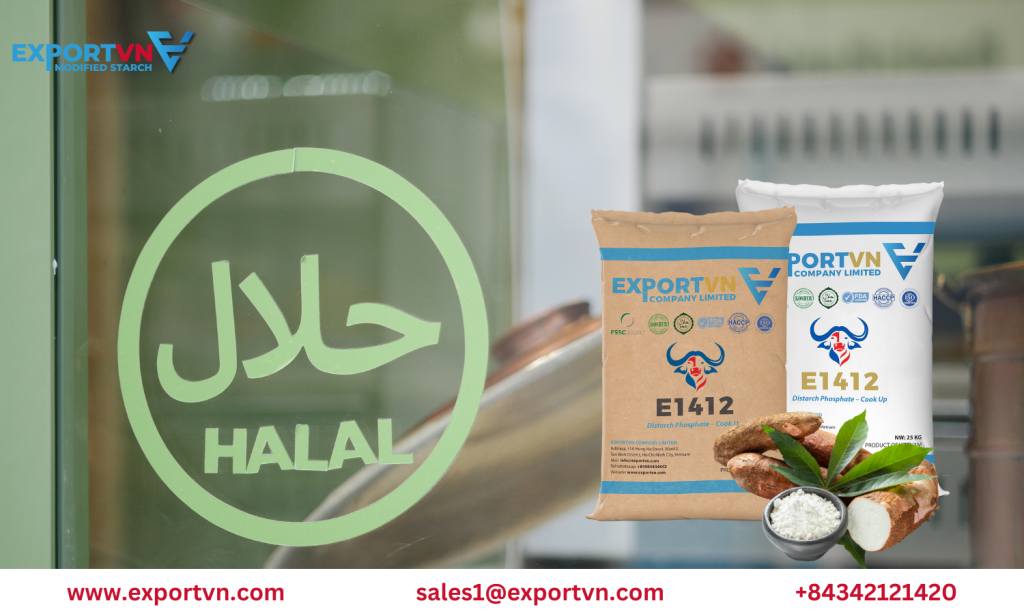
INS 1412 (E1412) is typically produced from tapioca starch extracted from cassava roots.
Tapioca starch offers several advantages:
- Plant-based origin
- Neutral flavor
- Bright white color
- Excellent functionality
- Wide food application compatibility
Because it is derived from cassava, tapioca starch is naturally suitable for Halal food manufacturing.
Cross-Linking Modification Process
The production of INS 1412 (E1412) involves a phosphate cross-linking process.
This modification strengthens starch granules and improves:
- Heat resistance
- Acid stability
- Shear resistance
- Viscosity control
- Texture retention
The resulting Distarch Phosphate performs significantly better than native starch under demanding food processing conditions.
Quality Control and Certification
Reliable manufacturers implement strict quality assurance systems throughout production.
Typical certifications include:
- Halal Certification
- HACCP Certification
- ISO 22000 Certification
- Kosher Certification
Manufacturers also maintain traceability systems to ensure compliance with international food safety standards.
Benefits of Halal Certified INS 1412 (E1412) in Food Applications
Excellent Water Retention
One of the most important benefits of INS 1412 (E1412) is its ability to retain water during processing.
This helps manufacturers:
- Reduce moisture loss
- Improve product yield
- Maintain juiciness
- Improve texture stability
Water retention is particularly valuable in meat processing and frozen food applications.
Improved Texture and Mouthfeel
INS 1412 (E1412) contributes to:
- Better elasticity
- Improved firmness
- Enhanced bite
- More uniform texture
These properties improve consumer acceptance and product quality.
Better Heat and Acid Stability
Compared with native starch, INS 1412 (E1412) remains stable during:
- Cooking
- Sterilization
- Pasteurization
- Acidic processing conditions
This makes it an effective food stabilizer in demanding food systems.
Consistent Product Quality
Food manufacturers value consistency because it supports production efficiency and customer satisfaction.
INS 1412 (E1412) helps maintain:
- Uniform viscosity
- Stable texture
- Reliable appearance
- Consistent functionality
Enhanced Shelf-Life Stability
The improved stability of Distarch Phosphate helps products maintain quality throughout storage.
Benefits include:
- Reduced syneresis
- Better texture retention
- Improved product stability
- Extended shelf life
Suitable for Global Halal Markets
Halal-certified INS 1412 (E1412) supports food manufacturers serving:
- Middle East
- Southeast Asia
- South Asia
- Africa
- Europe
- North America
This makes it a strategic ingredient for companies exporting food products internationally.
Applications of Halal INS 1412 (E1412) Modified Tapioca Starch
| Food Category | Benefits of Halal INS 1412 (E1412) |
|---|---|
| Processed Meat | Water retention and texture |
| Noodles | Elasticity and cooking stability |
| Sauces | Thickening and stability |
| Frozen Foods | Freeze-thaw resistance |
| Bakery | Softness and moisture retention |
| Confectionery | Texture improvement |
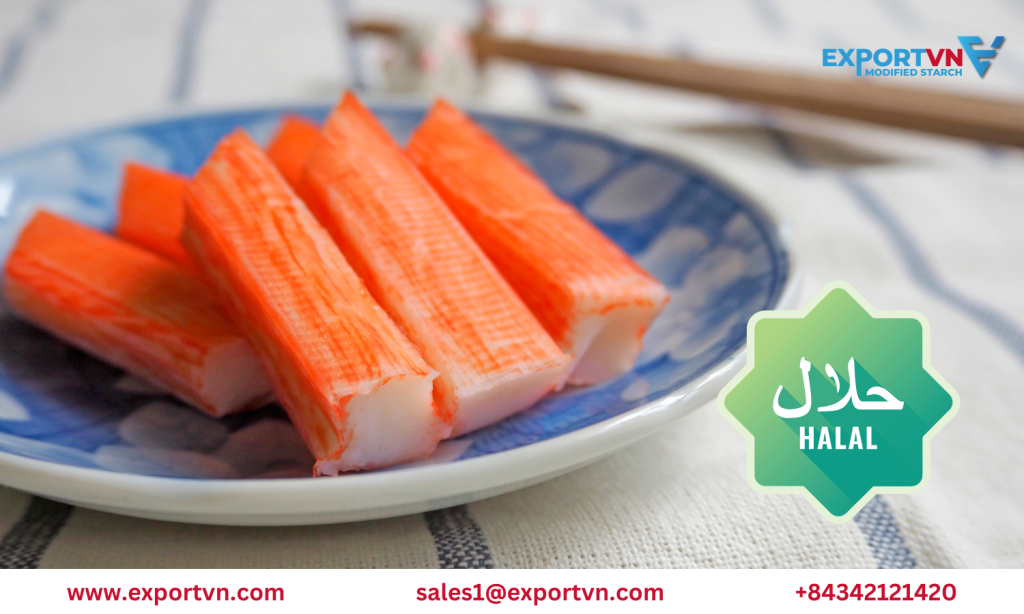
Processed Meat Products
Halal INS 1412 (E1412) is widely used in:
Key benefits include:
- Improved water retention
- Higher cooking yield
- Better texture
- Enhanced sliceability
Instant Noodles
In noodle applications, INS 1412 (E1412) improves elasticity, cooking tolerance, and texture consistency.
Sauces and Dressings
In products such as ketchup and chili sauce, the starch provides viscosity control, smooth texture, and stability.
Frozen Foods
INS 1412 (E1412) helps reduce water separation and maintain product quality during freeze-thaw cycles.
Bakery Products
Bakery manufacturers use this starch to improve:
- Softness
- Moisture retention
- Shelf-life stability
Confectionery Products
Applications include:
- Jelly products
- Fillings
- Sweet sauces
- Confectionery products
where stable texture is important.
Why Choose EXPORTVN as Your Halal INS 1412 (E1412) Supplier?
Reliable Manufacturing and Export Experience
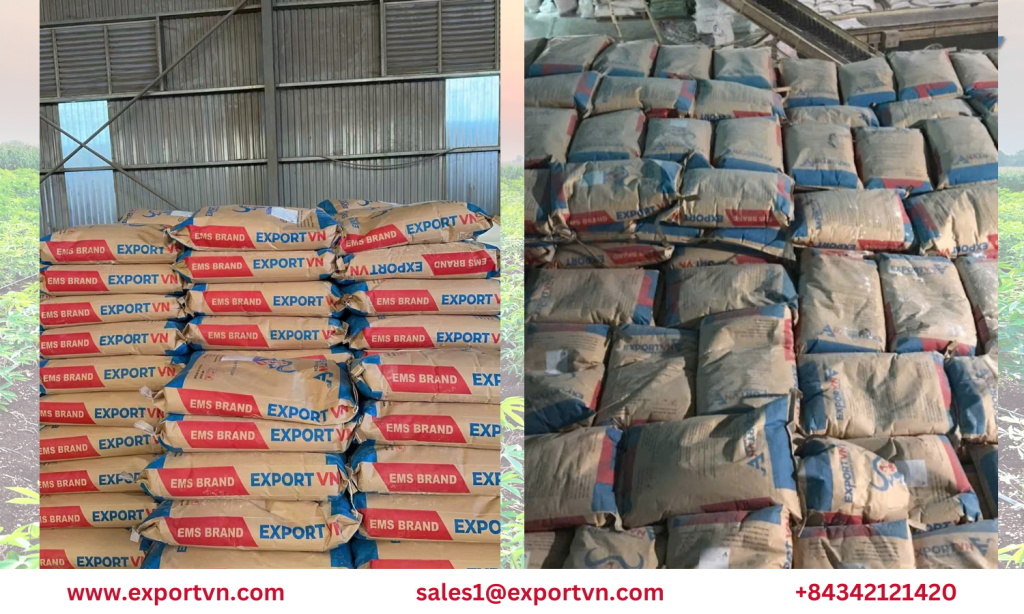
EXPORTVN CO., LTD is a trusted manufacturer and exporter of modified tapioca starch products serving customers worldwide.
With extensive export experience, EXPORTVN supports food manufacturers across Asia, the Middle East, Africa, Europe, and the Americas.
Certifications and Quality Assurance
EXPORTVN products are supported by:
- Halal Certification
- ISO 22000 Certification
- HACCP Certification
- Kosher Certification
These certifications help customers meet both regulatory and commercial requirements.
Technical Support for Food Manufacturers
EXPORTVN provides:
- Product recommendations
- Technical consultation
- Application support
- Sample availability
For specialized applications, customers may also consider E1422 Acetylated Distarch Adipate or E1442 Hydroxypropyl Distarch Phosphate.
Global Supply Capability
EXPORTVN serves customers in:
- Asia
- Middle East
- Africa
- Europe
- North America
- South America
Our stable production capacity ensures reliable supply for global food manufacturers.
Frequently Asked Questions
Is INS 1412 (E1412) Halal?
Yes. When manufactured from approved raw materials under certified production conditions, INS 1412 (E1412) can be Halal certified.
Is modified tapioca starch Halal?
Modified tapioca starch can be Halal provided the raw materials, processing aids, and manufacturing processes comply with Halal requirements.
What is Halal Certified Distarch Phosphate?
It is INS 1412 (E1412) that has been certified by a recognized Halal certification body.
What foods use Halal INS 1412 (E1412)?
Common applications include meat products, noodles, sauces, frozen foods, bakery products, and confectionery products.
Can Halal INS 1412 (E1412) be used in meat products?
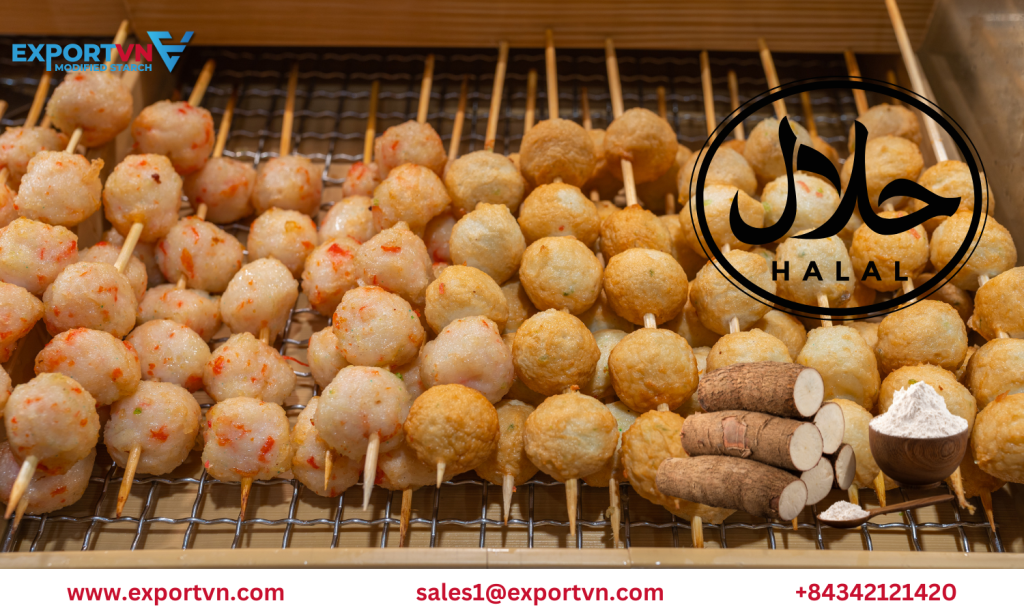
Yes. It is widely used in sausages, meatballs, ham products, and surimi-based products.
What certificates should a Halal starch supplier provide?
Manufacturers typically request:
- Halal Certificate
- HACCP Certificate
- ISO 22000 Certificate
- Kosher Certificate (when required)
Conclusion
Halal Certified INS 1412 (E1412) Modified Tapioca Starch combines the functionality of Distarch Phosphate with the assurance of Halal compliance. Its excellent water retention, texture improvement, processing stability, and suitability for global Halal markets make it an ideal ingredient for modern food manufacturing.
Contact EXPORTVN
Looking for a reliable supplier of Halal Certified INS 1412 (E1412) Modified Tapioca Starch? Contact EXPORTVN today for product specifications, certificates, technical consultation, and sample requests.
Email: sales1@exportvn.com
WhatsApp: +84342121420
Website: https://exportvn.com/us/
