


Common types of modified starch, Properties of starch
What Is Granulated Tapioca Starch Used For?
Jul
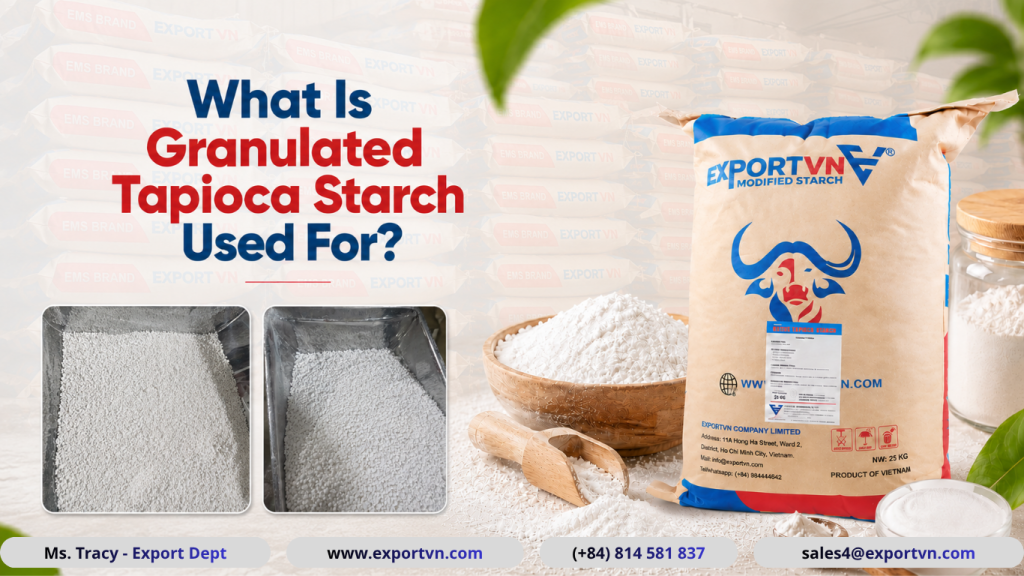
Granulated Tapioca Starch is a versatile food ingredient widely used to improve texture, crispiness, binding strength, and mouthfeel across many food applications. Unlike conventional native tapioca starch, which is usually processed into a fine powder, Granulated Cassava Starch features a larger and more uniform particle size that delivers unique functional benefits during food processing.
Also known as Coarse Tapioca Starch, this ingredient is produced from carefully selected cassava roots. Some buyers also search for similar terms such as Coarse Tapioca Flour, although the product specifications may vary depending on the manufacturer and application.
Today, food manufacturers around the world use Granulated Tapioca Starch, Granulated Cassava Starch, and Coarse tapioca flour in crispy coatings, snack manufacturing, seafood processing, and meat products because these ingredients help create superior texture while supporting clean-label product development. To ensure consistent quality from production to delivery, EXPORTVN CO., LTD supplies its products under the Buffalo Brand Tapioca Starch label with durable export packaging designed for safe international transportation and storage.
What Is Granulated Tapioca Starch?
Granulated Tapioca Starch is a natural starch ingredient extracted from fresh cassava roots and processed into controlled granules instead of conventional fine powder. Compared with ordinary native tapioca starch, the larger particle size offers different hydration characteristics and creates distinctive textures in finished food products.
Many international buyers also refer to this ingredient as Granulated Cassava Starch, Coarse Tapioca Starch. Regardless of the terminology, the objective remains the same: providing better texture development for modern food manufacturing.
Because it is produced from cassava, Food Grade starch ingredient naturally offers several important advantages:
- Neutral flavor that does not affect the original taste of food
- Excellent coating adhesion
- Improved crispiness after frying
- Better binding performance
- Naturally gluten-free composition
- Clean-label ingredient suitable for various formulations
Vietnam is one of the world’s leading cassava starch producers, supplying high-quality starch ingredients to food manufacturers worldwide. Among these products, Buffalo Brand Cassava Starch, developed and exported by EXPORTVN CO., LTD, is trusted by international customers for its consistent quality, reliable supply, and professional export packaging.
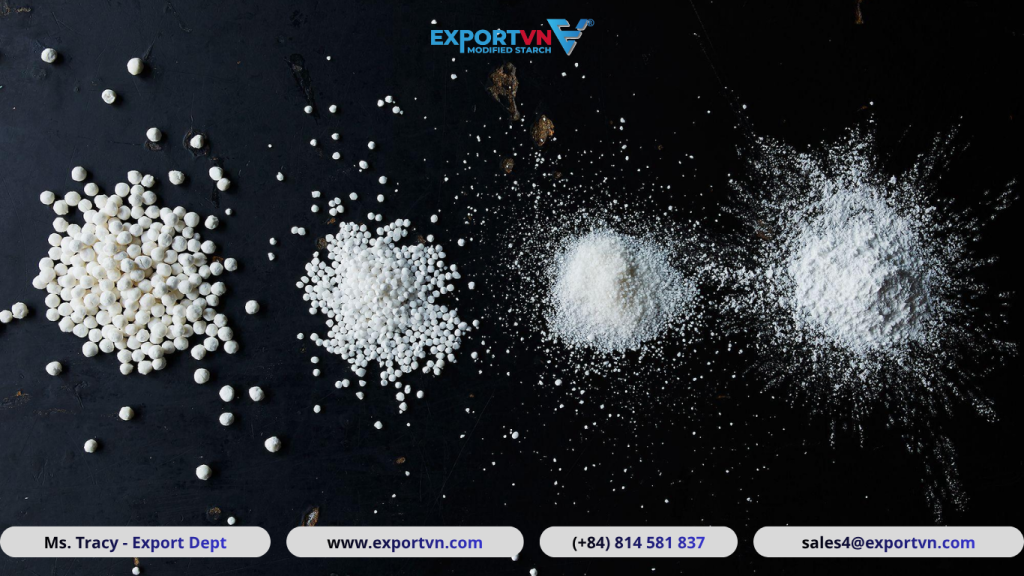
Granulated vs Native Tapioca Starch
For example, the main difference between granulated tapioca starch and regular native tapioca starch is particle structure and functional performance.
| Technical Parameter | Native Tapioca Starch | Granulated Tapioca Starch |
|---|---|---|
| Physical Form | Fine powder | Granular particles |
| Particle Size | Fine powder | 1.5-3 mm |
| Water Absorption Rate | Fast | Moderate |
| Surface Development | Low | High |
| Crispiness | ★★☆☆☆ | ★★★★★ |
| Coating Performance | ★★☆☆☆ | ★★★★★ |
| Expansion in Fried Products | Moderate | Excellent |
Because of these characteristics, food manufacturers often select granulated cassava starch when they need more than simple thickening and want to improve the overall eating experience of their products.
Why Food Manufacturers Choose Granulated Starch
Moreover, there are several reasons why granulated starch suppliers continue to see increasing demand from the food industry:
- Clean label ingredient: A natural starch solution without chemical modification.
- Gluten-free ingredient: Suitable for gluten-free food formulations.
- Neutral flavor: Does not interfere with the original taste of food products.
- Texture enhancement: Helps create crispy, chewy, and elastic textures.
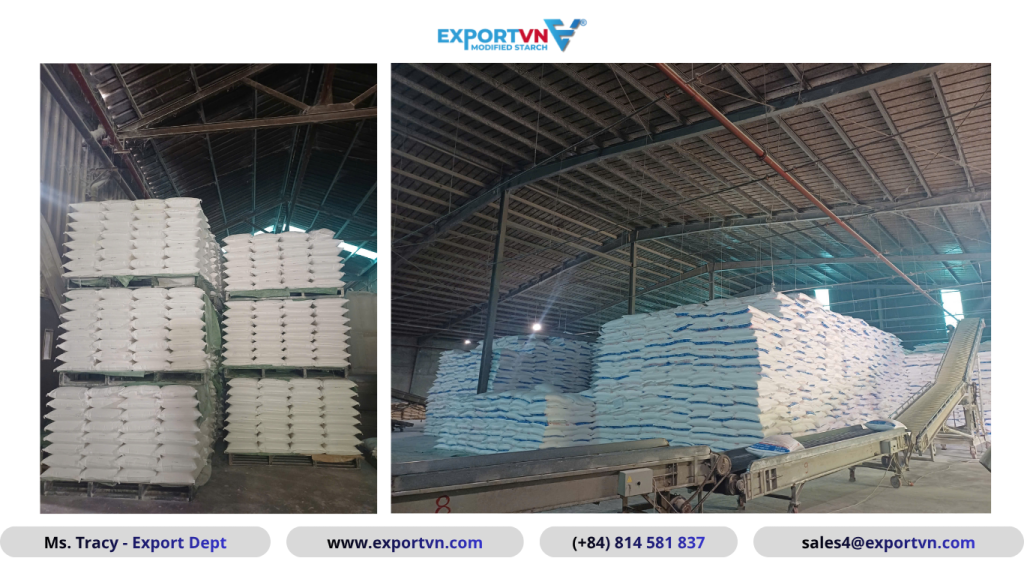
For industrial food production, packaging quality is also an important factor. Vietnamese tapioca starch exporters commonly use professional packaging solutions such as Buffalo Brand Tapioca Starch bags to ensure product protection during international transportation and storage.
What Is Granulated Tapioca Starch Used For?
Granulated Tapioca Starch is primarily used in coating and breading systems to improve the texture, appearance, and frying performance of coated foods. Compared with conventional starches or wheat flour, Granulated Cassava Starch features larger, controlled granules that create a thicker and more textured coating layer.
As a result, food manufacturers choose this cassava-based ingredient when they need products with excellent crispiness, strong coating adhesion, and an attractive golden appearance after frying. These functional properties make it an ideal ingredient for industrial food processing, particularly in frozen and ready-to-fry products.
Granulated Tapioca Starch for Crispy Coating and Fried Foods
One of the most common applications of Granulated Tapioca Starch is in coating systems for deep-fried foods. Its coarse granule structure helps create a crispy outer layer while improving coating stability throughout processing and frying.
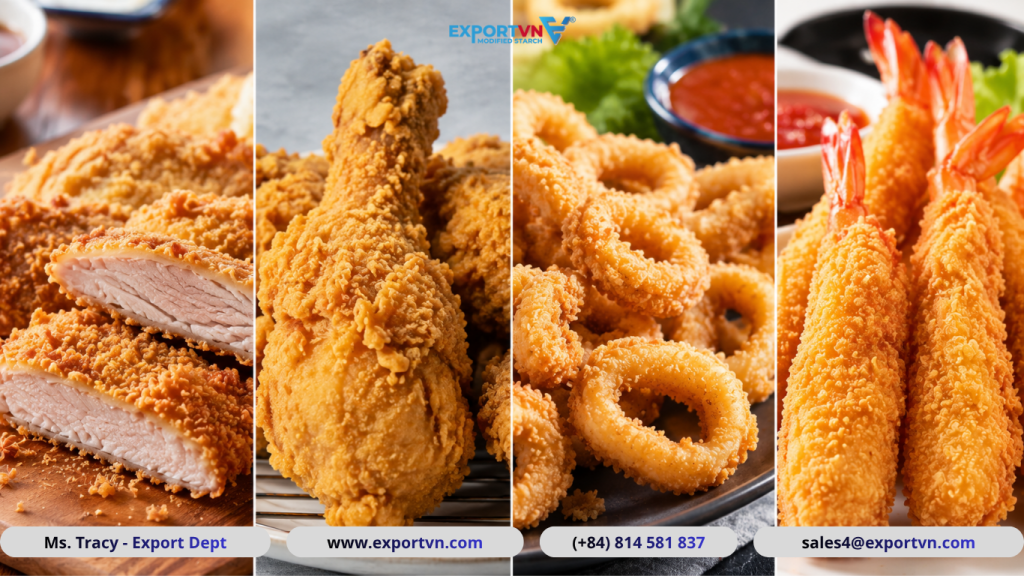
Typical applications include:
- Fried chicken
- Chicken nuggets
- Chicken popcorn
- Breaded shrimp
- Tempura shrimp
- Breaded squid rings
- Fish fillets
- Fish fingers
- Pork cutlets
- Frozen coated seafood products
Compared with traditional flour-based coating systems, Coarse Tapioca Starch produces a lighter, crispier, and more attractive coating, making it a preferred ingredient for manufacturers of premium fried foods.
Functional Benefits in Coating Systems
Beyond its wide range of applications, Coarse tapioca flour provides excellent functional performance throughout the coating and frying process. The larger particle size creates a rough, well-defined surface that improves both product appearance and eating quality.
Key functional benefits include:
- Creates a crispy and crunchy coating
- Improves batter pick-up and coating adhesion
- Forms a thicker, textured coating layer
- Produces an attractive golden color after frying
- Maintains crispiness for a longer holding time
- Reduces coating loss during processing and frying
- Improves coating stability during deep frying
- Enhances product consistency between production batches
- Delivers a light, crunchy bite with excellent mouthfeel
- Supports efficient industrial coating operations
These advantages make Coarse tapioca starch an excellent choice for manufacturers seeking premium coating performance while maintaining a natural, clean-label formulation.
Why Manufacturers Prefer This Ingredient
The growing demand for Granulated Tapioca Starch reflects the increasing need for natural ingredients that improve coating quality without compromising production efficiency. As consumers continue to prefer crispy fried foods with a satisfying texture, manufacturers require ingredients that consistently deliver high-performance results.
Choosing the Right Coating Ingredient
Food manufacturers around the world increasingly select Granulated Cassava Starch, and Coarse Tapioca Starch because they provide reliable performance in industrial coating applications. Their controlled particle size enhances coating structure, improves frying stability, and creates a distinctive crispy texture that consumers enjoy.
Whether used for fried chicken, breaded shrimp, squid rings, fish fillets, pork cutlets, or frozen coated seafood, The coarse starch granules helps manufacturers produce high-quality fried products with consistent appearance, excellent crunchiness, and superior coating adhesion. These functional benefits have made it an essential ingredient in modern coating and breading systems for the global food industry.
Choosing the Right Tapioca Starch Supplier
Selecting a reliable tapioca starch supplier is important for maintaining consistent product quality and production performance.
Food manufacturers should consider:
- Raw material quality
- Production capability
- Food safety certifications
- Technical support
- Packaging solutions
Professional Vietnamese suppliers such as EXPORTVN provide Native Tapioca Starch, Modified Tapioca Starch, and functional starch solutions for global food manufacturers.
With proper packaging solutions such as Buffalo Brand Tapioca Starch bags, tapioca starch products can maintain quality throughout international shipping and storage.
Frequently Asked Questions About Granulated Tapioca Starch
What is granulated tapioca starch used for?
This food-grade starch ingredient is mainly used to improve texture, crispiness, elasticity, and binding properties in food products such as coatings, noodles, snacks, meat products, and bakery items.
Is the product starch gluten-free?
Yes. Tapioca starch is naturally gluten-free, making it suitable for gluten-free food applications and clean-label product development.
What is the difference between Native Tapioca Starch and Granulated Tapioca Starch?
Native Tapioca Starch is a fine powder mainly used for thickening and texture development. Granulated Tapioca Starch has a larger particle size and is specially designed to improve coating adhesion, crispiness, and frying performance, making it ideal for fried chicken, seafood, and other coated food products.
See how EXPORTVN develops and tests starch solutions for food applications
Conclusion
Granulated Starch has become a valuable ingredient for producing high-quality coated foods with an appealing golden appearance, crispy texture, and long-lasting crunch. Thanks to its controlled particle size, it enhances coating adhesion, develops a distinctive crunchy surface, and delivers consistent frying performance for products such as fried chicken, pork cutlets, breaded shrimp, squid rings, fish fillets, and other frozen coated foods.
With its natural origin, neutral flavor, and reliable processing performance, Food Grade Granulated Starch continues to support modern food production by helping manufacturers create premium coating systems that meet both industrial processing requirements and consumer expectations. EXPORTVN CO., LTD supplies Buffalo Brand Starch, providing a dependable solution for businesses seeking consistent quality, stable supply, and reliable export packaging for global markets.
Contact for inquiries and business cooperation:
Ms. Tracy – Global Sales Executive
WhatsApp/ Mob: (+84) 814 581 837
Email: sales4@exportvn.com

Pingback: बफ़ेलो ब्रांड संशोधित टैपिओका स्टार्च का निर्माता कौन है?
Pingback: Amidon de tapioca modifié Buffalo : quelle entreprise le produit ?