


Common types of modified starch, Properties of starch
E1450 Modified Starch Certificates: ISO 22000, HACCP, Halal & Kosher
Jun
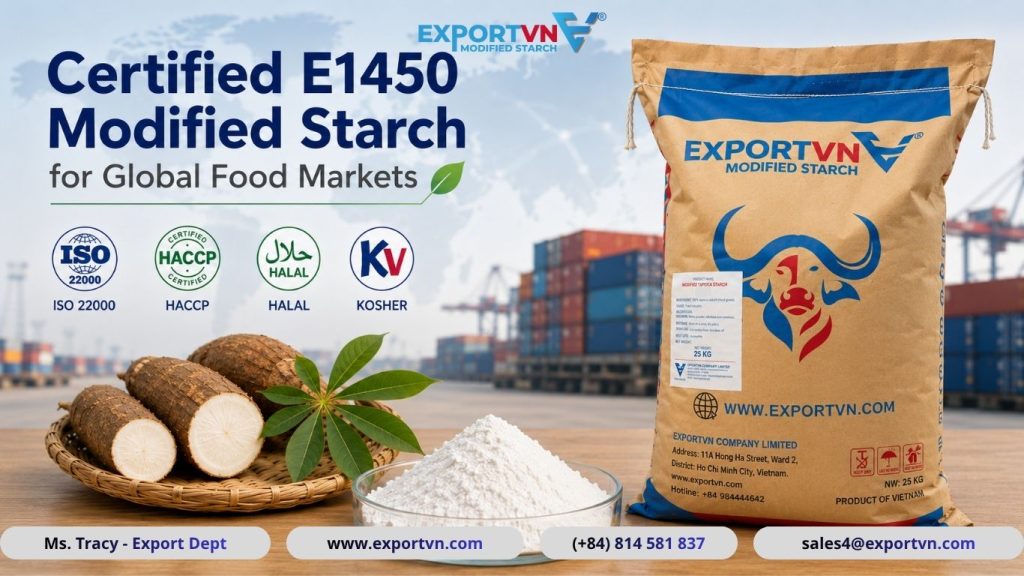
E1450 Modified Starch Certificates are essential documents that verify the safety, quality, and compliance of E1450 modified starch for use in the global food industry.
Today, food manufacturers, importers, and distributors require more than just a functional ingredient. They also need assurance that the ingredient is produced under controlled conditions and complies with recognized food safety standards. For this reason, certifications such as ISO 22000, HACCP, Halal, and Kosher have become key requirements when sourcing E1450 Modified Tapioca Starch, also known as INS 1450, Starch Sodium Octenyl Succinate (SSOS), or OSA Modified Starch.
These certifications help buyers reduce supply chain risks, simplify supplier approval procedures, and meet food safety requirements in different international markets.
Why Certifications Matter for E1450 Modified Starch
What Are E1450 Starch Certificates?
E1450 Modified Starch Certificates are official documents issued by accredited certification bodies or authorized organizations to confirm that the product meets specific standards related to food safety management, quality control, and religious compliance.
Because E1450 Modified Starch is widely used in beverages, dairy products, bakery fillings, sauces, nutritional powders, and instant food systems, manufacturers must ensure that the ingredient complies with international requirements before it enters the production chain.
These certificates provide objective evidence that the manufacturing process follows recognized standards and that the product is suitable for food applications.
Without valid certifications, suppliers may encounter:
- Import restrictions and customs delays
- Difficulties during supplier qualification audits
- Reduced acceptance by multinational food companies
- Limited access to regulated markets
- Increased compliance risks
As a result, certifications are no longer optional documents. They have become an important part of global food ingredient trade.
Why Buyers Request E1450 Starch Certificates Before Purchasing
Most international buyers evaluate suppliers based on both product performance and compliance documentation.
Before approving a supplier, food manufacturers often review certifications to verify that production facilities operate under controlled food safety systems. This process helps buyers reduce operational risks and ensure regulatory compliance.
Certified products also provide greater confidence regarding:
- Product consistency
- Food safety management
- Manufacturing traceability
- Regulatory compliance
- Supply chain reliability
For many multinational food companies, certification is a mandatory requirement before commercial discussions can proceed.
Common Documents Requested by International Buyers
In addition to ISO 22000, HACCP, Halal, and Kosher certificates, buyers frequently request supporting technical documents when evaluating E1450 Modified Starch suppliers.
Commonly requested documents include:
- Certificate of Analysis (COA)
- Product Specification Sheet
- Technical Data Sheet (TDS)
- Material Safety Data Sheet (MSDS)
- Halal Certificate
- Kosher Certificate
- Certificate of Origin (CO)
- Product Brochure
Providing complete documentation helps accelerate supplier approval and demonstrates professionalism and transparency.
Key Certifications for E1450 Modified Starch
ISO 22000 Certification
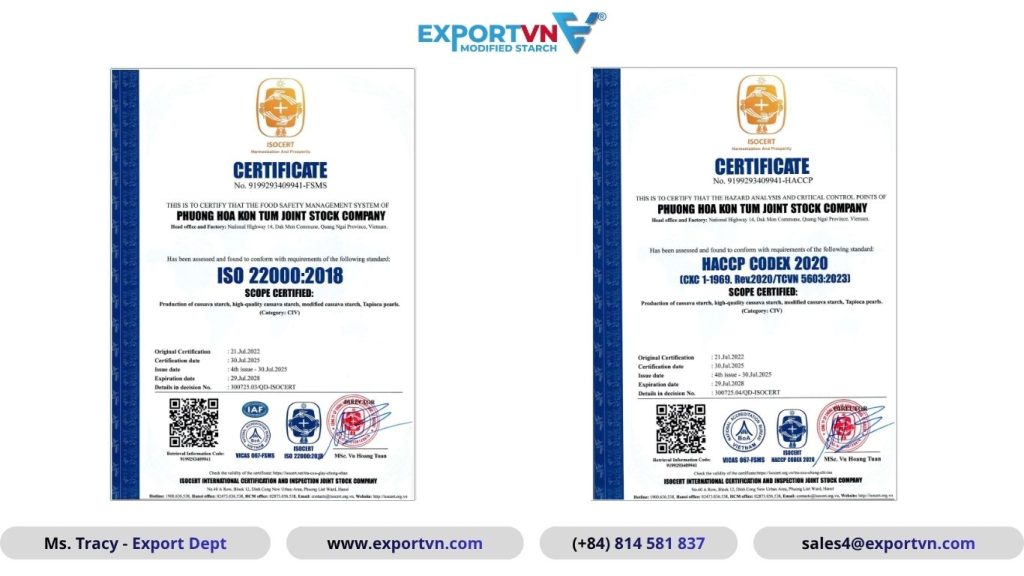
ISO 22000 is an internationally recognized food safety management system standard applicable throughout the food supply chain.
The standard provides a structured framework for identifying, evaluating, and controlling food safety hazards. It also promotes continuous improvement and effective communication between all parties involved in food production.
For manufacturers of E1450 Modified Tapioca Starch, ISO 22000 demonstrates a commitment to maintaining consistent food safety controls and management practices.
Key benefits of ISO 22000 certification include:
- Improved food safety management
- Better process control
- Enhanced traceability
- Increased customer confidence
- Stronger compliance with international requirements
Because of its global recognition, ISO 22000 is one of the most commonly requested certifications in the food ingredient industry.
HACCP Certification
HACCP (Hazard Analysis and Critical Control Points) is a preventive food safety system designed to identify and control hazards before they affect product safety.
Rather than relying solely on final product testing, HACCP focuses on preventing problems throughout the production process.
The HACCP approach includes:
- Hazard identification
- Risk assessment
- Critical control point determination
- Monitoring procedures
- Corrective actions
- Verification activities
For INS 1450 manufacturers, HACCP helps ensure that food safety risks are effectively controlled during production, handling, storage, and transportation.
Many food companies consider HACCP certification a fundamental requirement when selecting ingredient suppliers.
Halal Certification
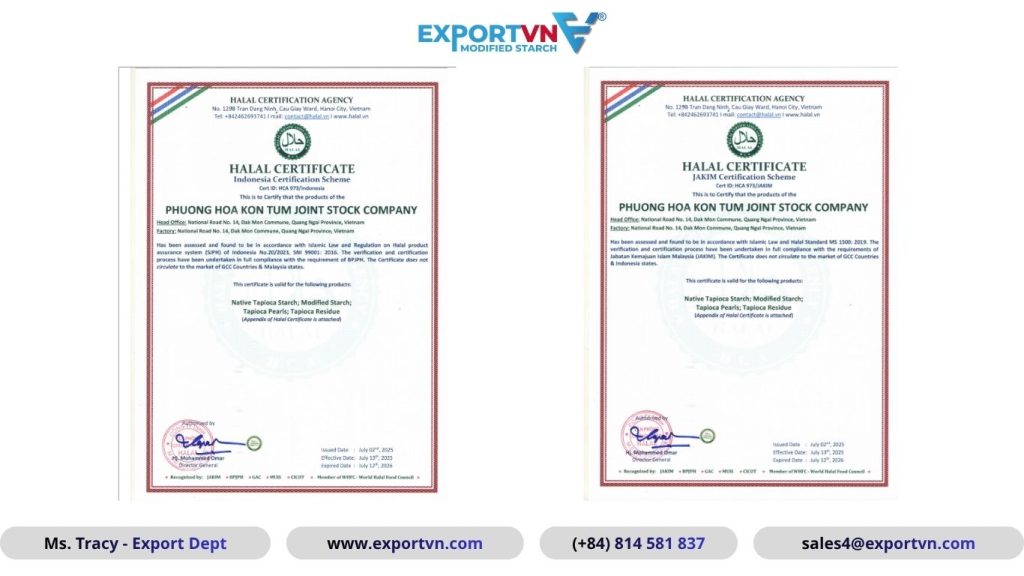
Halal Certification verifies that a product complies with Islamic dietary requirements.
For INS 1450 Modified Starch, Halal certification confirms that raw materials, production processes, and handling procedures meet Halal standards.
This certification is particularly important for food manufacturers serving Muslim consumers in:
- The Middle East
- Southeast Asia
- South Asia
- Africa
Halal certification helps food manufacturers expand their market reach and meet customer expectations in these regions.
In many countries, Halal-certified ingredients are strongly preferred and sometimes required for specific food applications.
Kosher Certification
Kosher Certification verifies compliance with Jewish dietary laws.
To obtain Kosher certification, manufacturers must ensure that raw materials, production equipment, and manufacturing processes comply with Kosher requirements.
Although Kosher certification primarily serves Jewish consumers, it is also widely valued by international food manufacturers because it reflects strict process control and quality management.
Kosher-certified ingredients often provide additional benefits such as:
- Increased market acceptance
- Enhanced product credibility
- Stronger quality perception
- Access to specialized food markets
As a result, many global food brands prefer suppliers that can provide Kosher-certified ingredients.
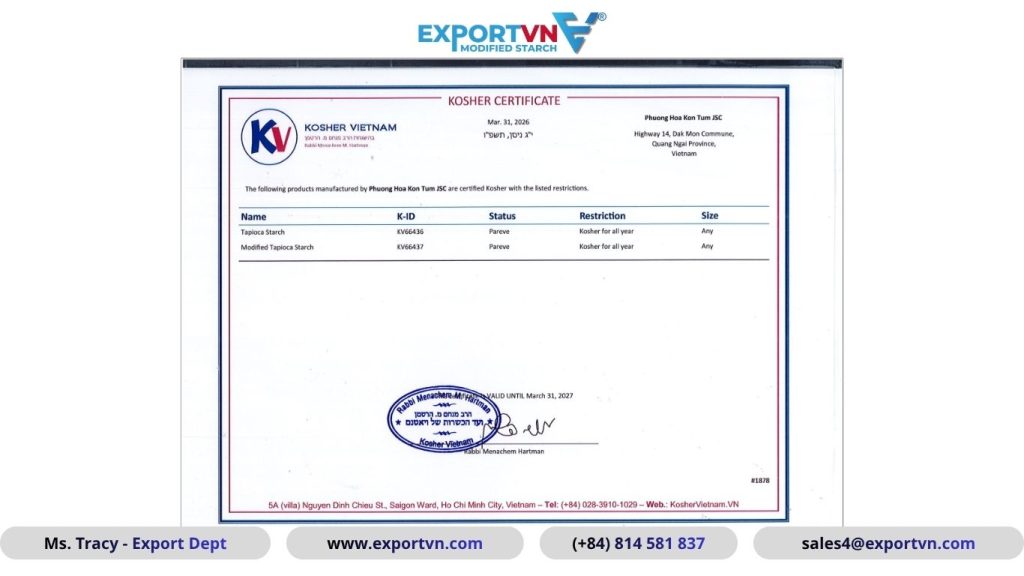
E1450 Certification Requirements for Global Food Manufacturers
Certification Requirements in Different Markets
Certification requirements vary depending on the destination market and customer expectations.
For example:
- Middle Eastern markets often prioritize Halal certification.
- Southeast Asian buyers frequently request Halal documentation.
- European food manufacturers commonly require ISO 22000 and HACCP certification.
- North American buyers may request HACCP, Kosher, and additional technical documentation.
Understanding these requirements helps suppliers prepare the necessary documentation and avoid delays during customer approval processes.
How Certifications Support Supplier Approval
Supplier approval is a critical step in the procurement process of large food companies.
Before purchasing ingredients, buyers often conduct evaluations covering:
- Food safety systems
- Quality management practices
- Regulatory compliance
- Documentation control
- Manufacturing capability
Certifications such as ISO 22000, HACCP, Halal, and Kosher provide evidence that the supplier operates according to recognized standards.
Consequently, certified suppliers often experience faster approval processes and greater opportunities to participate in international procurement programs.
E1450 Modified Starch from EXPORTVN
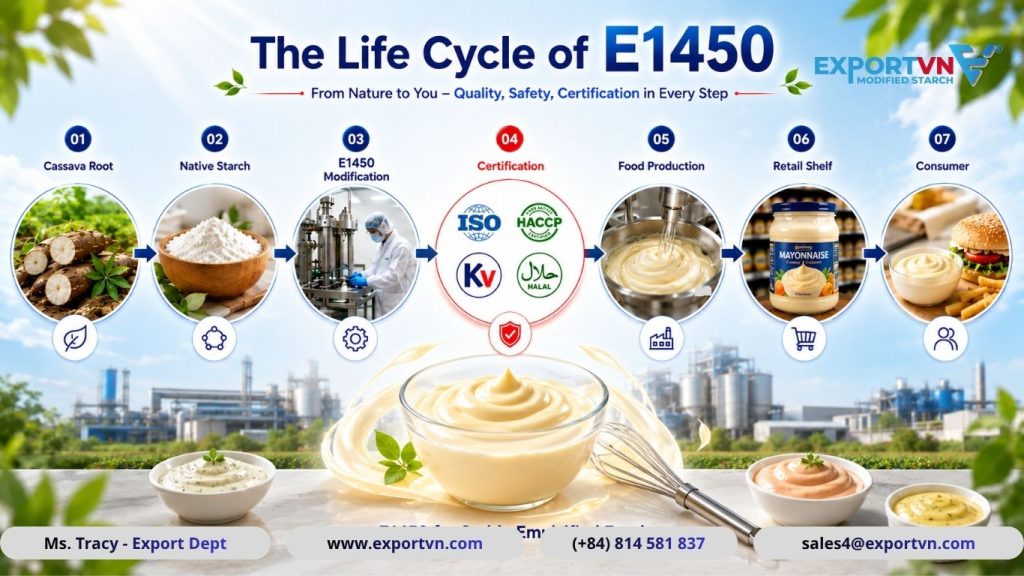
INS 1450 is a modified tapioca starch produced by reacting native tapioca starch with Octenyl Succinic Anhydride (OSA). This modification introduces both hydrophilic and lipophilic functional groups onto the starch molecule, allowing it to interact with water and oil simultaneously.
Because of this amphiphilic structure, OSA starch functions as an effective emulsifier and encapsulating agent. Compared with native starch, it offers superior emulsion stability, improved oil retention, and enhanced flavor protection.
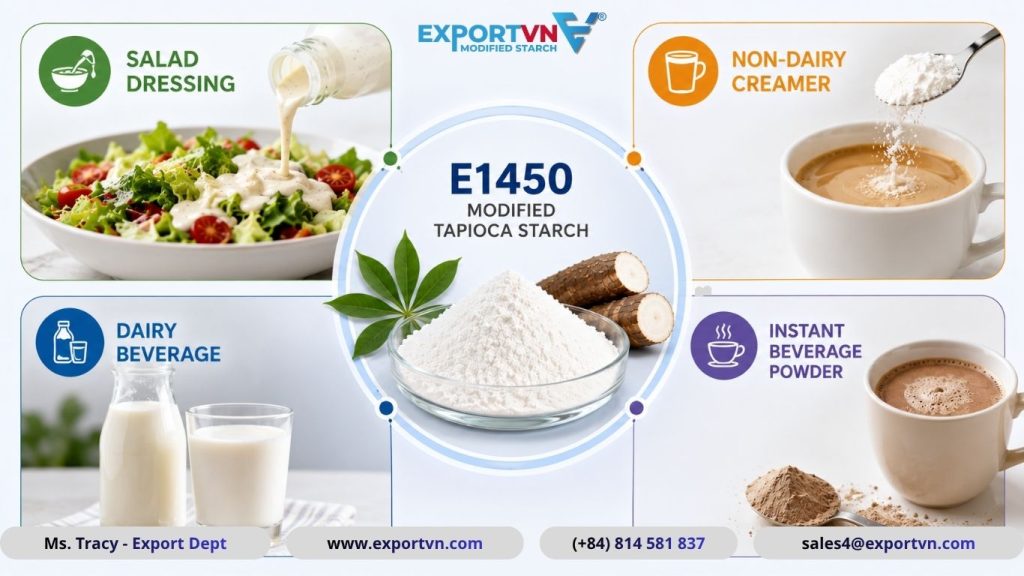
Today, Modified Tapioca Starch E1450 is commonly used in:
- Eggless mayonnaise
- Salad dressing
- Dairy beverages
- Non-dairy creamers
- Flavor encapsulation
- Instant beverage systems
- Bakery fillings
At EXPORTVN Co., Ltd., we provide two main types of INS 1450 for different food applications:
INS 1450 Pregelatinized
Modified Tapioca Starch E1450 Pregelatinized is a pre-cooked starch that can disperse and function in cold water without additional heating. Therefore, it is highly suitable for instant powder products, dry beverage mixes, nutritional powders, and cold-process applications.
INS 1450 Cook-Up
This type requires heating during processing to fully develop viscosity and functionality. Moreover, manufacturers commonly use starch sodium octenyl succinate E1450 Cook-Up in beverages, sauces, dairy products, and processed food systems that involve thermal treatment.
Conclusion
E1450 Modified Starch Certificates such as ISO 22000, HACCP, Halal, and Kosher have become essential requirements in the global food ingredient industry.
These certifications provide assurance that INS 1450 (E1450 / Starch Sodium Octenyl Succinate / OSA Modified Starch) is manufactured under controlled conditions and meets internationally recognized standards for food safety and compliance.
For buyers, certifications reduce risk, support supplier approval, and facilitate access to international markets. For suppliers, they enhance credibility and strengthen long-term business opportunities.
At EXPORTVN Co., Ltd., we provide certified E1450 Modified Tapioca Starch with complete documentation and professional export support to meet the needs of food manufacturers worldwide.
Contact for inquiries and business cooperation:
Ms. Tracy – Global Sales Executive
WhatsApp/Mob: (+84) 814 581 837
Email: sales4@exportvn.com
