
NATIVE STARCH






E1414 ACETYLATED DISTARCH PHOSPHATE
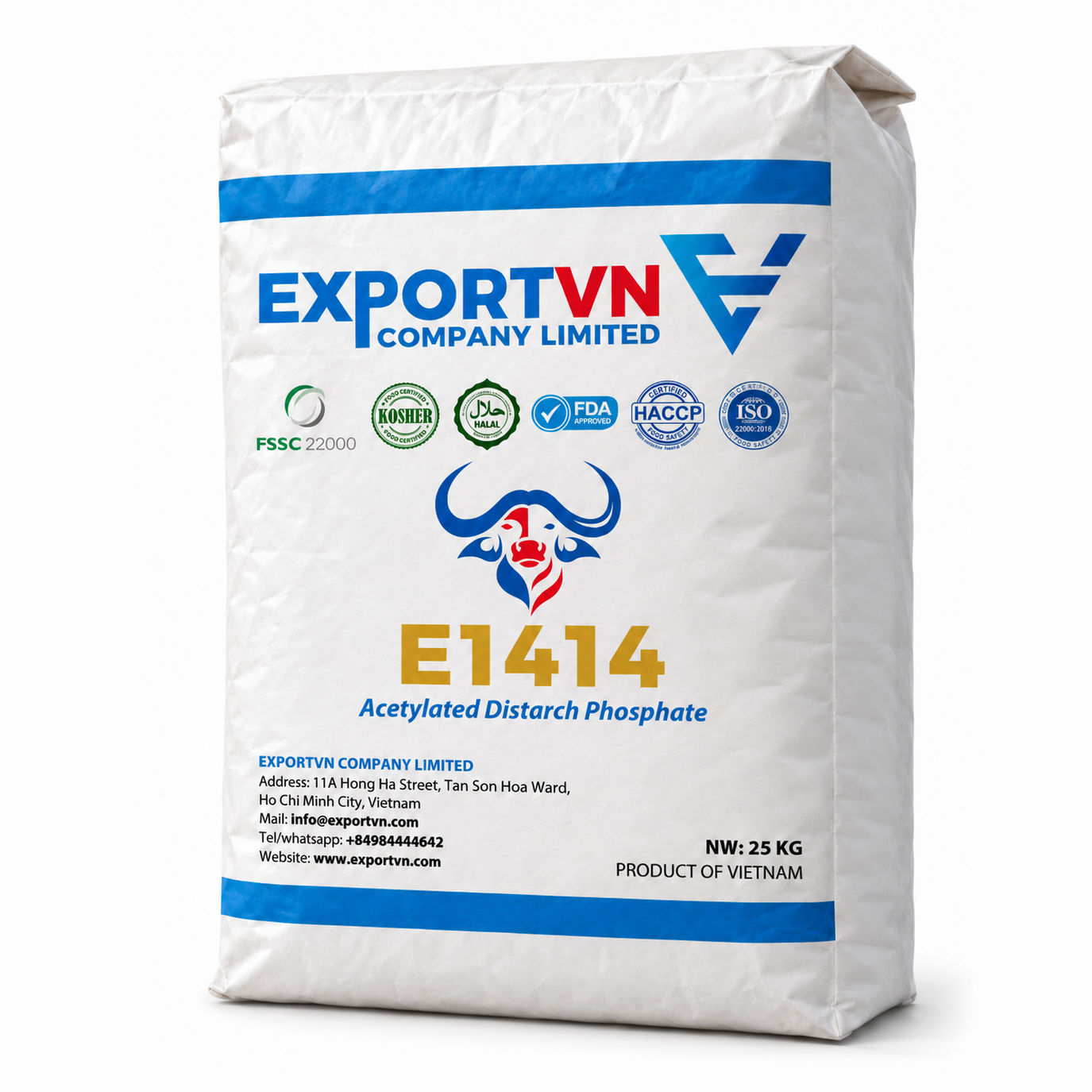
E1414 – Acetylated Distarch Phosphate is a food-grade modified starch manufactured in Vietnam by EXPORTVN, offering excellent heat stability, freeze–thaw resistance and consistent viscosity for processed and frozen food applications.
E1414 Acetylated Distarch Phosphate is a dual-modified food starch that combines phosphate cross-linking and acetylation. It provides stable viscosity, smooth texture, water retention and resistance to demanding food-processing conditions.
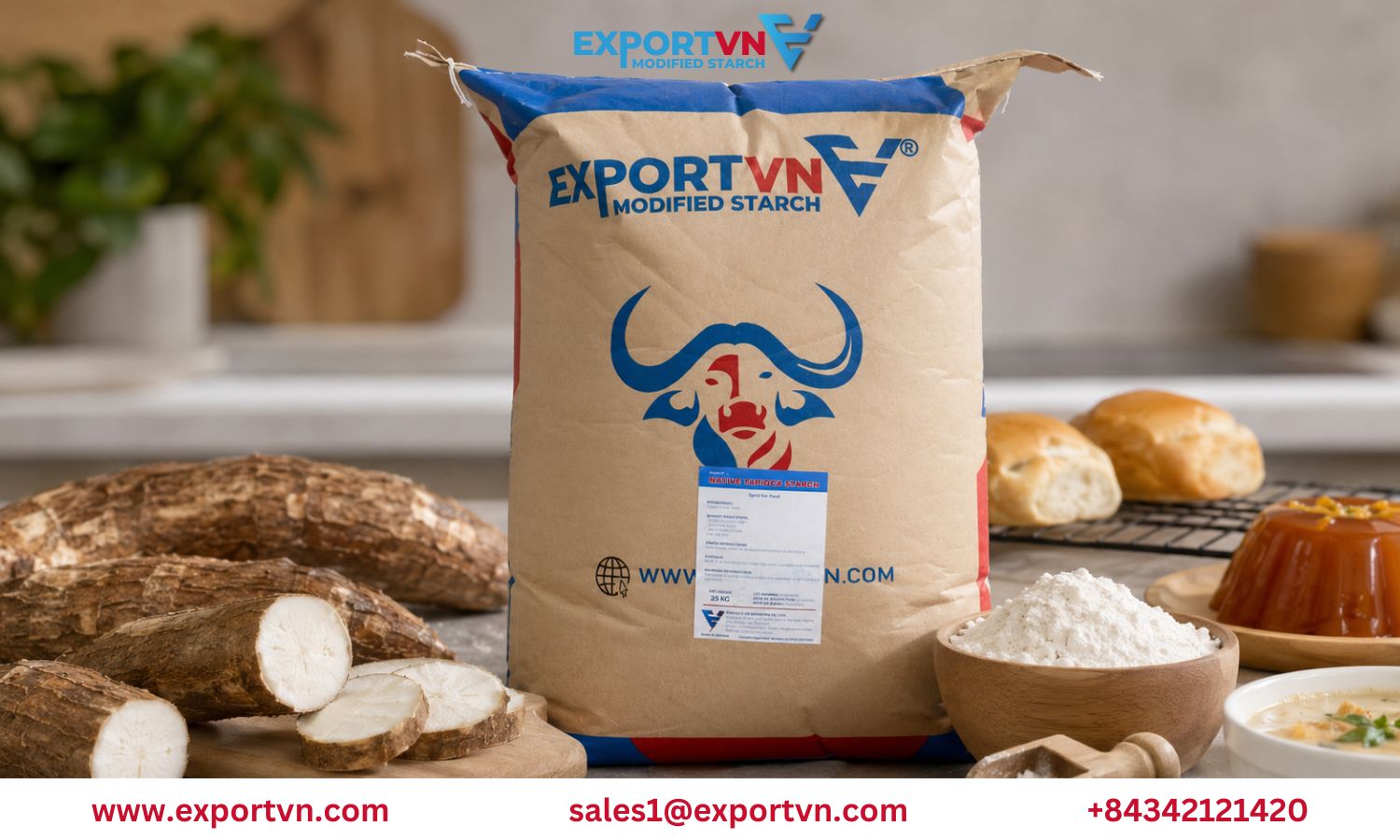
EXPORTVN manufactures E1414 tapioca starch under the CANFLO and CANFLOGEL brands. In addition, this E1414 modified starch supports food manufacturers in developing processed meat, canned food, surimi, sauces and other food products that require consistent texture and processing stability.
1. WHAT IS E1414 ACETYLATED DISTARCH PHOSPHATE?
E1414 Acetylated Distarch Phosphate (INS 1414) is a chemically modified starch that combines two modification processes: phosphate cross-linking and acetylation.
- Phosphate cross-linking: Manufacturers use sodium trimetaphosphate or phosphorus oxychloride to connect starch molecules. As a result, the starch structure gains better resistance to heat, acid and mechanical shear.
- Acetylation: Manufacturers introduce acetyl groups into the starch structure through esterification with acetic anhydride or vinyl acetate. These groups help prevent starch molecules from reassociating during cooling and storage.
Together, these modifications improve processing stability and texture retention. Furthermore, E1414 can develop a smooth, glossy and relatively transparent paste with good flow properties and water retention.
Difference between E1414, E1412 and E1422:
| Modified starch | Modification method | Main characteristics |
|---|---|---|
| E1412 – Distarch Phosphate | Phosphate cross-linking | Heat, acid and shear resistance |
| E1414 – Acetylated Distarch Phosphate | Phosphate cross-linking + acetylation | Processing stability and reduced retrogradation |
| E1422 – Acetylated Distarch Adipate | Adipate cross-linking + acetylation | Processing stability and texture retention |
Therefore, E1414 offers a combination of processing resistance and improved texture stability. EXPORTVN manufactures this modified tapioca starch for industrial food applications.
2. KEY FUNCTIONAL BENEFITS OF E1414 MODIFIED STARCH
E1414 modified starch combines the functional benefits of cross-linking and acetylation. Consequently, food manufacturers can use it in formulations that require consistent texture and processing performance.
- Heat Resistance: Phosphate cross-linking helps maintain starch structure during high-temperature cooking and thermal processing.
- Acid Resistance: E1414 helps maintain viscosity in acidic formulations such as ketchup, tomato sauce and fruit preparations.
- Shear Resistance: Its cross-linked structure helps withstand mixing, pumping, homogenization and mechanical processing.
- Freeze-Thaw Stability: Acetylation reduces molecular reassociation and helps limit retrogradation and water separation.
- Water Retention: E1414 supports moisture management, binding and product consistency.
- Smooth Texture and Gloss: It develops a smooth paste with good flow properties and a relatively glossy, transparent appearance.
Furthermore, manufacturers can select an appropriate E1414 grade according to their formulation, processing conditions and target texture.
3. E1414 PERFORMANCE UNDER FOOD PROCESSING CONDITIONS
Food manufacturers often expose starch to heat, acidity, mechanical shear and changing storage temperatures. E1414 helps maintain functional performance under these conditions.
| Processing condition | Functional performance |
|---|---|
| High-temperature cooking | Helps maintain starch structure and viscosity |
| Acidic conditions | Improves resistance to acid-related viscosity breakdown |
| Mechanical shear | Helps retain viscosity during processing |
| Freezing and thawing | Reduces retrogradation and water separation |
| Cooling and storage | Supports texture and consistency retention |
| Water management | Improves moisture retention and product body |
For example, canned food manufacturers require starch that maintains its thickening function during prolonged heating. Similarly, sauce manufacturers need stable viscosity under acidic conditions.
However, actual performance depends on several factors, including pH, starch concentration, temperature, processing time and shear intensity. Therefore, manufacturers should conduct application trials before selecting the final grade.
4. E1414 ACETYLATED DISTARCH PHOSPHATE TEST SPECIFICATIONS
EXPORTVN supplies E1414 tapioca starch under the CANFLO and CANFLOGEL brands. The company’s published product profile lists the following reference specifications.
EXPORTVN E1414 Product Specifications
| Parameter | Specification |
|---|---|
| Product name | Acetylated Distarch Phosphate |
| E-number | E1414 |
| INS number | INS 1414 |
| Raw material | Tapioca starch |
| Starch content | ≥ 85% |
| Moisture | ≤ 14% |
| Viscosity | ≥ 700 BU |
| Whiteness | ≥ 92% |
| Product brands | CANFLO / CANFLOGEL |
| Main applications | Canned foods, surimi |
These values represent EXPORTVN’s published reference specifications. Moreover, customers can consult the Technical Data Sheet (TDS) and batch Certificate of Analysis (COA) for the applicable grade and testing conditions.
EU Regulatory Specifications
The European Commission defines the identity and purity requirements for E1414 under Regulation (EU) No. 231/2012.
These requirements cover parameters such as:
- Loss on drying.
- Acetyl group content.
- Residual phosphorus.
- Residual vinyl acetate.
- Sulphur dioxide.
- Heavy metals, including lead and arsenic.
Importantly, regulatory limits depend on the applicable specification and botanical starch source. Food manufacturers should consult the official regulation when evaluating E1414 for the European market.
Reference: European Commission – Regulation (EU) No. 231/2012.
5. RECOMMENDED FOOD APPLICATIONS FOR E1414
E1414 modified starch supports food formulations that require thickening, binding, moisture retention and stable texture. In particular, manufacturers can evaluate this ingredient across several food categories.
5.1 Processed Meat Products
E1414 can support water retention, product cohesion and texture consistency in selected processed meat formulations.
Common applications include:
- Meatballs: Supports moisture retention, binding and a consistent bite.
- Sausages: Helps maintain moisture and texture during cooking.
- Hot Dogs: Supports water binding, smooth texture and consistency in finely emulsified meat products.
- Ham: Helps maintain moisture and texture in cooked and restructured ham formulations.
- Luncheon Meat: Supports product body, binding and uniform consistency.
- Canned Meat: Helps maintain texture and moisture during thermal processing.
Additionally, manufacturers can evaluate E1414 in meat formulations that contain added water or require improved texture retention.
The appropriate grade and dosage depend on meat composition, protein content, water addition and processing temperature. However, manufacturers must also check local regulations for the relevant processed meat category.
5.2 Canned Foods
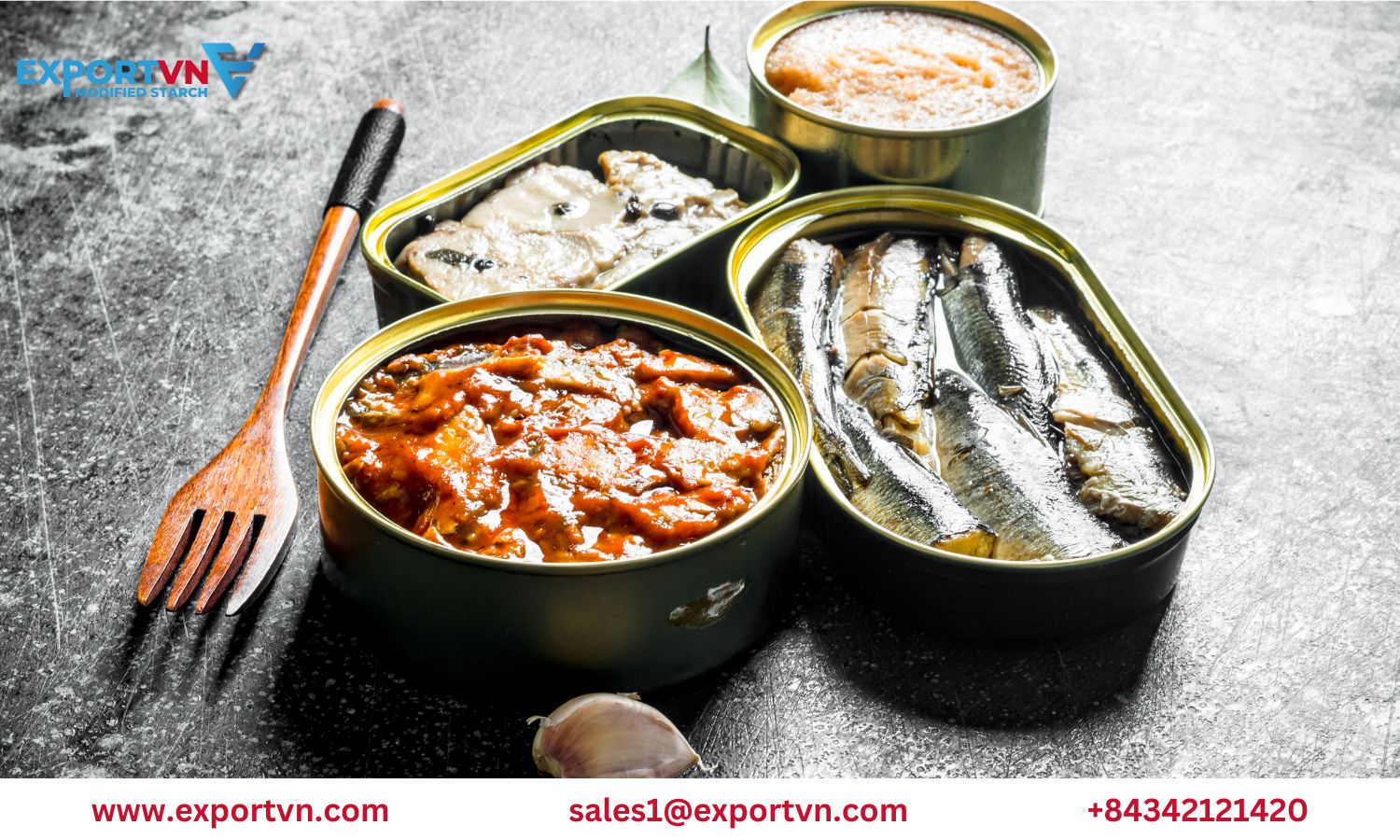
Canned food manufacturers can use E1414 to support viscosity and texture during prolonged heating and thermal processing.
For example, applications include canned meat, canned fish, canned seafood and other heat-processed foods.
5.3 Surimi and Processed Seafood
In surimi formulations, E1414 supports water retention and texture control. Furthermore, manufacturers can evaluate it in fish balls, imitation crab sticks, fish cakes and other processed seafood products.
5.4 Sauces and Condiments
E1414 contributes to smooth texture, viscosity and consistency in selected acidic food formulations.
Typical applications include tomato sauce, ketchup, oyster sauce, chili sauce and salad dressings.
5.5 Jams and Fruit Fillings
Manufacturers can use E1414 to develop viscosity, gloss and water retention in fruit jams, bakery fillings and fruit preparations.
As a result, it can help maintain a smooth texture and reduce moisture separation.
5.6 Bakery Glazes and Fruit Gels
E1414 supports consistency, flow properties and gloss in selected bakery coatings, transparent glazes and fruit gels.
5.7 Yogurt and Cultured Dairy
Food manufacturers can evaluate E1414 in selected dairy applications, including stirred yogurt, set yogurt and fermented milk products.
In these formulations, the starch can support viscosity, texture and water stability.
6. WHY CHOOSE EXPORTVN FOR E1414 MODIFIED STARCH?
EXPORTVN is a Vietnam-based manufacturer and exporter specializing in native and modified tapioca starch.
Specialized Tapioca Starch Manufacturing
EXPORTVN focuses on tapioca-based starch solutions for food and industrial manufacturers. Its modified starch portfolio includes E1414 Acetylated Distarch Phosphate under the CANFLO and CANFLOGEL brands.
Established Production Capacity
EXPORTVN reports an overall production capacity of 91,000 metric tons per year for its modified tapioca starch portfolio across its manufacturing operations.
This capacity supports the company’s international supply activities. However, it does not represent the dedicated annual capacity of E1414 alone.
Product Quality Control
EXPORTVN maintains published E1414 reference specifications for starch content, moisture, viscosity and whiteness. Additionally, customers can request relevant technical documents for product evaluation.
Technical and Application Support
EXPORTVN works with food manufacturers to identify suitable starch grades according to their production requirements.
Technical support can cover product selection, viscosity targets, processing conditions, sample evaluation and formulation trials.
International Supply
As a Vietnamese modified tapioca starch manufacturer and exporter, EXPORTVN serves international food manufacturers and ingredient distributors.
For buyers seeking an experienced Acetylated Distarch Phosphate manufacturer and E1414 supplier, EXPORTVN offers product information, technical coordination and export support.
7. E1414 PACKAGING & GLOBAL SUPPLY
EXPORTVN supplies E1414 Acetylated Distarch Phosphate for industrial food manufacturers and international distributors.
Available packaging options include:
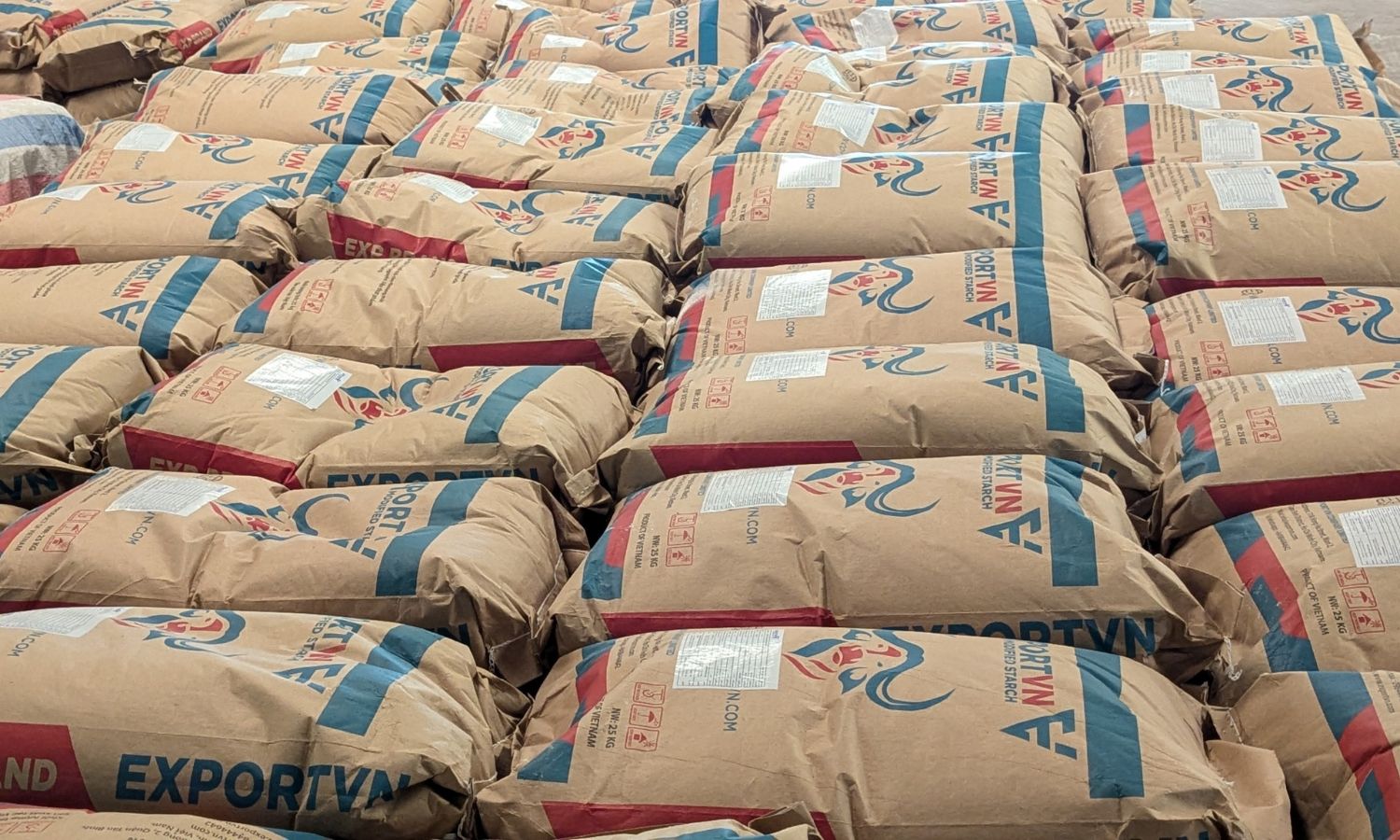
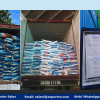
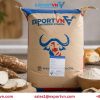
- 25 kg paper bags: Standard industrial packaging.
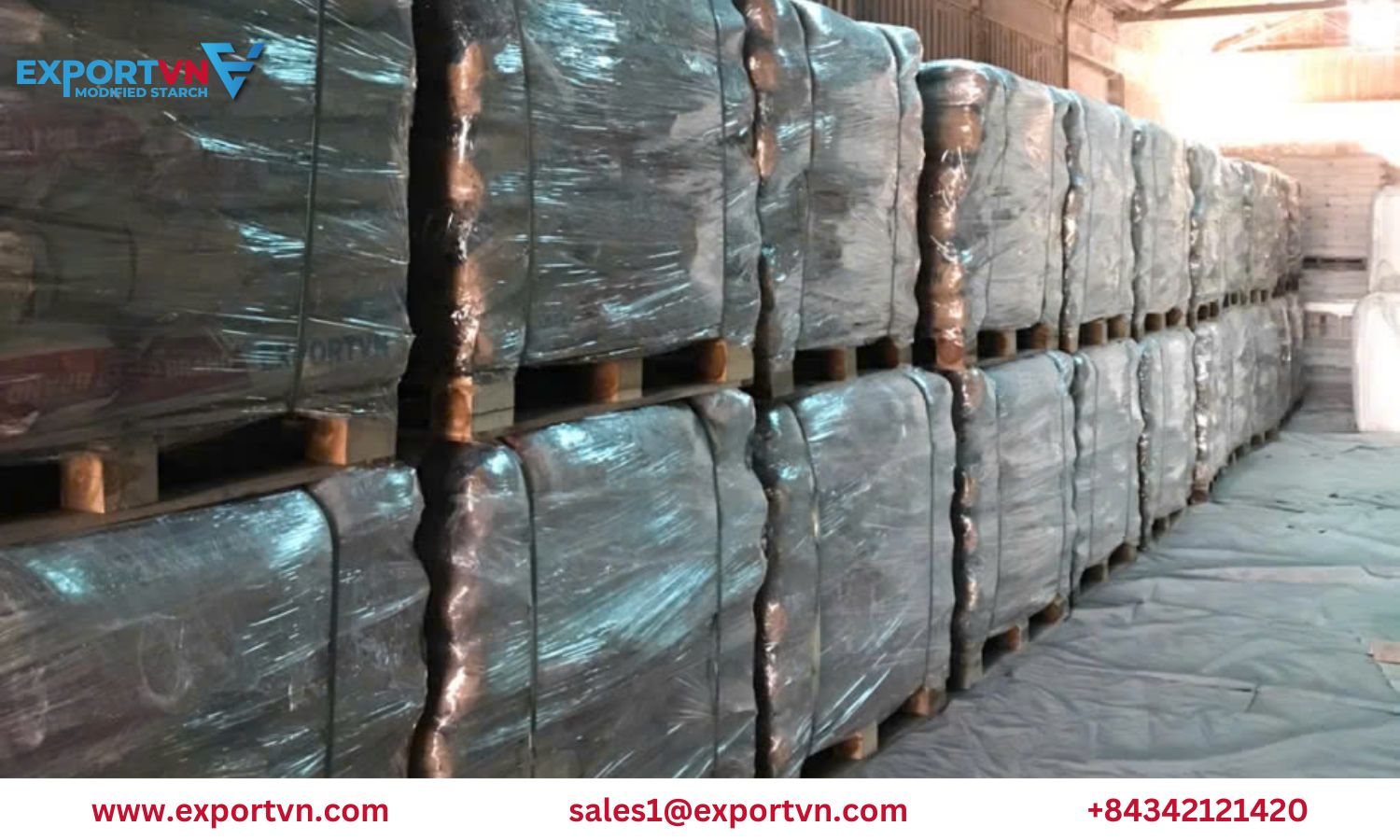
- Palletized bags: According to customer requirements.
- Customized packaging: Subject to order agreement.
- Export documentation: According to destination and shipping requirements.
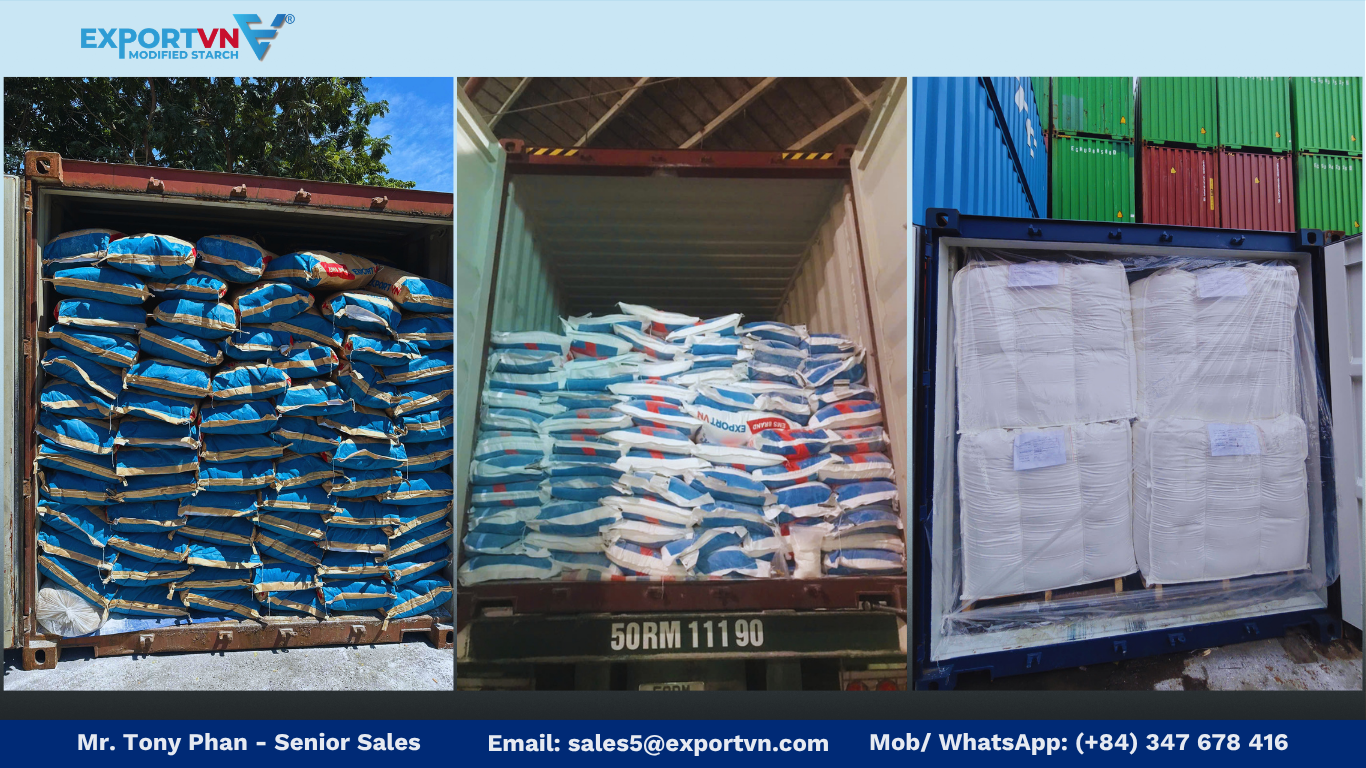
Furthermore, EXPORTVN can coordinate packaging, container loading and shipment arrangements according to individual orders.
8. E1414 QUALITY, CERTIFICATIONS & COMPLIANCE SUPPORT
Food manufacturers need reliable quality documentation and regulatory information when selecting an E1414 supplier.
Relevant international references include:
- European Union: Regulation (EU) No. 231/2012 defines food additive identity and purity specifications.
- FAO/WHO JECFA: Recognizes INS 1414 as Acetylated Distarch Phosphate.
- United States FDA: 21 CFR §172.892 addresses food starch-modified.
Depending on the manufacturing facility, product scope and current certification status, customers may request:
- HACCP documentation.
- ISO 22000 certification.
- FSSC 22000 certification.
- Halal certification.
- Kosher certification.
In addition, EXPORTVN can coordinate relevant documentation for supplier approval and customer compliance reviews.
Customers should always verify the issuing organization, validity period, legal entity, manufacturing site and product scope of each certificate.
9. E1414 TECHNICAL DOCUMENTS & QUALITY RECORDS
EXPORTVN can coordinate technical and quality documents to support product evaluation and supplier approval.
Customers may request the following documents:
| Document | Purpose |
|---|---|
| Technical Data Sheet (TDS) | Product characteristics and technical specifications |
| Certificate of Analysis (COA) | Actual batch quality results |
| Safety Data Sheet (SDS) | Product handling and safety information |
| Product Specification | Defined quality parameters |
| Manufacturing Flow Chart | Overview of the production process |
| GMO Statement | Applicable GMO status information |
| Allergen Statement | Relevant allergen information |
| Microbiological Report | Microbiological quality results |
| Heavy Metal Analysis | Relevant contaminant test results |
| Regulatory Documents | Applicable food additive compliance information |
| Certifications | Valid certificates for the relevant manufacturing site |
Moreover, customers can discuss specific documentation requirements with EXPORTVN before placing an order.
10. E1414 ACETYLATED DISTARCH PHOSPHATE FAQ
What is E1414 Acetylated Distarch Phosphate?
E1414 combines phosphate cross-linking and acetylation to improve starch processing stability, texture, water retention and resistance to retrogradation.
What is the INS number for E1414?
The international food additive number for Acetylated Distarch Phosphate is INS 1414.
What is the difference between E1414 and E1412?
Unlike E1412, which uses phosphate cross-linking alone, E1414 combines cross-linking with acetylation. Consequently, E1414 offers additional benefits in texture stability and resistance to retrogradation.
What is the difference between E1414 and E1422?
The main difference concerns the cross-linking chemistry. E1414 combines phosphate cross-linking with acetylation, whereas E1422 combines adipate cross-linking with acetylation.
Can E1414 be used in processed meat products?
Yes. Food manufacturers can evaluate E1414 in meatballs, sausages, hot dogs, ham, luncheon meat and canned meat. It can support water retention, binding and texture consistency during cooking. However, the final application must comply with the food additive regulations of the destination market.
Is E1414 suitable for high-temperature processing?
Yes. Phosphate cross-linking helps E1414 resist thermal breakdown and maintain viscosity during demanding processing conditions.
Is E1414 suitable for acidic food applications?
Yes. Manufacturers can evaluate E1414 in tomato sauce, ketchup, dressings and selected fruit preparations because its cross-linked structure improves resistance to acid-related viscosity loss.
Does E1414 improve freeze-thaw stability?
Acetylation helps reduce starch molecular reassociation. As a result, E1414 can reduce retrogradation and water separation during freezing and thawing.
What is the viscosity specification of EXPORTVN E1414?
EXPORTVN’s published reference specification lists a minimum viscosity of 700 BU. Customers should check the applicable TDS for the measurement method and testing conditions.
What is the moisture specification of EXPORTVN E1414?
The published reference specification lists a maximum moisture content of 14%.
What is the recommended dosage of E1414?
No universal dosage applies to every formulation. Instead, manufacturers should determine the appropriate level through laboratory and pilot-scale trials, considering water content, target viscosity and processing conditions.
Can manufacturers produce E1414 from tapioca starch?
Yes. Manufacturers can produce E1414 from different botanical starch sources, including tapioca, corn and potato.
EXPORTVN manufactures E1414 from tapioca starch under the CANFLO and CANFLOGEL brands.
Where can I find an E1414 supplier?
Food manufacturers and ingredient distributors can contact EXPORTVN for E1414 product specifications, TDS, COA, samples and quotations.
EXPORTVN – Modified Tapioca Starch Manufacturer & Exporter
Website: https://www.exportvn.com/
Email: info@exportvn.com
THINK TAPIOCA / THINK EXPORTVN
1 review for E1414 ACETYLATED DISTARCH PHOSPHATE
Add a review
Related products

Modified Starch

Modified Starch

Modified Starch
admin –
ilovestarch