


Common types of modified starch, Properties of starch
Hydroxypropyl Starch (HP Starch) INS 1440: Properties and Applications
Jun
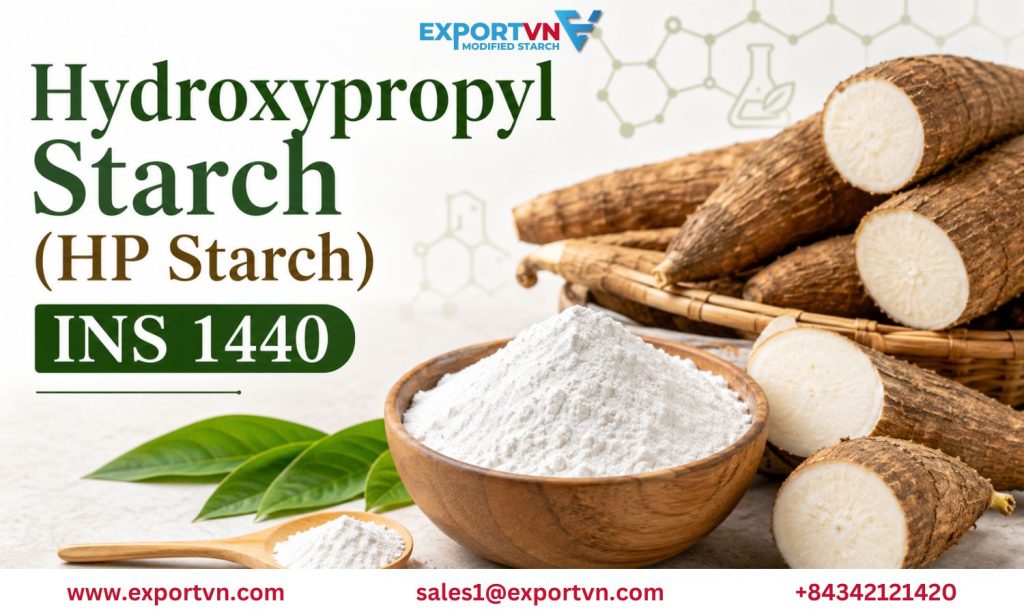
Hydroxypropyl Starch (HP Starch) INS 1440, also known as E1440, is a chemically modified starch produced by introducing hydroxypropyl groups into natural starch molecules. As a result, the starch gains significantly improved functional properties while preserving its essential characteristics.
Compared with native starch, Hydroxypropyl Starch offers superior performance under demanding food processing conditions. It remains stable during heating, pasteurization, freezing, thawing, and long-term storage. Therefore, it is an excellent choice for manufacturers seeking consistent product quality throughout processing and distribution.
Today, Hydroxypropyl Starch is widely used as a thickener, stabilizer, water-binding agent, and texture enhancer in a broad range of processed foods. Moreover, its outstanding stability and smooth texture make it a preferred ingredient for dairy products, bakery goods, sauces, frozen foods, and processed meat applications.
What Does Hydroxypropyl Starch (HP Starch) INS 1440 Mean?
INS stands for the International Numbering System for Food Additives, established by the Codex Alimentarius Commission.
Hydroxypropyl Starch is identified as:
- INS 1440
- E1440 (European Union designation)
Both names refer to the same modified starch approved for food use in many countries.
How is Hydroxypropyl Starch Produced?
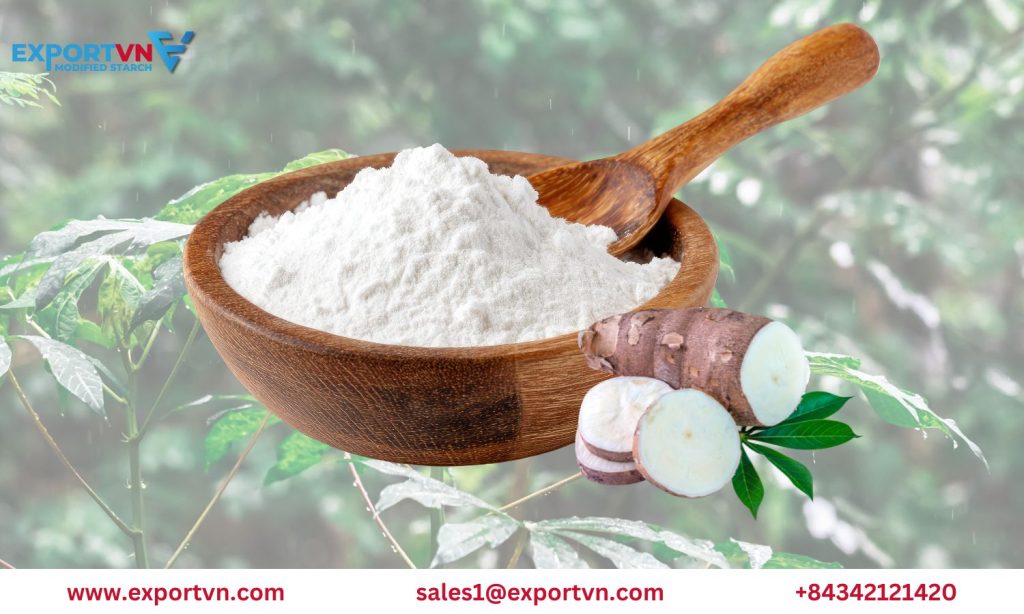
Hydroxypropyl Starch is manufactured by reacting purified starch with propylene oxide under carefully controlled conditions. During this process, hydroxypropyl groups are introduced into the starch molecules, significantly improving their functional performance.
The modification provides several important advantages:
- Better freeze-thaw stability
- Improved water retention
- Enhanced heat resistance
- Greater acid stability
- Higher shear resistance
- Reduced retrogradation
These properties make INS 1440 suitable for modern food manufacturing processes that involve high temperatures, continuous mixing, or cold storage.
Common Raw Materials
Hydroxypropyl Starch can be produced from corn, potato, wheat, or tapioca starch. However, food manufacturers increasingly prefer tapioca-based Hydroxypropyl Starch because of its excellent functional performance. Compared with other starch sources, tapioca starch provides several important advantages:
- High purity
- Neutral flavor
- Excellent whiteness
- Smooth texture
- Stable viscosity
- Consistent quality
Therefore, it is widely used in premium food formulations where appearance, texture, and processing stability are critical. Furthermore, its neutral taste allows manufacturers to preserve the original flavor of the final product.w material.
Is Hydroxypropyl Starch (HP Starch) INS 1440 Safe?
Yes. Hydroxypropyl Starch (INS 1440) has been evaluated and approved by internationally recognized food safety authorities. When used according to Good Manufacturing Practice (GMP), it is considered safe for food applications worldwide.
Many manufacturers also choose Hydroxypropyl Starch because it complies with international food standards and can be supplied with certifications such as ISO 22000, HACCP, Halal, and Kosher.
Key Properties and Benefits of Hydroxypropyl Starch
The popularity of Hydroxypropyl Starch comes from its ability to improve both product quality and manufacturing efficiency. Unlike native starch, it maintains stable performance under a wide range of processing conditions.
Excellent Freeze-Thaw Stability
One of the biggest challenges in frozen foods is water separation after repeated freezing and thawing.
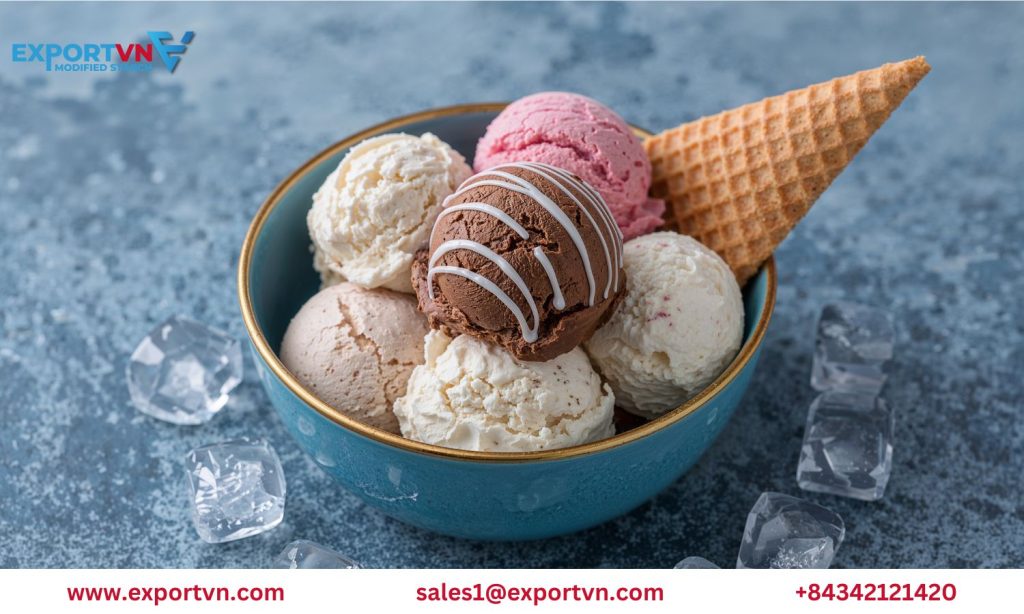
Hydroxypropyl Starch minimizes syneresis by maintaining a stable gel structure. Consequently, it is widely used in:
- Frozen desserts
- Ice cream
- Frozen ready meals
- Refrigerated foods
- Frozen bakery fillings
This stability helps products retain their original appearance and texture throughout storage.
Heat, Acid, and Shear Resistance
Many food products are processed under high temperatures, acidic conditions, or intensive mechanical mixing.
Native starch often loses viscosity during processing. In contrast, Hydroxypropyl Starch maintains stable viscosity. Therefore, it is widely used in industrial food production.
Improved Water Retention
Water retention plays an important role in product freshness and yield.
Hydroxypropyl Starch effectively binds water, helping manufacturers achieve:
- Reduced cooking loss
- Better juiciness
- Higher production yield
- Improved product stability
These advantages are especially important for meat products and bakery applications.
Smooth Texture and Reduced Retrogradation
Consumers prefer foods with a creamy, smooth mouthfeel.
Hydroxypropyl Starch creates a soft and uniform texture while slowing starch retrogradation during storage. Therefore, food products remain fresher for longer and maintain their desired consistency.
In addition, manufacturers benefit from an extended shelf life without sacrificing product quality.
Food Applications of Hydroxypropyl Starch
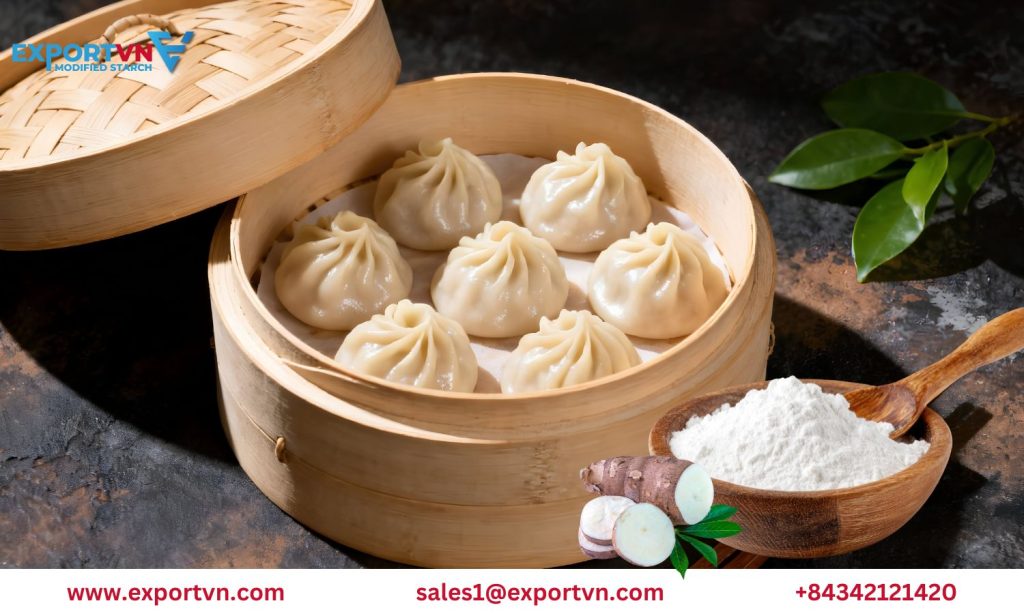
Thanks to its balanced functionality, Hydroxypropyl Starch is suitable for a wide variety of food products. It improves texture, enhances processing stability, and helps manufacturers maintain consistent quality throughout the product’s shelf life.
| Food Category | Main Benefits |
|---|---|
| Dairy Products | Creamy texture, water retention, freeze-thaw stability |
| Bakery Products | Soft crumb, moisture retention, extended freshness |
| Sauces & Dressings | Stable viscosity, smooth texture, glossy appearance |
| Frozen Foods | Reduced syneresis, improved freeze-thaw stability |
| Instant Foods | Rapid hydration and consistent viscosity |
| Meat & Seafood | Better water binding, higher cooking yield |
Dairy Products
Hydroxypropyl Starch is widely used in yogurt, dairy desserts, drinking yogurt, and ice cream. It creates a smooth and creamy texture while minimizing water separation during storage.
For instant dairy formulations, manufacturers may also choose Pregelatinized Hydroxypropyl Starch, which disperses quickly in cold water and simplifies processing.
Bakery Products
Freshness is a key quality indicator in bakery products. Hydroxypropyl Starch helps retain moisture, delay staling, and improve softness throughout storage.
It is commonly used in:
- Bread
- Cakes
- Cake Fillings
- Fruit fillings
- Sweet bakery products
As a result, manufacturers can deliver products with better texture and a longer shelf life.
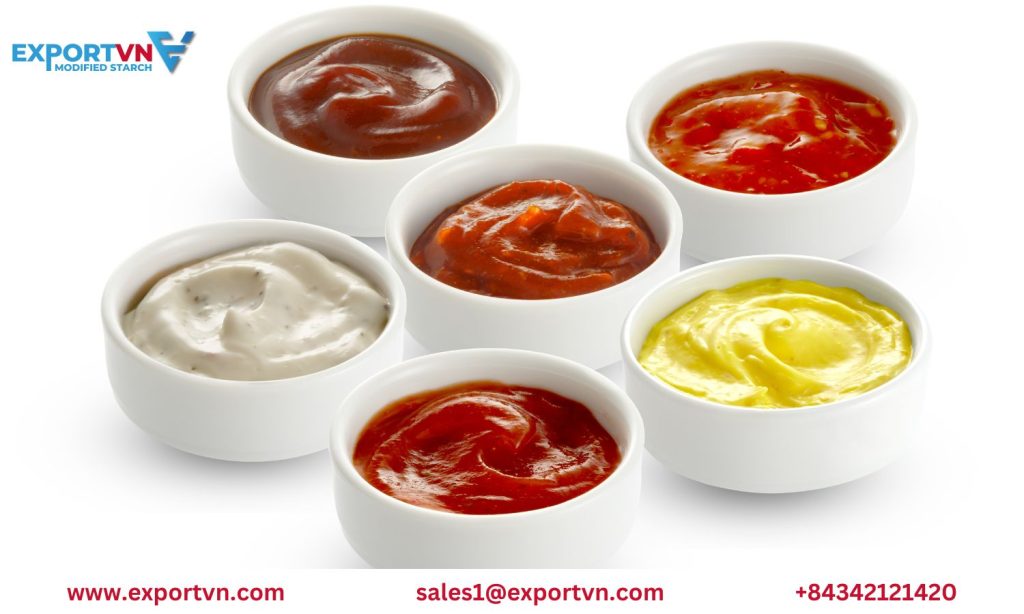
Sauces and Dressings
Sauces require stable viscosity even after heating, cooling, or transportation. Hydroxypropyl Starch provides excellent thickening performance while maintaining a smooth and glossy appearance.
Typical applications include:
These products benefit from improved stability without compromising mouthfeel.
Frozen and Instant Foods
Hydroxypropyl Starch performs exceptionally well in frozen and convenience foods because it maintains texture after repeated freeze-thaw cycles.
It is also widely used in Instant Noodles and other ready-to-cook products, where rapid hydration and consistent viscosity are essential.
Meat and Seafood Products
In processed meat and seafood, Hydroxypropyl Starch improves water-holding capacity, cooking yield, and product texture.
Typical applications include:
- Sausages
- Surimi
- Seafood Coating
- Ham
- Fish balls
- Meatballs
These improvements help manufacturers reduce production loss while enhancing the eating experience.
Why Choose Tapioca-Based Hydroxypropyl Starch?
Although Hydroxypropyl Starch can be produced from corn, potato, or wheat starch, tapioca starch offers several functional advantages that make it the preferred choice for many food manufacturers.
Advantages over Corn and Potato Starch
Tapioca-based Hydroxypropyl Starch generally provides:
- Higher whiteness
- Neutral taste
- Excellent clarity
- Smooth texture
- Stable viscosity
- Low protein content
These characteristics make it suitable for premium dairy products, sauces, desserts, and processed foods where appearance and flavor are important.
Comparison with Native Tapioca Starch
| Property | Native Tapioca Starch | Hydroxypropyl Starch (INS 1440) |
| Heat Stability | Moderate | Excellent |
| Acid Stability | Moderate | Excellent |
| Freeze-Thaw Stability | Poor | Excellent |
| Water Retention | Moderate | High |
| Shelf Life | Standard | Extended |
INS 1440 vs INS 1422
Both INS 1440 and Acetylated Distarch Adipate (INS 1422) are widely used modified starches. However, they are designed for different processing requirements.
- INS 1440 is preferred for excellent freeze-thaw stability, smooth texture, and moisture retention.
- INS 1422 provides higher resistance to severe heat, shear, and acidic processing, making it suitable for industrial sauces, canned foods, and retort applications.
INS 1440 vs INS 1414
Compared with Acetylated Distarch Phosphate (INS 1414), Hydroxypropyl Starch generally delivers a softer mouthfeel and better freeze-thaw performance.
The most suitable starch depends on the production process and the desired product characteristics.
Why Choose EXPORTVN as Your Hydroxypropyl Starch Supplier?
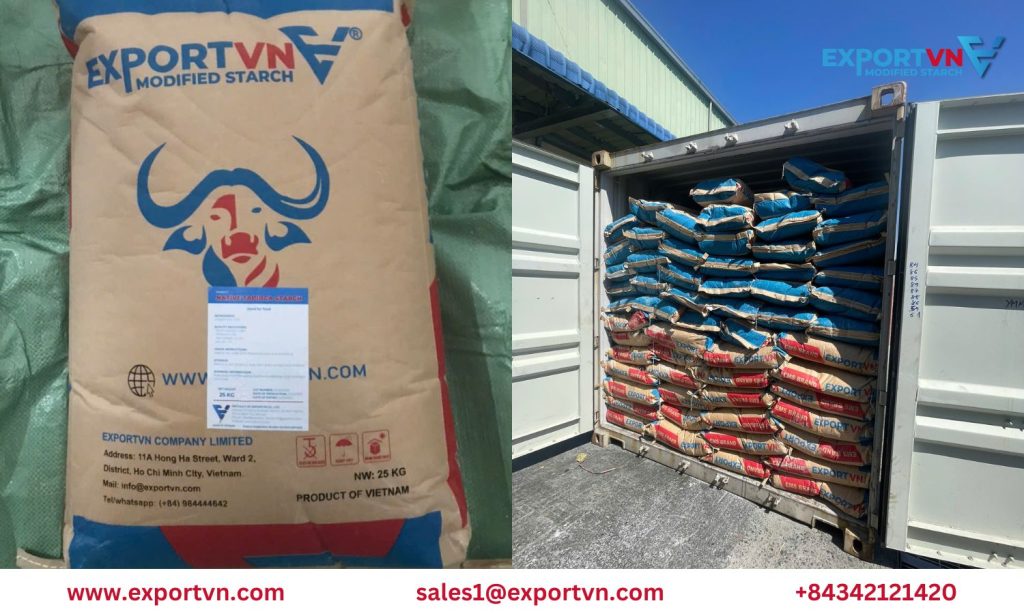
As a trusted manufacturer and exporter, EXPORTVN CO., LTD supplies premium tapioca-based modified starches to customers across Asia, the Middle East, Africa, Europe, and Latin America.
Premium Manufacturing
Our production facilities operate under strict quality management systems to ensure stable viscosity, consistent quality, and reliable product performance.
International Certifications
EXPORTVN products are available with internationally recognized certifications, including:
- ISO 22000
- HACCP
- Halal
- Kosher
These certifications help customers comply with global food safety requirements.
Customized Technical Solutions
Every food application has different processing conditions. Our technical team works closely with customers to recommend the most suitable modified starch solution based on:
- Product formulation
- Processing conditions
- Desired texture
- Cost optimization
- Shelf-life requirements
For detailed specifications, customers can request the Technical Data Sheet or visit our Hydroxypropyl Starch product page.
Frequently Asked Questions (FAQ)
Is Hydroxypropyl Starch the same as E1440?
Yes. INS 1440 and E1440 are two names for the same modified starch.
Is Hydroxypropyl Starch gluten-free?
When produced from tapioca starch, Hydroxypropyl Starch is naturally gluten-free.
What is the main function of INS 1440?
It acts as a thickener, stabilizer, moisture-retaining agent, and texture improver in processed foods.
Which foods commonly use Hydroxypropyl Starch?
It is widely used in dairy products, bakery items, sauces, frozen foods, instant foods, and processed meat and seafood.
Why choose tapioca-based Hydroxypropyl Starch?
Tapioca-based products provide excellent whiteness, smooth texture, neutral taste, and stable processing performance.
Can EXPORTVN provide customized modified starch solutions?
Yes. EXPORTVN offers customized tapioca-based modified starches tailored to specific food formulations and processing conditions.
Hydroxypropyl Starch (INS 1440) is an advanced modified starch that offers outstanding heat resistance, freeze-thaw stability, water retention, and texture improvement. These functional benefits make it an ideal ingredient for modern food manufacturing.
Produced from high-quality tapioca starch, Hydroxypropyl Starch combines reliable performance with excellent product appearance and consumer acceptance. Whether you produce dairy products, sauces, bakery goods, frozen foods, or processed meat, INS 1440 can help improve product quality and manufacturing efficiency.
If you are looking for a reliable supplier of tapioca-based Hydroxypropyl Starch, EXPORTVN CO., LTD is ready to support your business with high-quality products, technical expertise, and customized solutions.
Contact EXPORTVN today to request samples, technical data sheets, or a customized quotation.
EXPORTVN CO., LTD
Email: sales1@exportvn.com
WhatsApp: +84 342 121 420
Website: https://exportvn.com/us/
