


Properties of starch
Acetylated Distarch Phosphate INS 1414: Properties and Applications
Jun
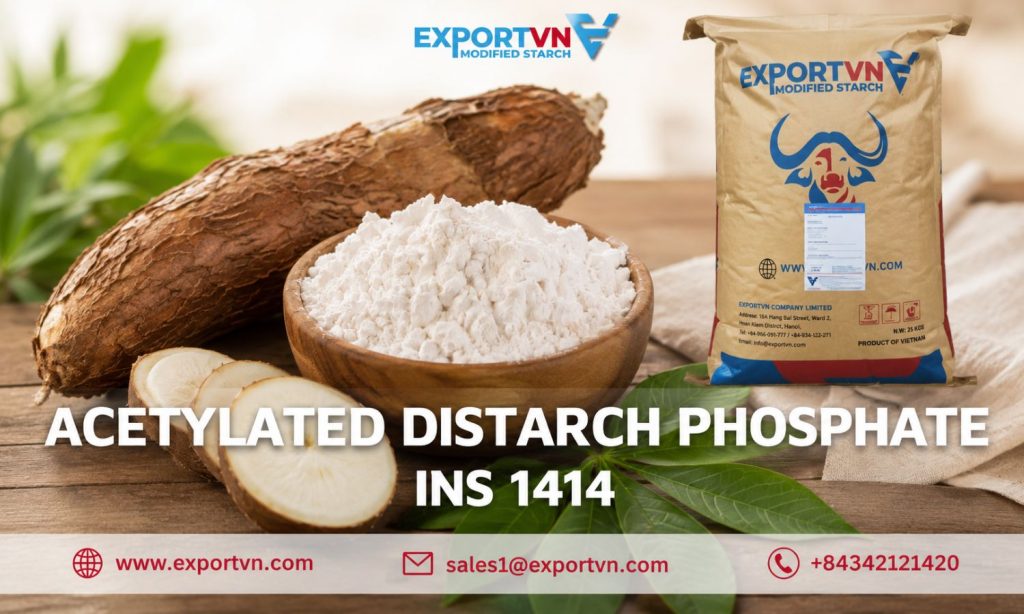
Acetylated Distarch Phosphate INS 1414 (E1414) is one of the most widely used modified starches in the global food industry. Thanks to its exceptional heat stability, acid resistance, and water-binding capacity, this ingredient helps manufacturers maintain consistent product quality across a wide range of applications.
Moreover, INS 1414 contributes to improved texture, enhanced process stability, and longer shelf life. As a result, it has become a preferred choice for canned foods, dairy products, sauces, frozen foods, and processed meat products.As a trusted supplier of modified starches, EXPORTVN CO., LTD supplies high-quality tapioca-based INS 1414 to customers in more than 25 countries worldwide.
What is Acetylated Distarch Phosphate (INS 1414)?
Definition of INS 1414
Acetylated Distarch Phosphate (INS 1414) is a chemically modified starch produced through both cross-linking and acetylation of starch molecules. These modifications improve the functionality of starch compared with native starch and allow it to perform effectively under demanding processing conditions.
For detailed product specifications, visit Acetylated Distarch Phosphate E1414.
How INS 1414 is Produced
E1414 is produced by modifying starch derived from sources such as tapioca, corn, potato, or waxy maize. The starch undergoes controlled chemical treatment that creates phosphate cross-links and acetyl groups within the starch structure.
As a result of the dual modification process, INS 1414 delivers several key functional advantages:
- First, it offers excellent heat stability, making it suitable for high-temperature processing such as pasteurization and sterilization.
- Furthermore, it provides improved acid resistance, helping maintain viscosity in low-pH food systems.
- In addition, the starch demonstrates strong shear resistance, ensuring stability during intensive mixing and processing.
- Moreover, its superior water-binding capacity contributes to better texture and moisture retention.
- Finally, enhanced freeze-thaw stability helps maintain product quality during frozen storage and distribution.
Difference Between Native Starch and INS 1414
| Property | Native Starch | INS 1414 |
|---|---|---|
| Heat Stability | Low | High |
| Acid Resistance | Low | High |
| Shear Resistance | Low | High |
| Freeze-Thaw Stability | Poor | Good |
| Shelf-Life Stability | Moderate | Excellent |
Compared with Native Tapioca Starch, INS 1414 provides significantly better performance in industrial food processing.
Chemical and Physical Properties of INS 1414
Appearance and Composition
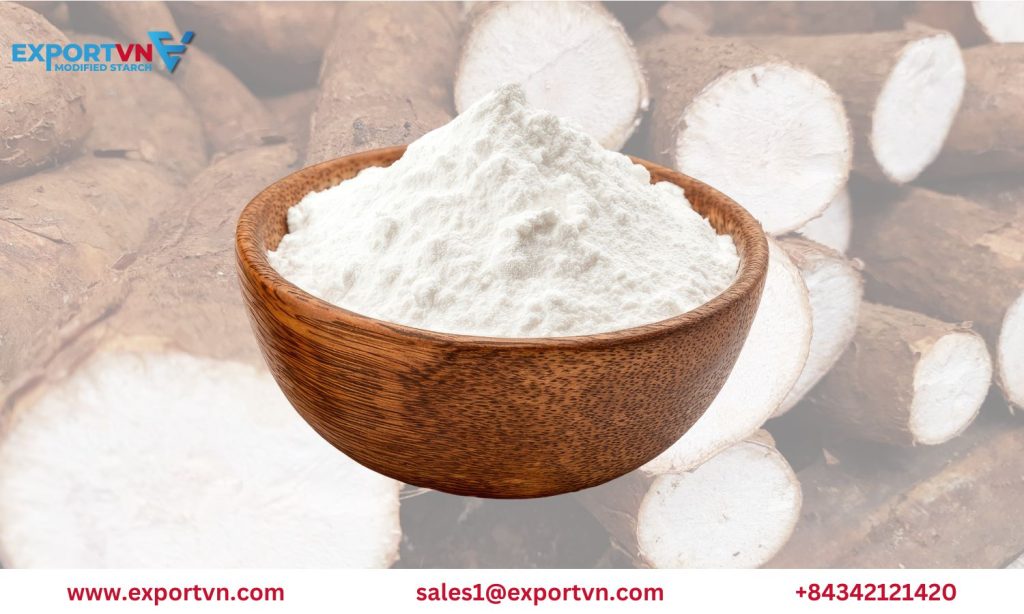
INS 1414 is a white to off-white powder with neutral taste and odor. It disperses easily in water and contributes to smooth texture development.
Stability Under Heat and Processing
One of the major advantages of INS 1414 is its ability to maintain viscosity during pasteurization, sterilization, and retort processing.
Resistance to Acid and Shear
Many processed foods contain acidic ingredients and undergo intensive mixing. INS 1414 maintains stability under these conditions, helping manufacturers achieve consistent product quality.
Freeze-Thaw Stability
In addition, the starch exhibits good freeze-thaw stability, reducing water separation and texture degradation during storage.
Water Binding Capacity
The starch effectively binds water, improving moisture retention and reducing weight loss during processing.
Functional Benefits of Acetylated Distarch Phosphate
One of the main advantages of INS 1414 is its ability to improve texture and mouthfeel. In many applications, the starch creates a smoother and creamier eating experience.
Furthermore, it enhances process stability during high-temperature manufacturing. Consequently, food manufacturers can maintain consistent viscosity throughout production.
Another important benefit is reduced syneresis. By minimizing water separation, INS 1414 helps improve both product appearance and shelf-life performance.
Finally, the starch supports batch-to-batch consistency, which is essential for large-scale industrial production.
Applications of INS 1414 in the Food Industry
Canned Food
INS 1414 is extensively used in:
Dairy Products
INS 1414 improves viscosity, creaminess, and stability in yogurt, dairy desserts, and flavored milk products.
Sauces and Dressings
Common applications include:
Bakery Products
INS 1414 helps improve texture and moisture retention in:
Frozen Foods
The starch performs effectively in frozen ready meals and frozen processed foods due to its excellent stability.
Meat Processing
INS 1414 improves texture, water retention, and yield in:
Why INS 1414 is Widely Used in Canned Food Applications
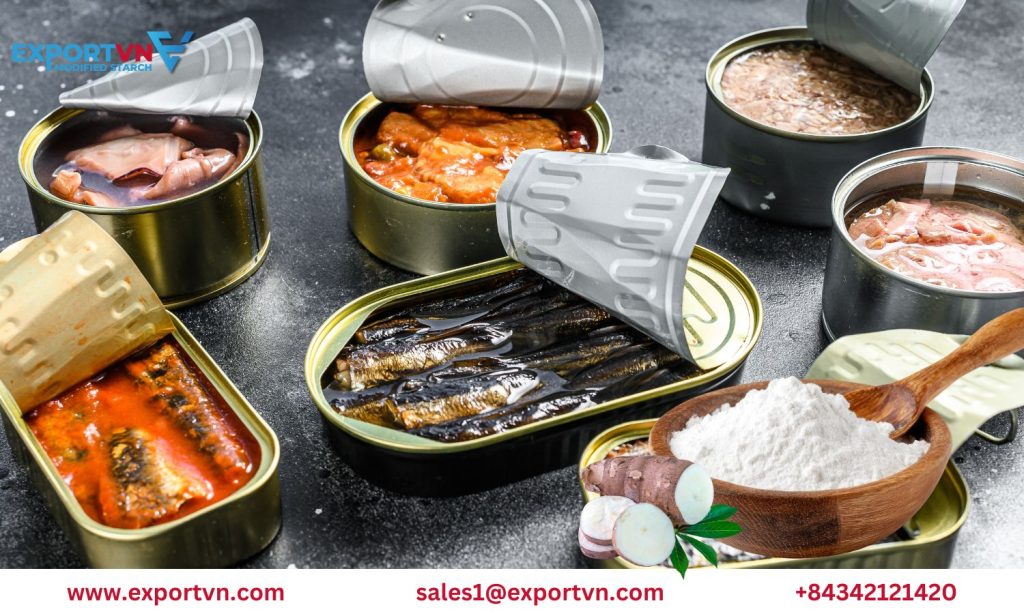
Canned food processing involves severe thermal treatment, often exceeding 121°C during sterilization. Under these conditions, native starches frequently lose viscosity and fail to maintain product texture.
In contrast, INS 1414 retains its functional properties even after retort processing. As a result, manufacturers can achieve better texture retention, improved suspension stability, and reduced water separation.
Furthermore, the starch helps maintain product quality throughout the shelf life of canned foods. Therefore, INS 1414 has become one of the most widely used modified starches in canned meat, canned fish, and ready-to-eat meals worldwide.
E1414 (INS 1414) vs Other Modified Starches
| Property | INS 1414 | INS 1422 | INS 1442 |
|---|---|---|---|
| Heat Stability | High | Very High | High |
| Acid Stability | High | Very High | Medium |
| Freeze-Thaw Stability | Good | Excellent | Excellent |
E1414 (INS 1414) vs E1422 (INS 1422)
INS 1422 (Acetylated Distarch Adipate) generally provides superior freeze-thaw stability and is often selected for frozen foods and dairy applications.
E1414 vs INS 1442
INS 1442 (Hydroxypropyl Distarch Phosphate) offers excellent freeze-thaw performance but may have lower acid resistance compared with INS 1414.
INS 1414 vs Native Tapioca Starch
Compared with Native Tapioca Starch, INS 1414 delivers significantly improved functionality in industrial food processing.
Acetylated Distarch Phosphate INS 1414 from EXPORTVN
Product Specifications
EXPORTVN supplies premium-quality tapioca-based INS 1414 suitable for a wide range of food applications.
| Item | Parameters | Unit | Specification | Test method |
| 1 | Starch | % | ≥ 85,0 | ISO 10520:1997 |
| 2 | Moisture | % | ≤ 13,0 | ISO 1666:1996 |
| 3 | Viscosity | BU | ≥ 700 | Brabender 6% (micro) |
| 4 | Fineness (140 mesh sieve) | % | ≥ 99,0 | TCVN 1874-86 |
| 5 | Whiteness | % | ≥ 90,0 | YQ-Z-48B |
| 6 | Ash | % | ≤ 0,2 | AOAC 923.03 |
| 7 | Fiber | % | ≤ 0,05 | TCVN 4590-88 |
| 8 | pH | – | 5.0 – 7.0 | AOAC 943.02 |
| 9 | SO2 | ppm | ≤ 10,0 | AOAC 990.28 |
Available Packaging Options
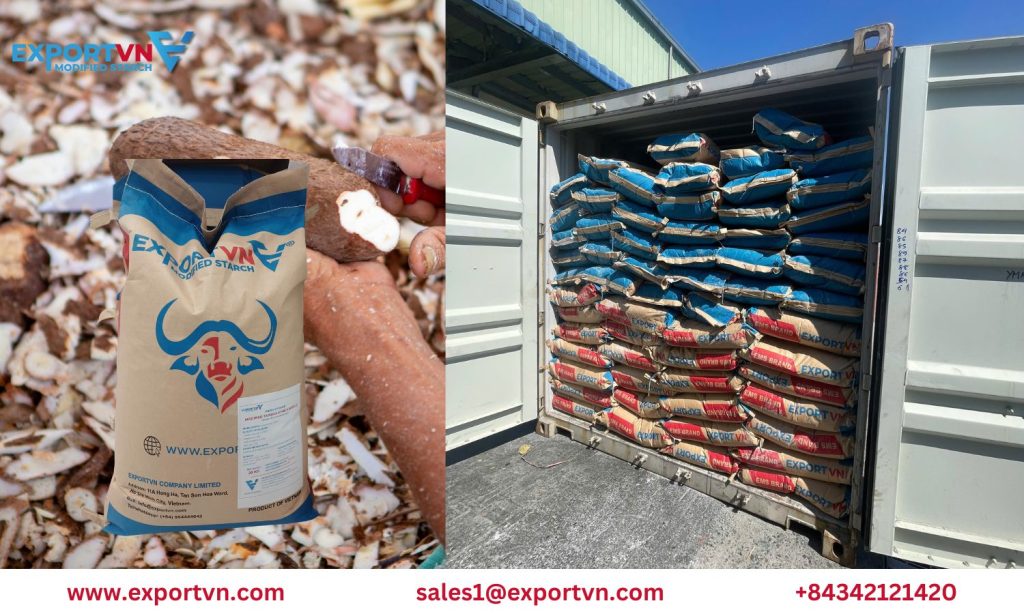
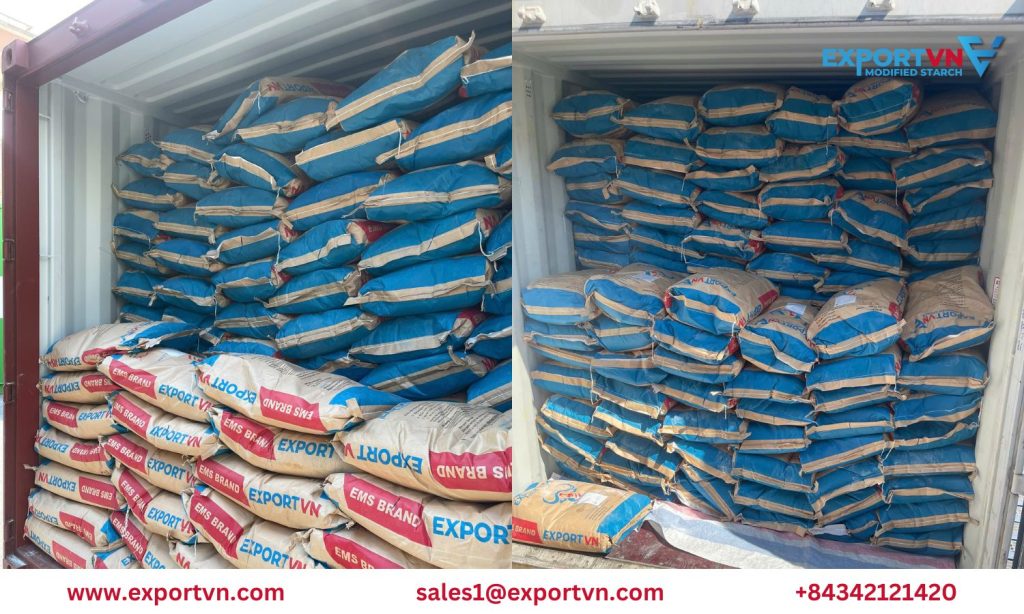
- 25 kg PP Kraft Bags
- Jumbo Bags
- Customized Packaging
Certifications
Our INS 1414 products can be supplied with:
- ISO 22000
- HACCP
- HALAL
- KOSHER
Additional features include:
- Non-GMO
- Gluten-Free
- Non-Allergen
Global Export Markets
In addition, EXPORTVN has supplied high-quality modified starch solutions to customers in more than 25 countries worldwide, serving diverse food manufacturers across Asia, the Middle East, Africa, Europe, and Latin America.
Request a Sample or Quotation
For technical consultation, product specifications, samples, and quotations, please contact our sales team.
Email: sales1@exportvn.com
WhatsApp: +84342121420
Website: EXPORTVN Official Website
Frequently Asked Questions (FAQ)
What is INS 1414 used for?
INS 1414 is used in canned foods, dairy products, sauces, bakery products, frozen foods, and processed meat products.
Is INS 1414 a modified starch?
Yes. INS 1414 is a chemically modified food starch.
Is Acetylated Distarch Phosphate gluten-free?
Yes. Tapioca-based INS 1414 is naturally gluten-free.
Can INS 1414 be used in canned food?
Yes. It is one of the most widely used modified starches in canned food applications.
What is the difference between INS 1414 and INS 1422?
INS 1422 offers superior freeze-thaw stability, while INS 1414 provides outstanding retort stability and excellent performance in canned food processing.
Is INS 1414 safe?
Yes. INS 1414 is approved for food use in many countries and is considered safe when used according to applicable food regulations.
