


Properties of starch
Benefits of INS 1412 in Meat Processing
May
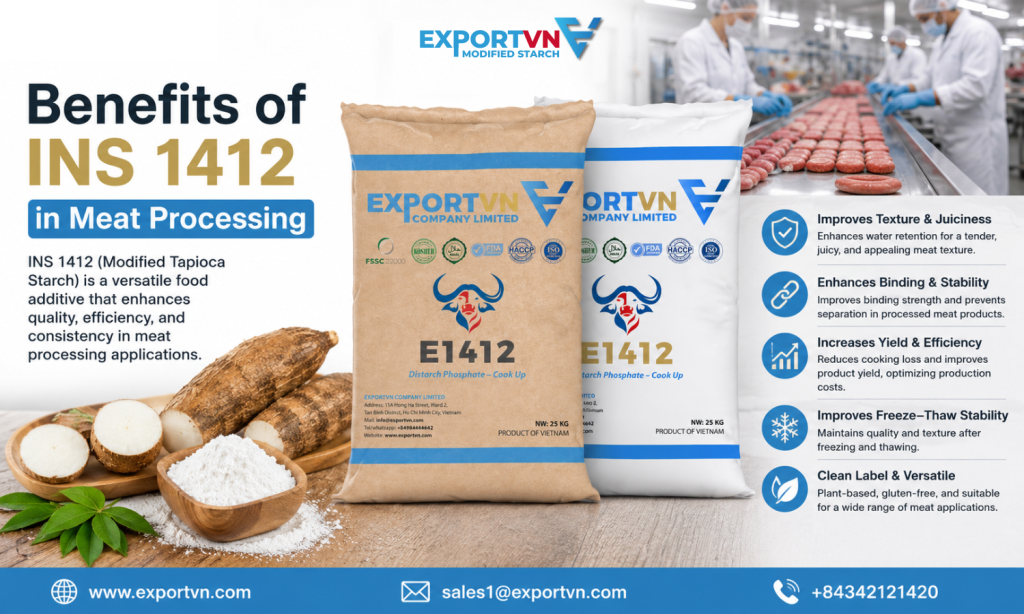
Benefits of INS 1412 in Meat Processing have made this modified starch one of the most widely used functional ingredients in the global meat industry. Also known as Distarch Phosphate, INS 1412 is a cross-linked modified tapioca starch that helps manufacturers improve water retention, increase cooking yield, enhance texture, and maintain consistent product quality.
Today, INS 1412 is widely used in sausages, meatballs, ham, surimi products, and canned meat products because of its excellent stability under heat and processing conditions. As meat manufacturers continue to focus on product quality and production efficiency, INS 1412 remains a preferred solution for modern meat formulations.
What Is INS 1412 (E1412) and Why Is It Used in Meat Processing?
What Is INS 1412?
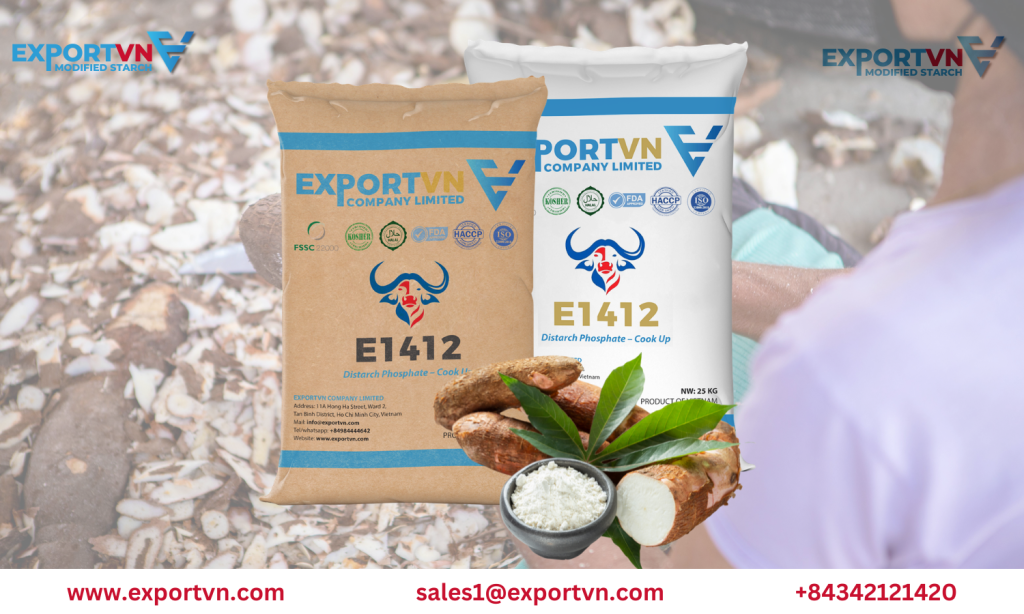
INS 1412 is the food additive code for Distarch Phosphate, a type of cross-linked starch produced from sources such as tapioca starch.
Unlike native starch, INS 1412 undergoes a modification process that creates phosphate cross-links between starch molecules. This improves the starch’s resistance to heat, shear, and processing stress.
Manufacturers often choose INS 1412 because it provides greater stability than conventional starches while maintaining the clean taste and functionality of tapioca-based ingredients.
To learn more about this product, visit our Distarch Phosphate E1412 page.
Why Meat Manufacturers Use INS 1412
Meat processors rely on INS 1412 because it helps:
- Improve product quality
- Increase processing stability
- Reduce moisture loss
- Improve production yield
- Enhance texture and mouthfeel
- Maintain product consistency between batches
Compared with ordinary starches, INS 1412 performs more effectively under industrial processing conditions such as cooking, steaming, sterilization, freezing, and storage.
Benefits of INS 1412 in Meat Processing
Enhanced Water Retention
Water retention is one of the most important factors in meat processing.
During cooking, steaming, or sterilization, meat products naturally lose moisture. Excessive moisture loss can reduce yield and negatively affect texture.
INS 1412 helps improve water retention in meat products by strengthening the protein-starch matrix and binding water more effectively.
Benefits include:
- Reduced cooking loss
- Improved moisture retention
- Better juiciness
- Increased product yield
This advantage is particularly valuable for products such as ham, sausages, and meatballs.
Improved Cooking Yield
Cooking yield directly impacts profitability.
Because INS 1412 helps retain water during thermal processing, manufacturers can reduce weight loss and improve final product output.
Benefits include:
- Higher production efficiency
- Reduced raw material waste
- Better manufacturing economics
- More consistent finished weight
For large-scale meat processors, even a small improvement in yield can generate significant cost savings.
Better Texture and Mouthfeel
Consumers expect processed meat products to have a firm, elastic, and pleasant texture.
INS 1412 acts as a highly effective meat texture improver by enhancing the internal structure of meat systems.
Key texture benefits include:
- Improved firmness
- Better elasticity
- Enhanced bite
- Smoother mouthfeel
- Improved sliceability
These properties are especially important in emulsified meat products such as sausages and fish balls.
Improved Freeze-Thaw Stability
Frozen meat products often experience water separation after thawing.
INS 1412 improves freeze-thaw stability by helping retain moisture and maintaining product structure throughout frozen storage.
Benefits include:
- Reduced syneresis
- Better appearance after thawing
- Improved texture stability
- Extended product quality
This functionality is particularly valuable for export-oriented manufacturers and frozen food processors.
Consistent Product Quality
One of the biggest challenges in industrial meat production is maintaining consistent quality between batches.
INS 1412 provides excellent processing stability, helping manufacturers achieve:
- Uniform texture
- Stable viscosity
- Reliable yield
- Consistent product appearance
As a result, processors can reduce quality variations and improve customer satisfaction.
Applications of INS 1412 in Processed Meat Products
INS 1412 is widely used in various meat processing applications.
| Meat Product | Benefit of INS 1412 |
|---|---|
| Sausages | Water retention and texture improvement |
| Meatballs | Elasticity and yield enhancement |
| Ham | Moisture retention |
| Surimi Products | Gel stability |
| Canned Meat | Thermal stability |
Sausages
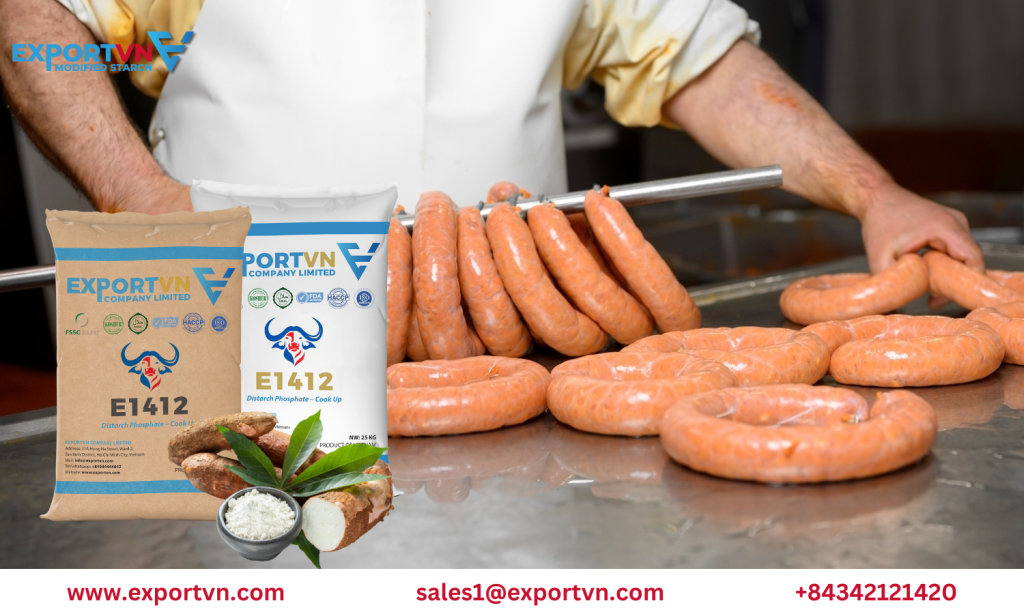
In sausages, INS 1412 improves water binding, elasticity, and product firmness.
Manufacturers often use it to:
- Improve texture
- Reduce cooking loss
- Increase yield
- Improve slicing performance
Meatballs
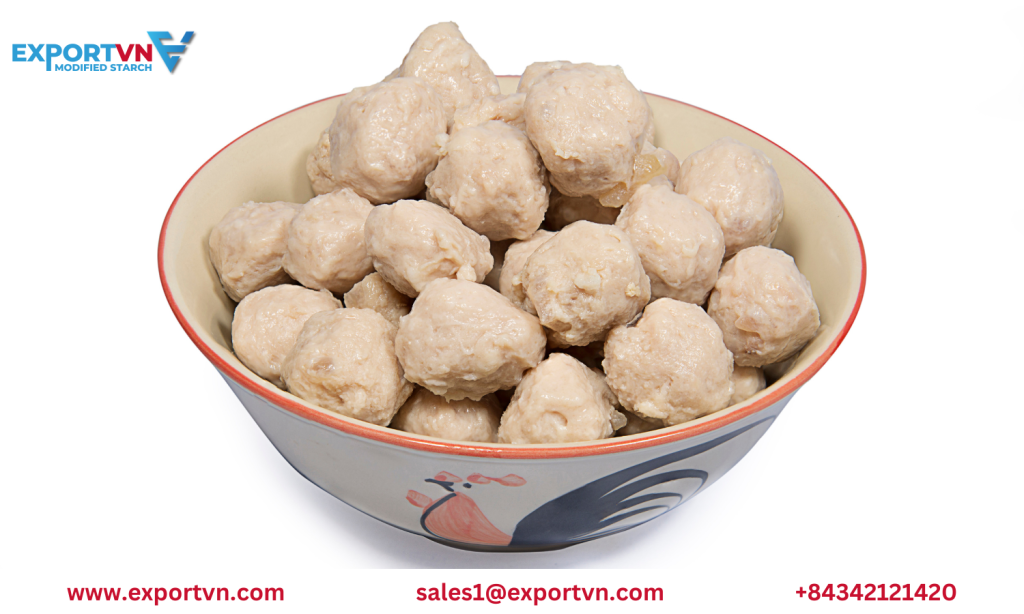
In meatballs, INS 1412 helps create a firmer and more elastic texture while reducing moisture loss during cooking.
Benefits include:
- Improved bounce
- Better bite
- Enhanced product consistency
Ham Products
In ham applications, water retention is critical.
INS 1412 helps improve moisture retention and reduce weight loss during cooking and storage.
Surimi-Based Products
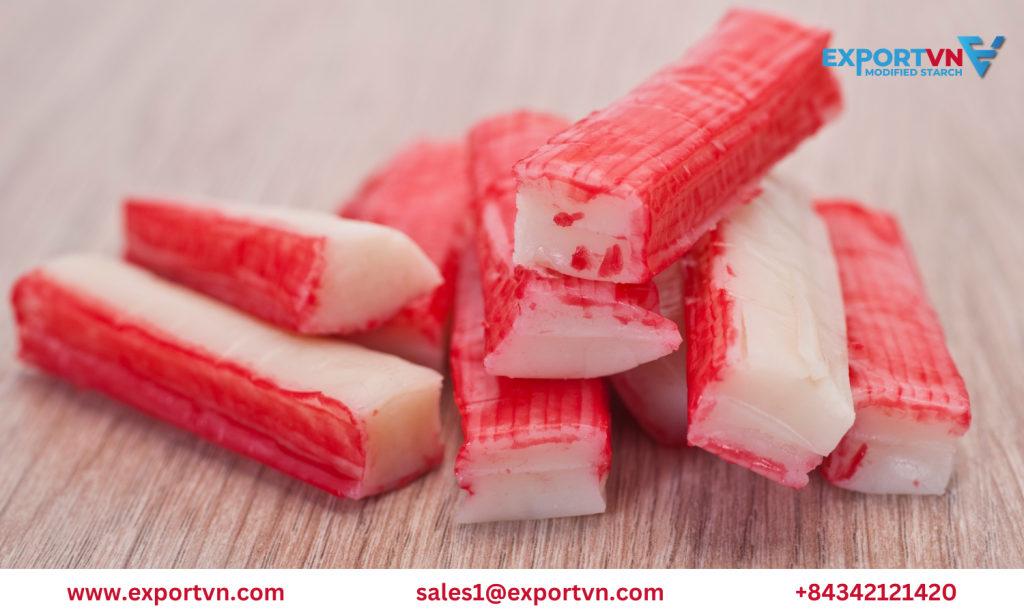
Products such as surimi and fish balls require stable gel formation.
INS 1412 contributes to:
- Stronger gel structure
- Improved elasticity
- Better texture stability
Canned Meat Products
In canned meat products, ingredients must withstand sterilization and high-temperature processing.
INS 1412 provides:
- Thermal stability
- Consistent viscosity
- Improved product structure after retorting
INS 1412 vs Native Tapioca Starch in Meat Processing
Although native tapioca starch is widely used, it cannot always meet the performance requirements of modern meat processing.
| Property | Native Tapioca Starch | INS 1412 |
| Water Retention | Moderate | High |
| Heat Stability | Moderate | Excellent |
| Processing Stability | Low | High |
| Yield Improvement | Limited | Significant |
| Industrial Performance | Basic | Superior |
Why Manufacturers Prefer INS 1412
Compared with native starch, INS 1412 offers:
- Better processing performance
- Greater moisture retention
- Improved texture stability
- Higher production yield
- Reduced processing losses
- Better suitability for large-scale manufacturing
For processors seeking consistent quality and improved efficiency, INS 1412 is often the preferred solution.
Where to Buy High-Quality INS 1412 for Meat Processing?
Why Choose EXPORTVN?
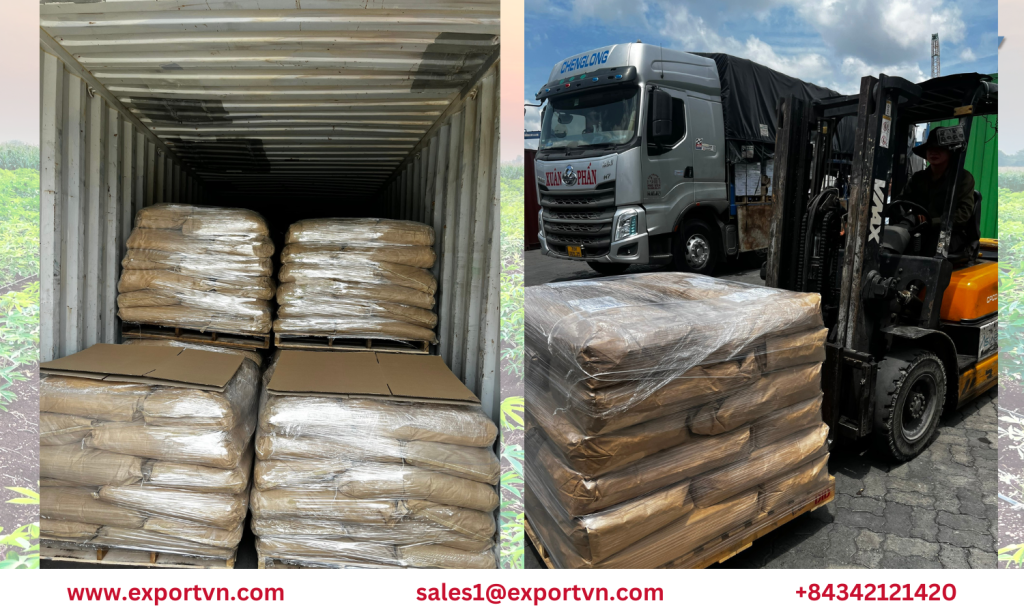
EXPORTVN CO., LTD is a trusted manufacturer and exporter of modified tapioca starch solutions serving customers worldwide.
With extensive experience in food ingredient exports, EXPORTVN supplies E1412 – Benefits of INS 1412 in Meat Processing.
Our technical team works closely with customers to optimize formulations and achieve the desired product performance.
What EXPORTVN Offers
- Consistent product quality
- Stable supply capacity
- Competitive pricing
- Technical support for meat applications
- Customized starch solutions
- Export experience serving global markets
- ISO 22000 certified production
- HACCP certification
- Halal certification
- Kosher certification
In addition to INS 1412, we also offer related modified starches such as E1422 Acetylated Distarch Adipate and Hydroxypropyl Distarch Phosphate E1442 for specialized food applications.
Conclusion
INS 1412 (Distarch Phosphate) is a highly effective modified starch for meat processing applications. Its ability to improve water retention, increase cooking yield, enhance texture, and maintain processing stability makes it an essential ingredient in sausages, meatballs, ham, surimi products, and canned meat products.
As meat manufacturers continue to focus on efficiency, quality, and consistency, INS 1412 remains one of the most reliable modified starch solutions available.
Contact EXPORTVN
Looking for a reliable INS 1412 supplier for sausages, meatballs, ham, or surimi products? Contact EXPORTVN today for technical consultation, samples, and customized starch solutions.
Email: sales1@exportvn.com
WhatsApp: +84342121420
Website: https://exportvn.com/us/
